The Freedom Charter – South African Congress Alliance (1955)

1946-1989, Authority, Black, Consciousness Raising, Date, Defining the Enemy, Disruptive Spaces, Institutions, Subjectives of Refusal, Subjects Redefined, Tactics of Disruption, White Supremacy

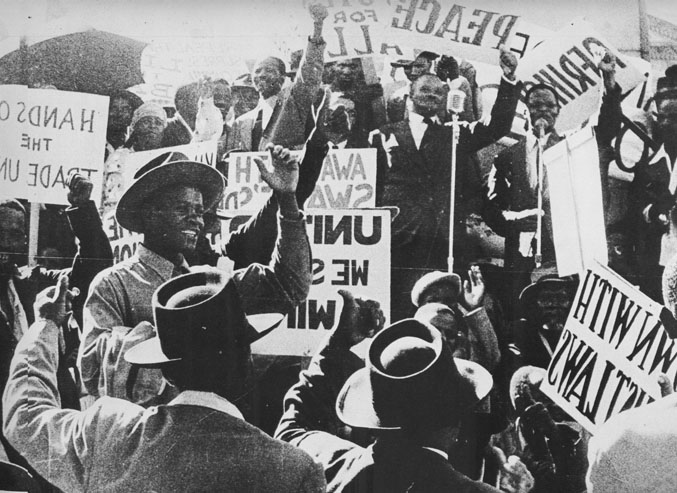
In 1955, the African National Congress (ANC) sent out 50,000 volunteers to various townships and rural areas throughout South Africa to gather “freedom demands” from average people. The ANC was tired of the repressive government and its desire to quell dissent. The demands made by the people of South Africa were synthesized into a document that was adopted later that year and became known as the “Freedom Charter.” This document is significant in that it was the first time in which the people were actively involved in creating their own vision for an alternative society.

 “The people shall govern!”

“These freedoms we will fight for, side by side, throughout our lives, until we have won our liberty.”

General Assembly Statement of Solidarity for Occupy Oakland (2011)

2011-Present, Date

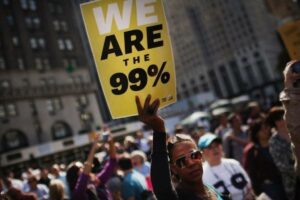
This document is a statement of solidarity for Occupy Oakland from the Occupy Wall Street General Assembly after the occupiers were forcefully evicted from their two-week old encampment. In the statement, the GA condemns the violence of the Oakland police department, calls for an immediate release of all detainees with all charges dropped, as well as demands that the mainstream media accurately report the events that ensued.

“WE WILL NOT LET INJUSTICE AND VIOLENCE DESTROY OUR SOLIDARITY AND STRENGTH. RE-OCCUPY OAKLAND! OCCUPY EVERYTHING!”

Statement from U.S. Political Prisoners to Nelson Mandela (1990)

1990-2010, Authority, Black, Date, Defining the Enemy, Disruptive Spaces, Institutions, Subjectives of Refusal, Subjects Redefined, White Supremacy

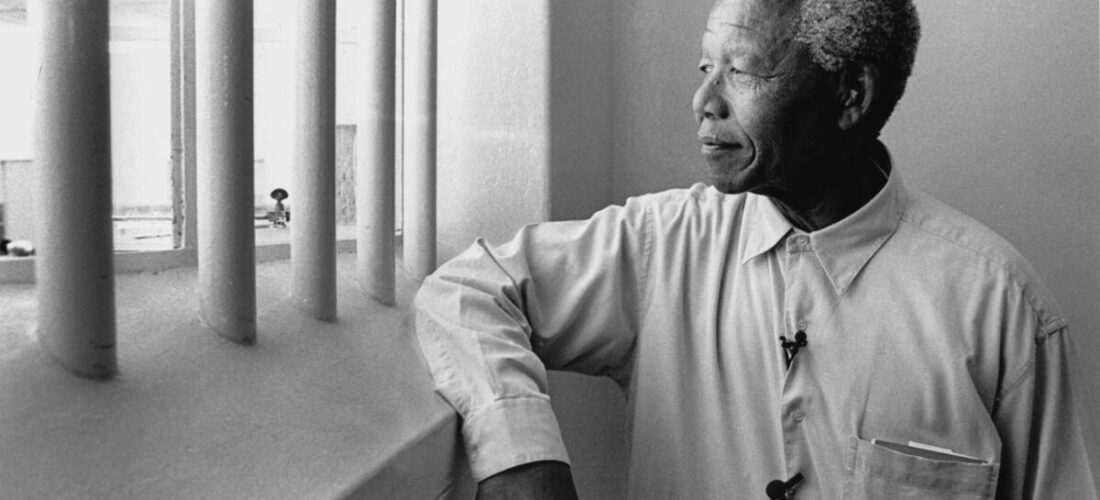
On June 21, 1990, U.S. political prisoners sent a statement to Nelson Mandela, who, at the time, was the Deputy Vice President of the African National Congress. In the statement, US political prisoners compared the criminalization of radical and progressive movements for social and political change within the US to what was happening in South Africa as well as contrasted the ways in which racism presents itself in both countries. They seek to relate to Mandela as because of his political views and activities on behalf of the African American community, he was a political prisoner himself. Additionally, they express solidarity with those in South Africa, who like them, are fighting a struggle for freedom against racial oppression.

Statement by Al-Fateh to the United Nations General Assembly (1968)

1946-1989, Authority, Colonized, Date, Defining the Enemy, Disruptive Spaces, Imperialism, Subjectives of Refusal, Subjects Redefined, The Home

In October 1968, Al-Fateh delivered a statement at the 23rd session of the General Assembly of the UN. In this statement, Al-Fateh compared the Palestinian resistance movement to those against German occupation during WWII, declared the continuance of this struggle against the foreign occupation of Palestine no matter the time taken, rejected the proposed Security Council resolution, called on the United Nations and the peoples of the world to take a stand in respect to the cause of the displaced Palestinian people, in addition to making various other demands.

Statement by the Leader of Iran’s Green Movement – Mir Hossein Mousavi (2023)

2011-Present, Authority, Date, Defining the Enemy, Subjectives of Refusal, Subjects Redefined

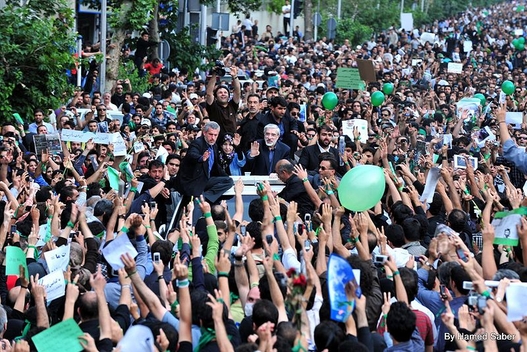
The Iranian Green Movement, also known as the Persian Awakening or the Persian Spring, came to existence after the June 12, 2009 Iranian Presidential Election, in which activists demanded the removal of Mahmoud Ahmadinejad from office. On February 4, 2023, the leader of Iran’s Green Movement, Mir Hossein Mousavi, released this statement, calling for a “fundamental change” in Iran based upon “Woman, Life, Freedom.” He argues for the drafting of a new constitution as well as a transition towards democracy led by an “assembly of founders.” Mousavi notes that Iranians have stopped believing in the government’s ability to reform itself, and instead calls for a referendum for Iranians to vote on both a new constitution and a new government rooted in democratic ideals.

Communique in Support of Port Workers in Northwest – Occupy Oakland (2011)

2011-Present, Authority, Blockade/Barricade, Date, Defining the Enemy, Disruptive Spaces, Infrastructure/Data, Occupation, Privatization, Subjectives of Refusal, Subjects Redefined, Tactics of Disruption, The Bourgeoisie

This is a communique published by Occupy Oakland in solidarity with Longshore workers in Longview, Washington. Occupy Oakland strongly condemns the actions taken by Export Grain Terminal (EGT), as the company has engaged in union busting as well as repression and recrimination against Longshore workers. Additionally, Occupy Oakland cites these actions by EGT as the reason for why it mobilized to shut down the Port of Oakland and concludes by declaring its solidarity with Longshoremen and commitment to shutting down the 1%.

Call for a Coordinated West Coast Port Blockade – Occupy Oakland (2011)

2011-Present, Authority, Blockade/Barricade, Date, Defining the Enemy, Disruptive Spaces, Infrastructure/Data, Occupation, Privatization, Subjectives of Refusal, Subjects Redefined, Tactics of Disruption, The Bourgeoisie

Occupy Oakland, a part of the larger Occupy Movement, published this piece calling for a blockade of all the West Coast Ports in order to shut down operations and disrupt the profits of the 1%. They reflect on the success of the Oakland Port shutdown that had occurred the previous month, highlighting the effectiveness of solidarity and uniting together in struggle.

Message From Democracy Village (2010)

1990-2010, Authority, Date, Defining the Enemy, Disruptive Spaces, Imperialism, Occupation, Tactics of Disruption, Urban Spaces

In 2010, anti-Afghanistan War activists turned Parliament Square in London into a protest camp, renaming the square “Democracy Village.” Over the course of the occupation, between May 1st and July 20th, other groups joined, including climate change activists, pro-democracy campaigners, anarchists, the homeless, and more. This piece came from the anti-war activists. They described what they were fighting for as well as the importance of taking direct action to resist injustice and tackle the problems that plague society.

Tecumseh Calls for Pan-Indian Resistance (1810)

1700-1830s, Date, Defining the Enemy, Disruptive Spaces, Indigenous, Self Institution, Subjectives of Refusal, Subjects Redefined, Tactics of Disruption, The 'Natural World', Uncategorized, White Supremacy

In this document, Tecumseh, a Shawnee chief and warrior, details a message of both resistance and spirituality. He writes to a community larger than just the Shawnee, calling on all the “red men” to unite and to reclaim the land that has been stolen from them by the “white people.”

“The way, and the only way, to check and to stop this evil, is for all the red men to unite in claiming a common and equal right in the land, as it was at first, and should be yet; for it never was divided, but belongs to all for the use of each.”

Declaration of the Occupation of New York City (2011)

2011-Present, Authority, Consciousness Raising, Date, Defining the Enemy, Disruptive Spaces, Occupation, Privatization, Subjectives of Refusal, Subjects Redefined, Tactics of Disruption, The Bourgeoisie, Urban Spaces

During the aftermath of the Great Recession, between September 17 and November 15, 2011, the Occupy Wall Street movement occurred in opposition to economic inequality, corporate greed, money in politics, and big finance. This document was drafted by the Call to Action Working Group and ratified by the New York City General Assembly on September 29, 2011. The piece explained who the occupiers were and why they were taking up public space. A list of grievances are included in the document as well as a call to action for all communities to take action to assert their power.

Workers! Students! – Jeunesse Communiste Révolutionnaire (1968)

1946-1989, Authority, Date, Defining the Enemy, Disruptive Spaces, Institutions, Occupation, Privatization, Strike, Students, Subjectives of Refusal, Subjects Redefined, Tactics of Disruption, The Bourgeoisie, The Workplace, Urban Spaces, Workers

Jeunesse Communiste Révolutionnaire, a French Trotskyist organization, wrote this piece, describing the transition from a student revolt into a general strike of workers contesting capitalist society during the May 1968 events. The organization included a list of demands and called on other workers and students to join them in the future actions they will take in their fight against the current system.

An Eyewitness Account by a Libertarian Communist (1968)

1946-1989, Authority, Date, Defining the Enemy, Disruptive Spaces, Institutions, Occupation, Privatization, Strike, Students, Subjectives of Refusal, Subjects Redefined, Tactics of Disruption, The Bourgeoisie, The Workplace, Urban Spaces, Workers

This document is a firsthand account of the events that occurred in Paris, France during the May 1968 time of unrest. The anonymous author describes the various strikes, occupations, and other actions taken by workers and students between the period of May 3rd to May 18th.

Address to All Workers – ENRAGÉ-SITUATIONIST INTERNATIONAL COMMITTEE (1968)

1946-1989, Authority, Blockade/Barricade, Date, Defining the Enemy, Disruptive Spaces, Institutions, Occupation, Privatization, Strike, Subjectives of Refusal, Subjects Redefined, Tactics of Disruption, The Bourgeoisie, The Workplace, Urban Spaces

Paris, France, beginning in May of 1968, was a city filled with general strikes, demonstrations, and occupations of universities and factories by students and workers. In this piece, the Enragé-Situationist International Committee Council for Maintaining the Occupations calls for the creation of workers councils as the solution to gain working-class autonomy in the proletariat revolutionary project. They reflect on the way in which their occupation of factories and public buildings has brought the economy to a halt and led to a widespread questioning of society, calling on the international proletariat to join in the fight for this transformation.

“This is the beginning of a revolutionary movement, a movement which lacks nothing but the consciousness of what it has already done in order to triumph.”

Sproul Hall Sit-In Address – Mario Savio (1964)

1946-1989, Authority, Date, Defining the Enemy, Disruptive Spaces, Institutions, Occupation, Students, Subjectives of Refusal, Tactics of Disruption, The Bourgeoisie

On December 2, 1964, Mario Savio, an activist and key member of the Berkeley Free Speech Movement, gave an address on University of California, Berkely’s campus at the Sproul Hall sit-in. Many students, including Savio, had spent the previous summer in Mississippi, participating in what became known as the “Freedom Summer” and helping to register Black sharecroppers to vote. These students then began fighting for the necessity of Free Speech on college campuses. In this address, Savio detailed two different ways in which civil disobedience can occur and previewed the direct actions that were about to take place in the storming of Sproul Hall to fight against the restrictions on political speech and actions on campus.

“There is a time when the operation of the machine becomes so odious, makes you so sick at heart, that you can’t take part; you can’t even passively take part, and you’ve got to put your bodies upon the gears and upon the wheels, upon the levers, upon all the apparatus, and you’ve got to make it stop. And you’ve got to indicate to the people who run it, to the people who own it, that unless you’re free, the machine will be prevented from working at all!”

Civil Disobedience Toolkit – Amnesty International

Authority, Defining the Enemy

Amnesty International published a detailed guide that contains instructions on when and how to carry out acts of civil disobedience. Definitions, guiding principles, information on the decision-making process, steps for engaging in civil disobedience, and other important material is described and illustrated in the document.

Theory of Anarchy – Edward Abbey (1988)

1946-1989, Authority, Date, Defining the Enemy, History, History/Theory, The Bourgeoisie, Theory

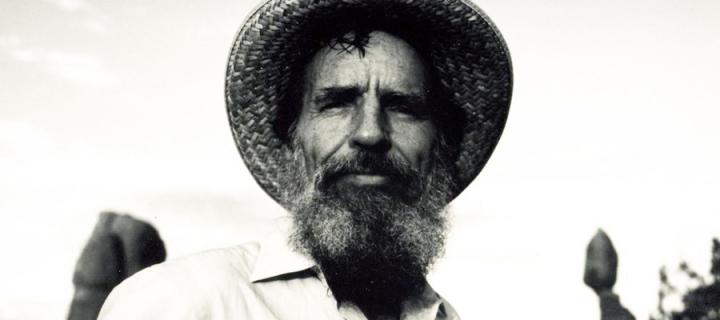
This piece is an excerpt from the book, One Life at a Time, Please, written in 1988 by Edward Abbey, an American author and essayist. In this excerpt, Abbey writes on the various ways in which power corrupts and is exercised in society. Additionally, he illustrates the importance of resisting such forms of power that deviate humans from what he sees as their true state of freedom.

“New dynasties will arise, new tyrants will appear–no doubt. But we must and we can resist such recurrent aberrations by keeping true to the earth and remaining loyal to our basic animal nature. Humans were free before the word freedom became necessary. Slavery is a cultural invention. Liberty is life: eros plus anarchos equals bios.”

In Time of Crisis – Dave Foreman (1991)

1990-2010, Blockade/Barricade, Date, Defining the Enemy, Disruptive Spaces, Occupation, Privatization, Sabotage/Ecotage, Subjectives of Refusal, Subjects Redefined, Tactics of Disruption, The 'Natural World', The Bourgeoisie

This piece is an excerpt from the book, Confessions of an Eco-Warrior, written in 1991 by Dave Foreman, a co-founder of Earth First!. In this excerpt, Foreman details the principles, practices, and goals of Earth First! activists.

“It is through becoming part of the wild that we find courage far greater than ourselves, a union that gives us boldness to stand against hostile humanism, against the machine, against the dollar, against jail, against extinction for what is sacred and right: the Great Dance of Life.”

Riot, Strike, Commune: Gendering a Civil War – Joshua Clover (2020)

History, History/Theory, Theory

This piece extends the framework of the author’s Riot.Strike.Riot, adding the “reproduction struggle” to the pairing of circulation and production struggles. A paradigm of the reproduction struggle can be found in the practical encampments that accompany, constitute, and help propagate land occupations and blockades, providing the persistently gendered features of social reproduction: food, shelter, care, community. The essay identifies these encampments as nascent communes, and in turn offers the commune as a feature within the repertoire of social contest: not a utopian withdrawal, not an alternative to the militancy of direct antagonism, but a necessary aspect of that antagonism that both enables other forms and, in its character as “counter-reproduction,” carries within it the kernel of a social existence beyond colonial capitalism. 

Introduction to “Riot. Strike. Riot: The New Era of Uprisings” – Joshua Clover (2016)

History, History/Theory, Theory

This Introduction summarizes the book in full, offering a comprehensive theorization of changes in the repertoire of social contest in the early-industrializing west since the medieval period. It situates the core categories of “production struggle”” and “circulation struggle” in relation to capitalism’s leading orientations within any given period, arguing that the compulsions of accumulation help shape the repertoire of social struggle. It concludes that the deindustrializing present, with its growing “surplus population” excluded from production along racialized lines, offers proletarian struggle increasingly likely to take the form of riots, similar to and distinct from the era of the classical bread riot. 

Statement From Vestas Workers on Their Factory Occupation (2009)

1990-2010, Authority, Date, Defining the Enemy, Disruptive Spaces, Occupation, Privatization, Subjectives of Refusal, Tactics of Disruption, The Bourgeoisie, The Workplace, Workers

On July 20, 2009, workers of the Vestas Wind Systems factory in Newport, Isle of Wight, occupied the factory after finding out that more than 525 jobs from both the Isle of Wight and the Southampton factories were moving abroad. In their statement, the occupiers called on the government to nationalize the factory, arguing that keeping it open is necessary for the livelihoods of the workers as well as for the health of the planet.

Statement of Indigenous Youth Standing in Solidarity with Wet’suwet’en (2020)

2011-Present, Authority, Date, Defining the Enemy, Disruptive Spaces, Indigenous, Institutions, Occupation, Privatization, Subjectives of Refusal, Subjects Redefined, Tactics of Disruption, The Bourgeoisie

On February 6, 2020, Indigenous youth in Canada began their occupation of the ceremonial gates and steps to the B.C. Legislative Assembly in solidarity with the Wet’suwet’en Nation, who were resisting an encroachment on their sovereign territories by the Royal Canadian Mounted Police (RCMP). The RCMP sought to seize the land to allow for the construction of Coastal GasLink’s new fracked gas pipeline. The Indigenous youth issued a statement on February 26, 2020, laying out their demands for Canadian officials and calling on them to stop the human and indigenous rights violations by the RCMP happening in Wet’suwet’en territory.

100 Years of Land Struggle – Mike Gouldhawke (2020)

Authority, Blockade/Barricade, Defining the Enemy, Disruptive Spaces, Indigenous, Occupation, Privatization, Subjectives of Refusal, Subjects Redefined, Tactics of Disruption, The 'Natural World', The Bourgeoisie, White Supremacy

This document is a timeline of Native American resistance in pursuit of land and self-determination between the years of 1921-2020.

Indonesia: PT Istana: A Factory Occupied and Producing Under Workers’ Control – Jorge Martin (2016)

1990-2010, Authority, Date, Defining the Enemy, Disruptive Spaces, Subjectives of Refusal, Subjects Redefined, The Bourgeoisie, The Workplace, Workers

This document is a written account by Jorge Martin, the International Secretary of Hands Off Venezuela, of his November 2008 visit to PT Istana, an occupied and now worker-run factory in North Jakarta, Indonesia. The story of how employees of CV Melody occupied the factory in an effort to fight off attacks by the company for their decision to unionize as well as how they began worker-controlled production are detailed in the piece.

“They had proven something very important: the bosses need the workers to run the factories, but the workers do not need the bosses!”

The War of the Worlds in France – Kristin Ross (2023)

2011-Present, Date, Disruptive Spaces, The 'Natural World'

In the past two years Les Soulèvements de la Terre, a network of ecological activists and groups, has used direct confrontations with polluters and developers to threaten industrial agriculture’s monopoly on the French countryside.

We Are Still Here (2009)

1990-2010, Authority, Date, Defining the Enemy, Disruptive Spaces, Institutions, Occupation, Students, Subjectives of Refusal, Subjects Redefined, Tactics of Disruption, The Bourgeoisie, We're Not Paying That, White Supremacy

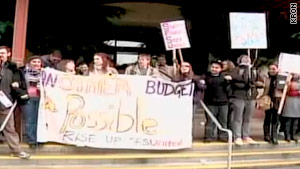
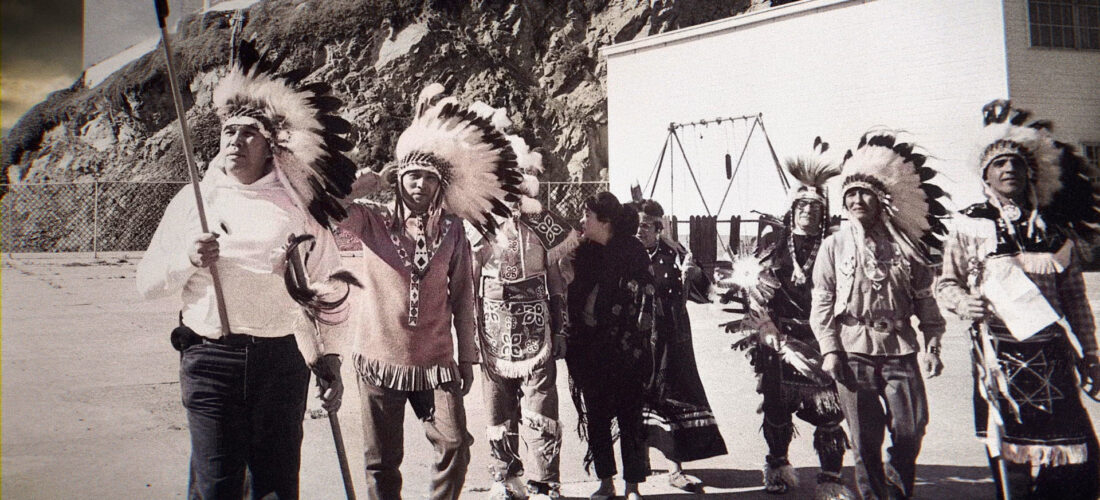
This is a communique from the occupation of a business administration building at San Francisco State University in the fall of 2009. Occupiers were protesting budget cuts and fee increases. In this communique, students connect their movement to anti-racist and labor movements, to the protests against the wars in Iraq and Afghanistan, to the occupation of Alcatraz Island by the Indians of All Nations, as well as to the wider struggle against capital.

“Although occupation, or reclaiming space, is not a historically new idea, it is a new form of struggle for many of those disillusioned with the promises of lobbying, those too tired of petitioning “our” elected leaders, those who have lost all faith in politics as they know it. As direct actions like these redefine socially-acceptable modes of protest, occupations themselves redefine the power-relations at the site of struggle.”

Voices from Wheeler Hall (2009)

1990-2010, Authority, Date, Defining the Enemy, Disruptive Spaces, Institutions, Occupation, Students, Subjectives of Refusal, Subjects Redefined, Tactics of Disruption, The Bourgeoisie, We're Not Paying That

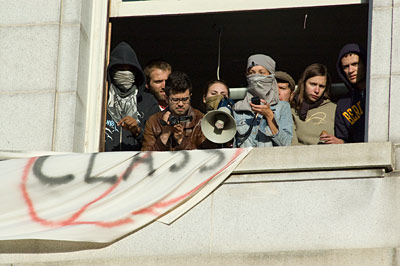
This document contains excerpts from the zine created after the occupation of Wheeler Hall at the University of California, Berkeley on November 20, 2009. The occupation was the apex of three days of demonstration after the University of California’s Board of Regents had voted to raise student fees by 32%. Rather than issue a communique, the occupiers chose to have their individual statements gathered into a zine composition.

“We will take buildings, streets, and all that is necessary until we are free and rid of this bureaucratic, authoritarian, and unjust structure…We will occupy, we will appropriate, and in turn, we will liberate.”

Manifest of “Occupy Museums” (n.d.)

Defining the Enemy, Disruptive Spaces, Institutions, Occupation, Privatization, Tactics of Disruption

This is a declaration by the activist group Occupy Museums, stating the direct actions they have taken to expose a cultural system of inequality and exploitation within the American and International art world. Inspired by the 2011 Occupy Wall Street Movement, Occupy Museums seeks to bring the critique of wealth and inequality to the cultural sphere where finance and aesthetics currently intersect.

WE OCCUPY MUSEUMS TO RECLAIM SPACE FOR MEANINGFUL CULTURE BY AND FOR THE 99%. WE BELIEVE THAT ART AND CULTURE ARE THE SOUL OF THE COMMONS. ART IS NOT A LUXURY!”

Extinction Rebellion Occupation of Insurance Firms – Extinction Rebellion (2024)

2011-Present, Date, Defining the Enemy, Disruptive Spaces, Occupation, Privatization, Tactics of Disruption, The Bourgeoisie, The Workplace, Urban Spaces

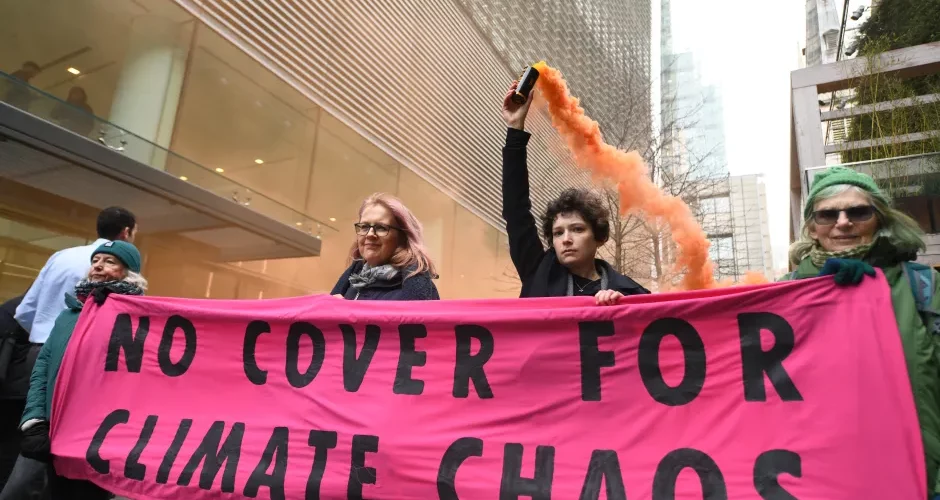
This is a news article by Extinction Rebellion (XR) detailing the occupation of the offices of five major insurers within the City of London by various XR protesters. Activists occupied the lobbies of the firms and called on the insurance company CEOs to speak with them about how their companies can play a part in stopping climate-destroying fossil fuel projects. The group had previously made demands in a letter sent to over 40 insurers throughout the City of London. Some of these demands included a complete and immediate ban on insuring new as well as expanding oil, gas and coal projects. These direct actions were taken in solidarity with the Insure Our Future Global Week of Action.

“I have joined the Insurance Week of Action to tell insurance companies that insuring fossil fuel extraction in 2024 is unacceptable. These companies are enabling destruction, displacement and death from the comfort of their headquarters.” – Dr. Lucy Hogarth, a member of Scientists for Extinction Rebellion

We Hold the Rock – Indians of All Tribes (1969)

1946-1989, Date, Defining the Enemy, Disruptive Spaces, Indigenous, Occupation, Subjectives of Refusal, Subjects Redefined, Tactics of Disruption, The 'Natural World', White Supremacy

This document was produced by the same group that wrote the Alcatraz Proclamation. In this piece, the occupiers demanded ownership of Alcatraz Island in the name of the Indians of All Tribes. They described the many injustices forced upon them by the “Whitemen” and made it clear that they are there to stay on the island. Through this piece, the authors redefined both what it meant to be “Indian” as well as their subsequent place within society.

Taking Back – Stacy Pettigrew and Skott Kellogg (2003)

1990-2010, Date, Defining the Enemy, Disruptive Spaces, Indigenous, Occupation, Privatization, Self Institution, Subjectives of Refusal, Subjects Redefined, Tactics of Disruption, The 'Natural World', The Bourgeoisie, We're Not Paying That

Movimiento Sin Tierra (MST), also known as the Landless Workers Movement, began in Brazil and has since spread across the Americans to places like Mexico, Peru, and Bolivia. MST fights for access to land for poor workers. Due to unresponsive governments, high levels of poverty, and the elite’s monopolization on land ownership, MST forms groups to occupy land and create settlements. This document provides an inside look into Bolivia’s Landless Workers Movement based upon interviews conducted with those involved in MST Bolivia. 

“We no longer ask the authorities to give us the land, because when we do that, they cut us off. We go directly to lands…We enter, we work, we occupy the lands.” – Wilfor Colque Caceres, secretary of the MST Bolivia National Coordinating Committee

Breaking the Illusion of Scarcity: A Squatter’s Primer (2003)

1990-2010, Date, Defining the Enemy, Disruptive Spaces, Occupation, Privatization, Tactics of Disruption, The Home, Uncategorized, We're Not Paying That

This piece is a detailed guide on how to squat an unoccupied property. Information on how to find a place, claim squatters’ rights, gain adverse possession, and fix utilities within the space are described and illustrated in the document. Additional squatting resources are provided at the end of the piece as well.

 “If we are to avoid urban sprawl, we must see through the illusion of scarcity and utilize what already exists. So dig a pry bar under the boards covering the window, crack it open and squat it.”

We Won This Round: The Cancún WTO Ministerial Summit – Lesley Adams (2003)

1990-2010, Blockade/Barricade, Date, Defining the Enemy, Disruptive Spaces, Imperialism, Institutions, Occupation, Sabotage/Ecotage, Subjects Redefined, Tactics of Disruption, The 'Natural World', The Bourgeoisie

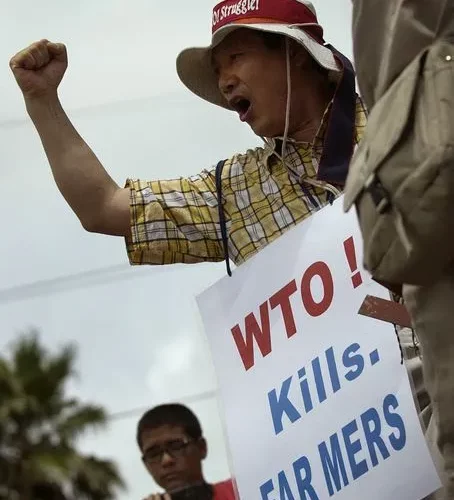
This piece was written by an activist at the 2003 ministerial conference of the World Trade Organization in Cancún. Over 10,000 protesters from around the world took action throughout the summit, occupying a building, conducting marches, disrupting the opening ceremony, using bolt cutters to break down barriers, and employing other direct action tactics. Activists faced the challenge of integrating different cultures, who each had their own organizing methods, social relations, and disruptive tactics. Many of the activists were farmers, who were protesting the globalist free trade policies that they argued had privileged multinational businesses at the detriment of their livelihoods. This was shown by one farmer, Lee Kyung Hae, who stabbed himself as an act of sacrifice, expressing, “WTO kills farmers. I am taking my life so that others can live.”

“Building alliances and solidarity between struggles is vital to counter the ways in which the current power structure is connecting our global community. The world is being globalized whether we like it or not. They choose to globalize capital. We choose to globalize resistance.”

Locking Down with Lockboxes – CrimethInc. (2012)

2011-Present, Blockade/Barricade, Date, Occupation, Tactics of Disruption

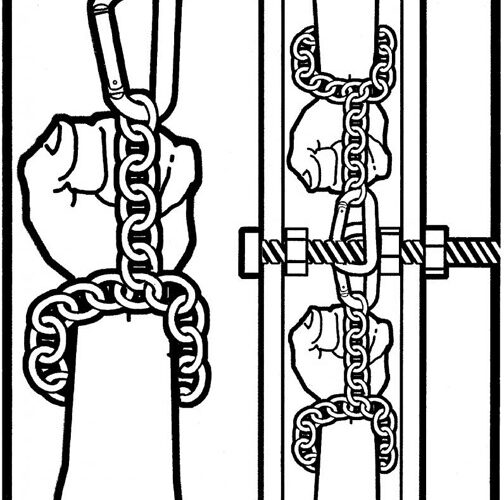
This is a step-by-step guide published by CrimethInc. on how to utilize lockboxes when conducting a blockade. Information on equipment, design instructions, planning stages, handling legal consequences, as well as other material is described and illustrated in the document.

Excerpts from a Native Women’s Liberation Front Newsletter (1970)

1946-1989, Blockade/Barricade, Date, Defining the Enemy, Disruptive Spaces, Imperialism, Indigenous, Occupation, Privatization, Self Institution, Subjectives of Refusal, Tactics of Disruption, The 'Natural World'

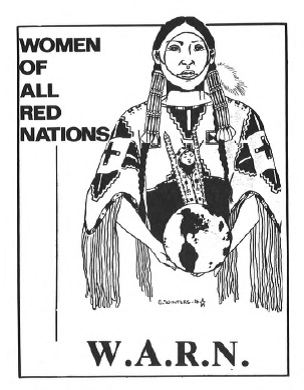
These excerpts come from a Native Women’s Liberation Front newsletter published in 1970. Four different cases of direct action land struggles waged by various Native American groups are described, including the occupation of Fort Lawson military base, Stanley Island, Alcatraz Island, and the southern tip of land previously belonging to the Pit River Indians. In each of these cases, Native American activists are seeking to reclaim the land that belongs to them and are calling on readers to join them in their fight.

Trail of Broken Treaties 20-Point Position Paper – American Indian Movement and Rosebud Sioux (1972)

1946-1989, Blockade/Barricade, Date, Defining the Enemy, Disruptive Spaces, Imperialism, Indigenous, Institutions, Occupation, Subjectives of Refusal, Tactics of Disruption, Urban Spaces, White Supremacy

In 1972, AIM activists and members of the Rosebud Sioux organized the Trail of Broken Treaties and Pan American Native Quest for Justice. This demonstration brought caravans of Native Americans from across the country to Washington D.C. where they occupied the Bureau of Indian Affairs (BIA) for six days. The group drafted a 20-point position paper that outlined major issues that needed to be addressed. All of their points centered around recognizing Native American sovereignty and restoring Indigenous rights, as set forth in previous treaties. Additionally, the paper called for the abolishment of the BIA and the creation of an Office of Federal Indian Relations and Community Reconstruction instead.

May Day Belongs to the People of the World – Student and Youth for a People’s Peace (1971)

1946-1989, Blockade/Barricade, Date, Disruptive Spaces, Occupation, Tactics of Disruption, Urban Spaces

This piece is a call to action for individuals to join in the civil disobedience measures that will be taking place beginning on May 1, 1971 and continuing until a peace treaty is implemented by the Nixon Administration. Should Nixon fail to call an immediate end to the war within two days, the group is set to close down the federal government through acts of civil disobedience. The importance of these actions being non-violent is stressed, while various methods of blockades, strikes, and more are mentioned. The author also articulates how demonstrations should be carried out in more cities than just Washington D.C. and that all communities should get involved as everyone is affected by the war.

May Day Tactical Manual – Student and Youth for a People’s Peace (1971)

1946-1989, Blockade/Barricade, Date, Disruptive Spaces, Occupation, Tactics of Disruption, Urban Spaces

This is a manual published in advance of the 1971 May Day protests in Washington D.C. It describes how to carry out civil disobedience actions in opposition to the Vietnam War. Information on non-violent civil disobedience, the schedule for when actions will be carried out, the organization form that will be taken, various tactics that will be utilized, as well as images and maps of the city are included in the document.

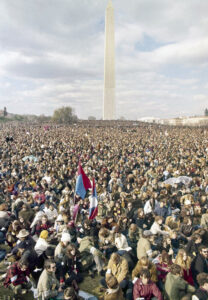
Thousands of anti-war protesters gather near the Washington Monument in Washington, D.C., May 3, 1971, one of several days of civil disobedience called the Mayday march on Washington. (AP Photo)

The Mandate for 1992: Resistance – Bobby Castillo (1992)

1990-2010, Date, Indigenous, Self Institution, Subjectives of Refusal, Subjects Redefined, Tactics of Disruption

This piece was published in the 1992 program of the International Tribunal of Indigenous Peoples and Oppressed Nations in the USA. Bobby Castillo, the author of the mandate as well as the coordinator of the International Tribunal, challenged the 500th anniversary of the “discovery” of America by Christopher Columbus, demanding that myth be destroyed. Furthermore, he demanded the release of political prisoners/prisoners of war and the ability of oppressed national movements to exercise their rights to self-determination. This document serves to raise awareness to the new resistance of the American Indian Movement and to reaffirm the basic human rights of indigenous groups to determine their own destiny. Additionally, both the document and the tribunal are evidence of efforts by indigenous groups to redefine themselves within the current system.

People’s Blockade of S.F. Bay

1946-1989, Date, Disruptive Spaces, Infrastructure/Data, Occupation, Tactics of Disruption

This piece was an anonymous call to action to impose a people’s blockade on the Oakland Army Terminal and the naval facilities at the port of Oakland-San Francisco. This was in response to President Nixon’s blockading of Haiphong and the destructive air and naval bombardments he had recently ordered on Vietnam. The Oakland Army Terminal was a major loading point for U.S. troops and munitions to be sent to Vietnam, which is why these anti-war activists sought to disrupt its operation in the hopes of forcing Nixon to bring the Vietnam War to an end.

What’s Really Happening at Gustafsen Lake and Why (1995)

1990-2010, Date, Defining the Enemy, Disruptive Spaces, Imperialism, Indigenous, Occupation, Privatization, Subjectives of Refusal, Tactics of Disruption, The 'Natural World', White Supremacy

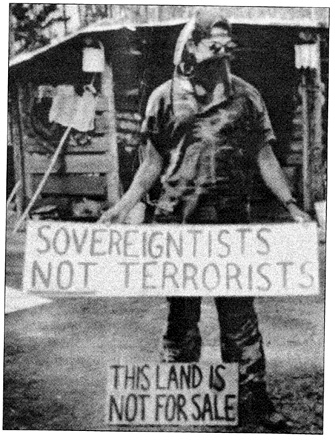
This piece describes the conflict between sundancers of the Shuswap First Nation and the Royal Canadian Mounted Police (RCMP) during August and September of 1995. Members of the Shuswap Nation were engaging in their annual sundance ceremonies when individuals from the RCMP SWAT team began encircling the camp. More Shuswap sundancers as well as other nations soon arrived to defend those already there from violence. Throughout the coming weeks, the RCMP began painting these individuals as “terrorists,” blaming them for recent shootings in the area, and cutting off all communication to and from the camp, including that of the media. Those in the camp demand that an impartial third party tribunal be set up to decide on the question of jurisdiction over unceded Native American territories. They have refused to leave their defensive position until their petition has been forwarded from the Governor General of Canada to the British Privy Council and the Queen, as stipulated in the Royal Proclamation of 1763. The piece includes information on how to contact the various governments, lawyers, and other groups involved in the situation to apply pressure in support of the Shuswap, Mohawk, and all other indigenous nations.

An Excerpt From an Interview With Earl Livermore About the Indians of All Tribes (Ioat) Occupation of Alcatraz – 1970

1946-1989, Date, Defining the Enemy, Disruptive Spaces, Imperialism, Indigenous, Institutions, Occupation, Subjectives of Refusal, Tactics of Disruption, White Supremacy

This is a transcript of an interview with Earl Livermore, a leader of the American Indian Movement. He describes the thought behind occupying Alcatraz, the organization of various committees, schools, medical centers, and transportation methods on the island, as well as the outside support the activists have been receiving in support of their occupation. Additionally, he reads a part of the Alcatraz Proclamation (1969) to give listeners a clearer sense of what specifically the Indian activists desire of Alcatraz.

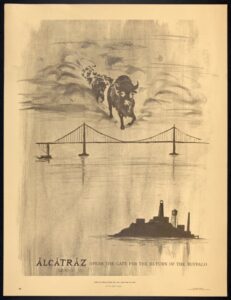
This is a poster created by Earl Livermore. In addition to serving as a leader of the American Indian Movement, Livermore was also an artist. The proceeds from this poster went directly into the Alcatraz fund.

The Alcatraz Proclamation (1969)

1946-1989, Date, Defining the Enemy, Disruptive Spaces, Indigenous, Occupation, Subjectives of Refusal, Tactics of Disruption, The 'Natural World', White Supremacy

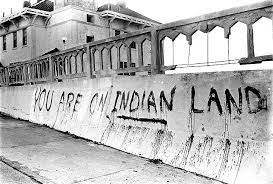
This was a proclamation issued by the group of indigenous peoples who occupied Alcatraz Island beginning on November 20, 1969 and lasting until June 11, 1971. In the proclamation, Natives demanded the reclamation of the land based on historical precedents and called attention to the poor conditions of Indian Reservations across the country. The proclamation was addressed to the “Great White Father and All His People” with the intended audience being both the US government and the American people.

“We, the native Americans, re-claim the land known as Alcatraz Island in the name of all American Indians by right of discovery.”

Mitsubishi Stumped! – NYC Earth First! (1998)

1990-2010, Blockade/Barricade, Date, Defining the Enemy, Disruptive Spaces, Occupation, Tactics of Disruption, The 'Natural World', The Bourgeoisie, The Workplace

This piece describes the direct actions taken by NYC Earth First! and Wetlands Rainforest Action Group activists at the Mitsubishi International office building. The activists entered the building with multiple 600-pound concrete-filled barrels, lockboxes, and megaphones. They used these tools to lock themselves to the doors and barrels, barricade the entrances, and effectively shut down the building until police forces arrived to break it up. The blockaders demanded to meet with Mitsubishi’s president and stood their ground until the blockade was deconstructed by the police. The activists sought to raise public awareness for the destructive environmental practices of Mitsubishi and repeatedly chanted the phrase “Earth First! Profits Last! Boycott Mitsubishi!” This piece by NYC Earth First! concluded with a call for all readers to boycott products with the Mitsubishi logo and with information on how to contact the president of the Mitsubishi International Corporation.

“We made Mitsubishi’s life hell for a day and got our message out with great newspaper, TV, international newswire and internet website coverage, bringing home the message: “Earth First! Profits Last! Boycott Mitsubishi!”

Maine Earth First! Disrupts State’s Approval of Plum Creek Development Plan – Maine EF! (2010)

1990-2010, Date, Defining the Enemy, Disruptive Spaces, Occupation, Privatization, Sabotage/Ecotage, Tactics of Disruption, The 'Natural World', The Workplace

This article, published by Maine Earth First! details the occupation of the Land Use Regulatory Commission’s meeting in Bangor, Maine in opposition to the agency’s approval of Plum Creek’s proposal to develop in the Moosehead Lake region. Activists argued that approval of this plan will allow Plum Creek to conduct harmful extraction projects, dump sewage sludge, clear cut forests, among other detrimental acts on the environment. Maine Earth First!ers burst into the room prior to the vote, demanded a chance to have votes of their own, and continued to occupy the meeting room by sitting down and linking arms.

Five Centuries of Resistance in Argentina – Kendra Fehrer and Brad Will (2004)

1990-2010, Date, Defining the Enemy, Disruptive Spaces, Imperialism, Indigenous, Occupation, Privatization, Sabotage/Ecotage, Subjectives of Refusal, Subjects Redefined, Tactics of Disruption, The 'Natural World', The Workplace

This piece describes the direct action tactics used by the Ava Guaraní indigenous peoples of Argentina and their allies against Tabacal Sugar, a subsidiary of the Seaboard Corporation. Tabacal Sugar owns the ancestral land of the Ava Guaraní, which is found in Salta, a northern province of Argentina. Despite being displaced from their land over five decades ago, members of the Ava Guaraní community have occupied the land in their ancestral homeland to harvest native fruits, vegetables, and medicinal herbs. In addition to the actions taken by the indigenous community themselves, activists from the Worcester Global Action Network, on behalf of the Ava Guaraní, disrupted Seaboard Corporation’s annual shareholders meeting to demand the corporation address the displacement of the indigenous peoples in Salta.

A Civilian’s Guide to Direct Action – CrimethInc. (2017)

2011-Present, Date, Disruptive Spaces, Uncategorized

This piece is a step-by-step guide published by CrimethInc. on organizing direct action. Common objectives of direct action, how to navigate the initial planning stages, what to do during and after the action, as well as other information is described and illustrated in the document.

Blockade Personal Accounts – Earth First!ers (1983)

1946-1989, Blockade/Barricade, Date, Defining the Enemy, Disruptive Spaces, Occupation, Privatization, Self Institution, Tactics of Disruption, The 'Natural World'

This piece consists of personal accounts of three Earth First!ers during their various blockades over the course of a two week period. The blockades occurred in order to stop the continued destruction of the Bald Mountain road in the Kalmiopsis region. In each instance, activists locked arms, forming a barrier between the bulldozer and the rest of the road, temporarily halting destruction. Additionally, the second account describes how in addition to forming a blockade, Earth First!ers chained themselves to the bulldozers, halting the destruction for even longer.

“We feel in our hearts that we have contributed to a great cause, and helped with the advent of a new tactic in the protection of wilderness in America: Direct Action.”

Ecodefenders Sabotage Bighorn Hunt – Rod Coronado (1987)

1946-1989, Date, Disruptive Spaces, Sabotage/Ecotage, Tactics of Disruption, The 'Natural World'

This piece, written by Rod Coronado, an active member of the Sea Shepherd Society, the Hunt Saboteurs Association, the Animal Liberation Front, and Earth First! describes the direct actions taken over the course of a week to prevent the trophy hunting of Bighorn Sheep near the Old Dad Peak region of California. For the first time in 114 years, a recent state amendment to the California Department of Fish and Game code granted a select number of applicants the opportunity to hunt one Bighorn each. Activists from both Earth First! and various animal rights groups engaged in acts of sabotage to disrupt the hunt, particularly through the use of horns and whistles. Although the ecodefenders were unable to prevent the death of all targeted Bighorns, they were able to set a precedent on the issue, draw greater attention to the abuse of wildlife, in addition to saving four Bighorn lives.

“They were totally effective in their attempts to disrupt the hunt. They ruined it.” – Dr. Loren Lutz (Founder of the Society for the Conservation of Bighorn Sheep)
How to Sink Whalers, Driftnetters, and Other Environmentally Destructive Ships – Earth First! (n.d.)

1990-2010, Date, Defining the Enemy, Disruptive Spaces, Evasion, Sabotage/Ecotage, Tactics of Disruption, The 'Natural World', The Workplace

This is an in-depth guide provided by Earth First! on how to sink whalers, drift netters, and other environmentally-destructive ships. Necessary tool lists and chronological steps to undertake with diagrams included are described and illustrated in detail throughout the packet.

Return to Bald Mountain: The Second Battle of the North Kalmiopsis – Chant Thomas (1987)

1946-1989, Blockade/Barricade, Date, Defining the Enemy, Disruptive Spaces, Imperialism, Occupation, Privatization, Sabotage/Ecotage, Tactics of Disruption, The 'Natural World', The Workplace

A story from Vol. VII, No. IV of the Earth First! Journal that describes the direct actions taken by Oregon Earth First!ers in response to the Siskiyou National Forest’s reneging on an agreement to postpone logging within the North Kalmiopsis Roadless Area. While much of the wilderness in the Kalmiopsis region is protected, this action occurred to defend the hundreds of thousands of unprotected roadless areas. Activists engaged in a precedent-setting seven direct actions in addition to providing non-violent direct action training sessions to others. The piece concludes with a call to action to all Earth First!ers as well as anyone interested in participating in the direct actions the group has planned in the coming weeks to protect the North Kalmiopsis.