Violence and Class Consciousness in Revolutionary Struggle – L’Ouvrier Communiste (1930)

1840-1945, Consciousness Raising, Date, Defining the Enemy, Subjectives of Refusal, Tactics of Disruption, The Bourgeoisie, Workers

This document, written in 1930 by L’Ouvrier Communiste, a French political publication linked to the communist movement of the early 20th century, examines the relationship between violence and the development of class consciousness within the proletariat. It posits that class consciousness arises from the lived experiences of struggle and confrontation with capitalist forces. It asserts that violence is a necessary element for the proletariat to overcome hesitations, advance to a higher level of consciousness, foster class unity, and challenge the bourgeoisie.

Demonstrate Oct. 31: Leavenworth Prison – San Patricio Corps Solidarity Organization (n.d.)

Colonized, Defining the Enemy, Disruptive Spaces, Imperialism, Institutions, Latino, Subjectives of Refusal

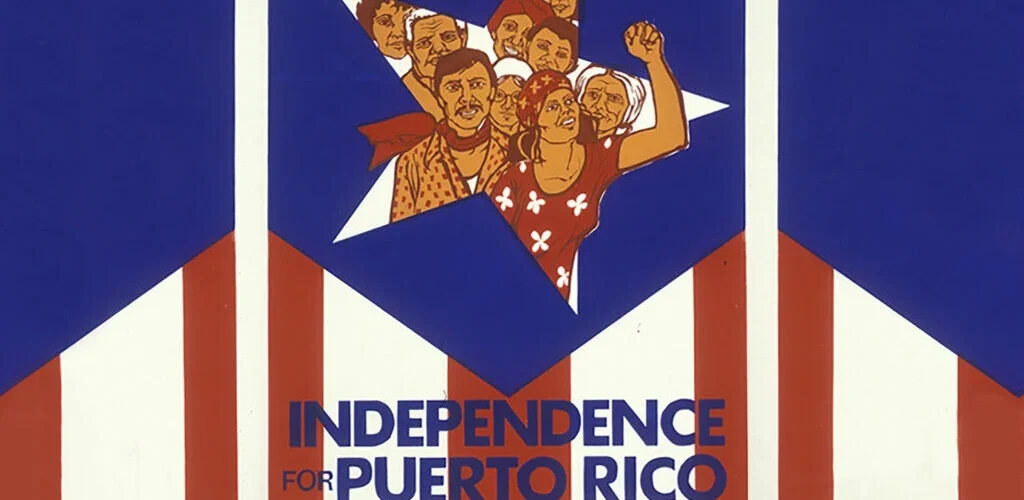
This flyer is a political statement aimed at generating support for Puerto Rican independence and the release of imprisoned activists. The poster seeks to rally communities, specifically those in New York and Chicago, to demonstrate against the incarceration of three independence leaders. Through this document, the San Patricio Corps Solidarity Organization calls on White people to participate alongside the independence movement to help defeat US imperialism and win a society free of oppression. Visual elements include an image of a hand holding a gun, draped in a Puerto Rican flag, alongside an obscured picture of the prison.

Speech by Guillermo Suarez at an Anti-Klan Conference (1981)

1946-1989, Colonized, Date, Defining the Enemy, Imperialism, Latino, Subjectives of Refusal, White Supremacy

This is a transcript of a speech by Guillermo Suarez, a member of the Movimiento de Liberacion Nacional, a national Puerto Rican and Chicano/Mexicano organization. In his 1981 address, Suarez highlighted the need to resist white supremacy and U.S. imperialism, particularly in the occupied territories of the Southwestern United States. Direct actions and resistance mentioned include armed struggle and challenging the Klan, drawing inspiration from the Puerto Rican independence movement and historical figures who fought against oppression. The call to action emphasizes supporting prisoners of war, refusing to accept the status quo, advocating for the socialist reunification of Mexico, and for white North Americans to stand against white supremacy and acknowledge the right of colonized people to fight for their liberation.

The Proper Way to Harvest Wheat? Direct Action for the 90’s (1989)

1946-1989, Authority, Date, Defining the Enemy, Disruptive Spaces, Infrastructure/Data, Institutions, Sabotage/Ecotage, Tactics of Disruption, The 'Natural World'

This document highlights various forms of direct action and resistance employed by groups such as Plowshares, known for disarmament actions, and Earth First!, associated with environmental sabotage. The text also discusses clandestine political bombings carried out by groups like the Armed Resistance Unit, emphasizing the importance of building revolutionary movements and resisting state repression. It examines the successes and failures of these actions, focusing on the need for strong networks, security, and a broader revolutionary vision. 

12-Point Plan for Milwaukee – Socialist Party of Milwaukee (1992)

1990-2010, Date, Defining the Enemy, Disruptive Spaces, Privatization, Urban Spaces

This document outlines the Socialist Party of Milwaukee’s 12-point plan for the city, published in January 1992. It details the party’s vision for progress across multiple sectors, such as economic growth and neighborhood revitalization. The plan advocates for a socialist approach to urban issues, prioritizing community empowerment and social justice as key solutions.

Women! Join Our Celebration of Independence – Bread and Roses (n.d.)

Defining the Enemy, Patriarchy, Privatization, Subjectives of Refusal, Women

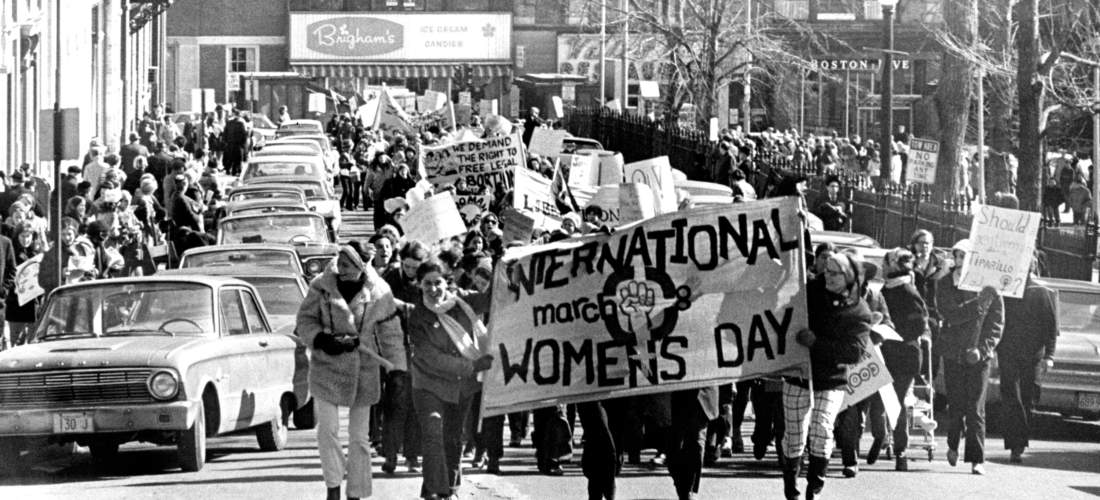
This document is a call to action, urging women to join a movement led by Bread and Roses, a socialist women’s liberation group, on International Women’s Day in Boston, Massachusetts. The flyer presents a declaration of women’s independence, advocating for self-determination in key areas such as the economy, family, bodily autonomy, and education, while demanding equal rights and an end to various forms of discrimination and oppression. It also outlines a list of demands, including access to free medical care, like abortion and birth control, economic equality, the elimination of degrading portrayals of women in schools and media, and the establishment of free, community-controlled childcare centers.

W.A.S.P Manifesto – Women Armed for Self-Protection (1974)

1946-1989, Date, Defining the Enemy, Patriarchy, Sabotage/Ecotage, Subjectives of Refusal, Subjects Redefined, Tactics of Disruption, Women

Founded in 1974 in Dallas, Texas, Women Armed for Self-Protection (W.A.S.P.) was created in response to the increasing incidents of rape and the societal attitudes that enabled such violence. In their 1974 manifesto, the organization voiced strong condemnation of the legal system, cultural norms, and the tendency to blame victims, which allowed the crime of rape to perpetuate and remain under-prosecuted. W.A.S.P. advocated for women to incorporate self-defense into their lifestyles and supported those who took aggressive retaliation actions against rapists. To achieve this, the organization aimed to train women in weaponry and promote the sharing of self-defense knowledge and experiences.

Herstory Monologues – Women Against Imperialism (1990)

1990-2010, Date, Defining the Enemy, Imperialism, Occupation, Patriarchy, Sabotage/Ecotage, Strike, Subjectives of Refusal, Tactics of Disruption, The Bourgeoisie, Women

This 1990 performance piece, “herstory,” amplifies the voices of diverse women confronting oppression while celebrating resistance. Personal anecdotes are intertwined with political demands, highlighting the interconnectedness of individual experiences and larger social justice movements. The piece explores various forms of direct action, from smashing scales to challenge patriarchal beauty standards, to organizing against unjust working conditions. It also touches on defending abortion clinics, marching for women’s rights, and advocating for the dismantling of the U.S. military.

“Dozens of women who stumbled by the rally lined up to take a turn with the sledge hammer to obliterate this hated symbol of women’s oppression and smash the scales!”

Political Prisoners and Lesbian Resistance – Jennie McKnight (1989)

1946-1989, Authority, Date, Defining the Enemy, Disruptive Spaces, Infrastructure/Data, Institutions, Patriarchy, Queer, Sabotage/Ecotage, Subjectives of Refusal, Tactics of Disruption, White Supremacy, Women

This 1989 interview from Gay Community News features political activists Linda Evans, Laura Whitehorn, and Susan Rosenberg, who were imprisoned for aiding and abetting the bombing of military and government facilities. In the interview, they share their experiences as activists, their lesbian identities, and their time in prison. They advocate for various direct actions, including demonstrations, militant AIDS activism, and collective resistance to injustices they viewed as immoral and illegal, such as racism.

“One of my favorite slogans is “Build to Win,” which is a slogan from the Black Liberation Army. They have always had a perspective that really is about victory. It’s really important that the gay liberation movement has taken that on in such a serious way – that winning is what we really want to do, not just make a protest or make reforms.”

“Resistance is not a crime.”

We Still Ain’t Satisfied! – Women Against Imperialism (n.d.)

Defining the Enemy, Imperialism, Patriarchy, Subjectives of Refusal, Women

This document is a powerful declaration addressing the numerous injustices and hardships faced by women. It condemns gender-based violence, racial discrimination, and the absence of sufficient support systems. The statement critiques government policies and societal views on reproductive rights, healthcare, education, and the treatment of marginalized communities. It also emphasizes the struggles women face in asserting their sexuality and advocating for their freedom. At its core, the document expresses dissatisfaction and a call for continued action.

Women Deface the Presidio Army Base – Women Against Imperialism (n.d.)

Defining the Enemy, Disruptive Spaces, Imperialism, Institutions, Occupation, Sabotage/Ecotage, Subjectives of Refusal, Tactics of Disruption, Women

On International Women’s Day, between 150 and 200 women occupied the exterior of the Presidio Army Base in San Francisco. The event, coordinated by Women Against Imperialism, sought to criticize U.S. militarism and imperialism. The demonstrators marked buildings with blood, removed the American flag, and displayed signs and puppets to express their opposition to the base’s involvement in colonization, war, and oppression. They showed support for global women’s movements and called for an end to U.S. intervention in Central America, as well as violence against women.

Statement for International Women’s Day Demonstration – Judy Clark (n.d.)

Colonized, Defining the Enemy, Imperialism, Patriarchy, Subjectives of Refusal, White Supremacy, Women

This statement by Judy Clark, a member of the Weather Underground and May 19th Communist Organization, celebrates International Women’s Day and advocates for direct action against U.S.-led imperialism. She rejects reformism and calls for active resistance to the U.S. war machine, stressing solidarity with Third World liberation movements and political prisoners. Clark emphasizes revolutionary boldness, proletarian internationalism, and support for national liberation struggles, highlighting the historical significance of women’s revolutionary actions.

“For these movements to become a significant force, people must move from merely protesting specific government policies or responding to each imperialist escalation to actively resisting and combatting the US war machine.”

“WOMEN-CONFRONT THE U.S. WAR MACHINE!”

Principles of Unity – Women’s Committee Against Genocide (1981)

1946-1989, Colonized, Date, Defining the Enemy, Imperialism, Patriarchy, Subjectives of Refusal, White Supremacy, Women

The Women’s Committee Against Genocide is an anti-imperialist group dedicated to advancing women’s liberation by opposing US-led imperialism and supporting the struggles of oppressed women worldwide. This 1981 draft by the committee highlights imperialism as a system that exploits Third World nations as well as stresses the significance of Third World women’s efforts toward national liberation. The committee calls for the fight against white and male supremacy as essential parts of the broader anti-imperialist movement, arguing that these forms of oppression are tools used by imperialism to subjugate women. Additionally, through their manifesto, they advocate for aligning with the leadership of national liberation movements, promoting lesbian liberation, combating sterilization abuse, and engaging in other direct actions.

The Occupied Museum – Noah Fischer (2014)

2011-Present, Blockade/Barricade, Date, Defining the Enemy, Disruptive Spaces, Institutions, Occupation, Privatization, Sabotage/Ecotage, Tactics of Disruption, The Bourgeoisie

In this piece, Noah Fischer, a founding member of the Occupy Museums movement, examines the group’s efforts to address economic inequality in the art world and promote alternative models of economic exchange. Emerging from the Occupy Wall Street protests, the movement views museums as vehicles for reinforcing capitalist ideals. In response, Occupy Museums uses direct actions—such as uninvited performances, public gatherings, and the repurposing of museum spaces—to challenge these structures. The goal is to reclaim public spaces, inspire greater community involvement, and create opportunities for creative expression and collective unrest.

The Women’s Question is a Class Question – Celia Sojourn (n.d.)

Defining the Enemy, Disruptive Spaces, Institutions, Patriarchy, Subjectives of Refusal, The Bourgeoisie, Women

This document, authored by Celia Sojourn, a member of the Weather Underground—a radical Marxist militant group active in the United States from 1969 to 1977—argues that the “women’s question” is inherently tied to class struggle. Sojourn emphasizes that women’s oppression cannot be understood in isolation, as it is deeply intertwined with their social class and economic status, and must be addressed as part of a broader fight against class inequality. Her argument underscores the intersectionality of oppression, where gender, race, and class intersect to create distinct experiences of inequality. Sojourn asserts that true liberation for women can only be achieved through a revolution that dismantles class society and establishes socialism. She advocates for the creation of class-conscious women’s organizations, the education of women to understand who their “real enemies” are, and calls for militant action to bring about the societal transformation she envisions.

Women, the Unions and Work, or… What is Not to Be Done – Selma James (1972)

1946-1989, Date, Defining the Enemy, Disruptive Spaces, Patriarchy, Subjectives of Refusal, The Bourgeoisie, The Home, The Workplace, Women

This 1972 pamphlet, written by Selma James—an American writer, feminist, and social activist who co-founded the International Wages for Housework Campaign—critiques the shortcomings of traditional left-wing and trade union approaches to women’s liberation. The campaign, a grassroots network of women, advocated for the recognition and compensation of caregiving work, both inside and outside the home. James argues that unions have historically overlooked the specific types of exploitation women face, such as unequal wages and the undervaluation of housework. She calls for a women’s movement that operates independently of unions and existing political systems, advocating for demands like shorter work hours, guaranteed income, bodily autonomy, and equal pay. The pamphlet highlights the importance of women organizing on their own terms to challenge capitalist exploitation and create a revolutionary movement based on their unique experiences and analysis, rather than relying on traditional structures.

“It will take some time, but then Rome wasn’t destroyed in a day.”

Launching Statement of the ‘Solidarity Committee with Mahalla Workers’ (2007)

1990-2010, Date, Defining the Enemy, Disruptive Spaces, Occupation, Strike, Subjectives of Refusal, Tactics of Disruption, The Bourgeoisie, The Workplace, Workers

This is a launching statement of the ‘Solidarity Committee with Mahalla Workers,’ formed on September 25, 2007, to express their support for the workers’ strike at the Mahalla Spinning and Weaving Company in Egypt. The strike, which began in 2006 in Mahalla al-Kubra, was part of a broader movement driven by textile workers fighting for better wages and improved working conditions. This labor struggle persisted through the 2011 Egyptian revolution. In the statement, the committee criticizes both the company’s management and the Egyptian government for their efforts to suppress the workers’ demands for dignity, fair wages, and basic labor rights. The committee calls for a variety of actions in support of the workers, such as organizing sit-ins, issuing solidarity statements, and continuing the strike in defiance of the regime’s intimidation and repression.

International Working Women’s Day – N. Lenin (1921)

1840-1945, Date, Defining the Enemy, Disruptive Spaces, Patriarchy, The Bourgeoisie, The Home, The Workplace

This essay, written by N. Lenin in 1921 and published in Pravda, the official newspaper of the Communist Party of the Soviet Union from 1918 to 1991, argues that women’s liberation is inherently tied to the overthrow of capitalism, which oppresses women both economically and domestically. Lenin emphasizes that women’s emancipation is central to the success of the Bolshevik Revolution. He calls for significant changes to dismantle the capitalist system and liberate women from “household bondage.” Lenin also exposes the falsehood of bourgeois democracy, stresses the importance of international solidarity, and advocates for the active involvement of the masses in political life.

“Nothing can stop the tide of the peoples’ liberation from the imperialist yoke and the liberation of working men and women from the yoke of capital. This cause is being carried forward by tens and hundreds of millions of working men and women in town and countryside. That is why this cause of labour’s freedom from the yoke, of capital will triumph all over the world.”

Free Puerto Rico! – New Movement in Solidarity with Puerto Rican Independence and Socialism (1986)

1946-1989, Colonized, Date, Defining the Enemy, Disruptive Spaces, Imperialism, Institutions, Occupation, Subjectives of Refusal, Tactics of Disruption

This document is a May 1986 newsletter published by the New Movement in Solidarity with Puerto Rican Independence and Socialism, focusing on Puerto Rico’s ongoing fight for independence from the United States. It highlights various direct actions, including protests against the construction of a Voice of America radio station on Puerto Rican land and demonstrations aimed at shutting down two federal maximum security prisons. The newsletter also draws comparisons between the US military presence in Puerto Rico and the Philippines, pointing out the harmful impacts of US colonialism and military intervention in both countries. Additionally, it features an interview with Jorge Farinacci, a key leader in the movement, who shares insights into the political landscape in Puerto Rico and Puerto Rican Independence 16’s legal defense efforts.

Communique From an Absent Future – Research and Destroy (2009)

1990-2010, Authority, Blockade/Barricade, Consciousness Raising, Date, Defining the Enemy, Disruptive Spaces, Institutions, Occupation, Strike, Students, Subjectives of Refusal, Tactics of Disruption, The Bourgeoisie, Workers

This pamphlet critiques the modern university system, claiming that it has become a tool of capitalism designed to produce obedient workers rather than encourage independent thought or true education. The authors reject gradual reforms and instead advocate for direct action and rebellion to dismantle the capitalist structure and build a liberated society. They draw inspiration from historical student protests in France and Greece, stressing the necessity of unity between students and workers to achieve their goals. Ultimately, the pamphlet calls for a complete societal overhaul, moving beyond the confines of capitalism.

“We must begin by preventing the university from functioning. We must interrupt the normal flow of bodies and things and bring work and class to a halt. We will blockade, occupy, and take what’s ours.”

“We’ll see you at the barricades.”

How to Fire Your Boss: A Workers’ Guide to Direct Action – Industrial Workers of the World (1968)

1946-1989, Authority, Date, Defining the Enemy, Disruptive Spaces, Sabotage/Ecotage, Strike, Subjectives of Refusal, Tactics of Disruption, The Bourgeoisie, The Workplace, Workers

This pamphlet, first released by the Industrial Workers of the World (IWW) in 1968 and revised in 2022, promotes direct action as a powerful tool for workers to secure better conditions at work. It outlines a range of tactics, from slowdowns and work-to-rule strategies to more assertive actions like “marches on the boss” and organizing sick-outs. Emphasizing the critical role of solidarity among workers, the pamphlet includes historical examples of direct action campaigns that have achieved success.

How to Sack Your Boss: A Workers’ Guide to Direct Action (n.d.)

Authority, Defining the Enemy, Disruptive Spaces, Sabotage/Ecotage, Strike, Subjectives of Refusal, Tactics of Disruption, The Bourgeoisie, The Workplace, Workers

This document is an excerpt from a worker’s guide that promotes direct action against employers. It critiques traditional resistance methods like strikes as ineffective, instead advocating for alternative tactics such as slowdowns, delivering excellent service to disrupt profits, adhering strictly to the rules, and fostering solidarity to compel employers to meet workers’ demands. The author (unknown) offers examples from various industries and historical periods to demonstrate how these methods can be effective, while also emphasizing the potential illegality of many of these actions.

The Cochabamba Water Wars: An Interview with Oscar Olivera (2011)

2011-Present, Blockade/Barricade, Date, Defining the Enemy, Disruptive Spaces, Indigenous, Occupation, Privatization, Strike, Subjectives of Refusal, Tactics of Disruption, Urban Spaces, We're Not Paying That, Workers

The Bolivian Water Wars were a series of protests and civil unrest against the privatization of water and rising water rates in the city of Cochabamba, primarily in 2000. This interview was conducted in 2011 with Oscar Olivera, a trade unionist and prominent leader of the famous Water Wars.

Radical Women Manifesto – Radical Women Publications (1975)

1946-1989, Consciousness Raising, Date, Defining the Enemy, Patriarchy, Subjectives of Refusal, Tactics of Disruption, Women

Radical Women, founded in 1967 in Seattle, Washington, is a revolutionary faction within the women’s movement and a prominent feminist voice on the Left. The organization fights against racism, sexism, homophobia, anti-trans discrimination, and labor exploitation, while advocating for multi-issue organizing that prioritizes the needs of the most marginalized communities. The 1975 Radical Women Manifesto: Theory, Program, & Structure critiques the capitalist system’s oppression of women, arguing that sexism stems from economic inequalities and the patriarchal family structure. It calls for a socialist revolution to achieve women’s liberation, while outlining the group’s political platform, principles, and organizational structure.

How to Throw a Squatted Dance Party – Anonymous (2018)

2011-Present, Alternative Spaces, Date, Defining the Enemy, Disruptive Spaces, Occupation, Privatization, Self Institution, Tactics of Disruption, The Bourgeoisie

This is a step-by-step anonymous guide published on CrimethInc.’s website detailing how to throw a squatted dance party. Information on gear, location, how to promote the event, handling the authorities, among other important instructions are included in the document.

White House Sit-In Flyer – Students for a Democratic Society (1965)

1946-1989, Date, Defining the Enemy, Disruptive Spaces, Imperialism, Institutions, Occupation, Students, Subjectives of Refusal, Tactics of Disruption

Students for a Democratic Society (SDS) was a national student activist organization in the US during the 1960s that sought to establish a New Left focused on civil rights, peace, and universal economic security. In 1965, SDS held a mass sit-in at the White House to protest the Vietnam War. This document is a flyer for the event, detailing the various demands, plans, and sponsors of the group.

Open Letter from Students for Justice in Palestine to Universities (2024)

2011-Present, Authority, Date, Defining the Enemy, Disruptive Spaces, Imperialism, Institutions, Students, Subjectives of Refusal

This letter was released by Students for Justice in Palestine on April 21, 2024. In the document, SJP lays out its mission, sets forth various demands, expresses solidarity with SJPs across the country, and makes clear its determination to reclaim student power on campus to pursue justice and liberation for the people of Palestine.

The Written Resistance #3 – National Students for Justice In Palestine (2024)

2011-Present, Authority, Blockade/Barricade, Date, Defining the Enemy, Disruptive Spaces, Imperialism, Institutions, Students, Subjectives of Refusal, Tactics of Disruption

This is the third edition of the newsletter written by a compilation of individual authors and published by the National Students for Justice in Palestine. The importance of discomfort, the global struggle against imperialism, information on the Palestine Solidarity Movement, accounts of personal experiences, various calls to action, and other important topics were included in the newsletter.

The Written Resistance #2 – National Students for Justice In Palestine (2024)

2011-Present, Authority, Blockade/Barricade, Date, Defining the Enemy, Disruptive Spaces, Imperialism, Institutions, Students, Subjectives of Refusal, Tactics of Disruption

This is the second edition of the newsletter written by a compilation of individual authors and published by the National Students for Justice in Palestine. Smiling as an act of resistance, Palestinian educational institutions, the role of US students and workers in the struggle for Palestine, decolonization as a practice, recommendations for student organizing, and other topics were included in the newsletter.

In Defense of the Right to Free Speech and Peaceful Protest on University Campuses – American Association of University Professors (2024)

2011-Present, Authority, Date, Defining the Enemy, Disruptive Spaces, Institutions, The Bourgeoisie

On April 29, 2024, the American Association of University Professors (AAUP) released a statement defending the right to free speech and peaceful protest on college campuses, condemning the militarized response to these forms of student activism, expressing solidarity with all AAUP chapters and members nationwide who have supported these student groups, and calling on others to sign the statement.

How to Submit an Anonymous Communiqué and Get Away With It (2024)

2011-Present, Authority, Date, Defining the Enemy

A communiqué is a report on direct actions that is typically shared either online or in print publications. This is a guide on how to submit an anonymous communiqué online. Key terms, step-by-step instructions, relevant websites, and other important information is included in the document.

Blockade, Occupy, Strike Back (2012)

2011-Present, Authority, Blockade/Barricade, Date, Defining the Enemy, Occupation, Sabotage/Ecotage, Strike, Students, Subjectives of Refusal, Tactics of Disruption

This is a guide that was distributed by anarchists during the 2012 student strikes and social conflicts in Montreal. The document provides step-by-step instructions on how to form crews, how to create paint bombs, how to occupy a space, how to conduct a street demonstration, as well as other important tactics.

A Call to Bucknell Faculty, Staff, and Students – Bucknell Students for Justice in Palestine (2024)

2011-Present, Authority, Date, Defining the Enemy, Disruptive Spaces, Imperialism, Institutions, Strike, Students, Subjectives of Refusal, Tactics of Disruption, The Bourgeoisie

This is a statement made by the Students for Justice in Palestine at Bucknell University (BUSJP), located in Lewisburg, Pennsylvania. The group set forth four demands for the university including disclosing the identities of all donors and investment portfolios, divesting from companies that fund the Israeli government, denouncing Israel and the repression of university students across the country who support Palestine, as well as detaching from corporate partnerships that support the genocide. Additionally, BUSJP calls on everyone at the university to join the student movement and participate in the strike by withholding their labor.

“If there is no functioning university in Gaza, there should be no functioning university here.”

The Written Resistance #1 – National Students for Justice in Palestine (2024)

2011-Present, Authority, Blockade/Barricade, Date, Defining the Enemy, Disruptive Spaces, Imperialism, Institutions, Occupation, Students, Subjectives of Refusal, Tactics of Disruption

This is the first edition of the newsletter written by a compilation of individual authors and published by the National Students for Justice in Palestine. The right to resist, a history of the Israeli-Palestinian conflicts, information on the BDS (Boycott, Divestment, and Sanctions) and the Palestinian Feminist Collective movements, accounts of personal experiences, various calls to action, and other topics were included in the newsletter.

May-Day Strike by French Postal Employees (1924)

1840-1945, Date, Defining the Enemy, Disruptive Spaces, Sabotage/Ecotage, Subjectives of Refusal, Tactics of Disruption, The Bourgeoisie, The Workplace, Workers

This is a screenshot of an excerpt from a 1924 newspaper on the proposed May-Day strike by French postal workers. In an effort to obtain a raise in wages, these postal workers sought to disrupt the operation of the mail service by enforcing all minor regulations, thus slowing down the service.

Joint Statement by Harvard Palestine Solidarity Groups on the Situation in Palestine (2024)

2011-Present, Authority, Date, Defining the Enemy, Disruptive Spaces, Imperialism, Institutions, Occupation, Students, Subjectives of Refusal, Tactics of Disruption

In this piece, Palestine Solidarity Groups at Harvard University take a stand against the violence committed against Palestinians and call on the Harvard community to take action. This is a part of a string of pro-Palestinian protests on college campuses across the United States against both the Israel-Hamas War and the financial ties these various universities have with Israel.

Press Release – Columbia Students for Justice in Palestine (2024)

2011-Present, Authority, Date, Defining the Enemy, Disruptive Spaces, Imperialism, Institutions, Occupation, Students, Subjectives of Refusal, Tactics of Disruption

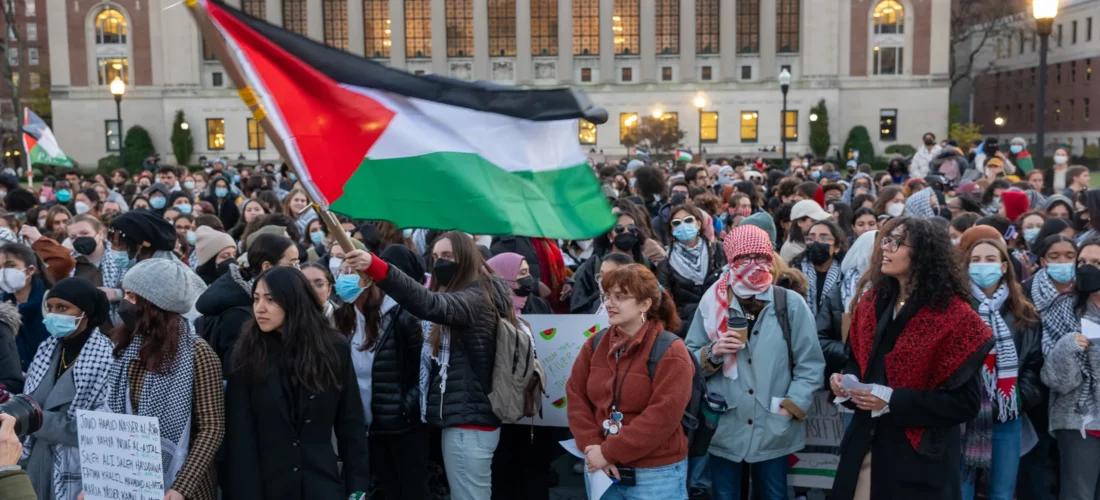
This is a press release from the Columbia Students for Justice in Palestine’s Twitter page. In the document, the organization demands their voices be heard, likens their quest for liberation to that of the Civil Rights Movement and other anti-war protests, as well as vows to remain in place until their demands are met. These demands include a complete divestment of all finances linked to the Israeli apartheid in Palestine, complete transparency of all of Columbia’s financial investments, and amnesty for everyone at the university who has been penalized for participating in the movement for Palestinian liberation.

Call to Action – National Students for Justice in Palestine (2024)

2011-Present, Authority, Date, Defining the Enemy, Disruptive Spaces, Imperialism, Institutions, Occupation, Students, Subjectives of Refusal, Tactics of Disruption

This was a call to action posted on the social media accounts of the National Students for Justice in Palestine (SJP) on April 19, 2024. In the document, the National SJP criticizes the decision of the universities to choose profit and reputation over the lives of those in Palestine and the will of the students. The organization expresses solidarity with other chapters of SJP across the nation and calls on them for continued action.

Press Release from The New School Students for Justice in Palestine

2011-Present, Authority, Date, Defining the Enemy, Disruptive Spaces, Imperialism, Institutions, Occupation, Students, Subjectives of Refusal, Tactics of Disruption

Over the past weeks at various universities across the United States, students have erected encampments to demand action to end Israel’s war on the Gaza Strip. These protests have arisen on the campuses of some of the US’ highest academic institutions, including Harvard and Columbia. This document is a press release from The New School Students for Justice in Palestine, a student-organization at The New School in New York City. In the press release, they expressed their solidarity with other student protesters across the country, described why they established the encampment, detailed the rich history of student protest at the school, and set forth a list of demands for the university. Some of these demands included a complete divestment from all corporations that benefit from and are complicit in the ongoing genocide against the Palestinian people, greater protection for pro-Palestinian protesters, a full academic boycott of Israeli academic and cultural institutions, among others.

The Great Berkeley Rent Strike – Berkeley Tenants Union (1969)

1946-1989, Authority, Date, Defining the Enemy, Disruptive Spaces, Privatization, Strike, Subjectives of Refusal, Subjects Redefined, Tactics of Disruption, The Bourgeoisie, Urban Spaces, We're Not Paying That

The Berkeley Tenants Union was established in 1969 and sought to organize low-income tenants to join in protest against rent increases, eviction, and poor housing conditions. This document is a flyer produced in 1969 by the union explaining the reasoning, goals, and strategy behind the city-wide renters strike as well as the various risks activists might face for carrying out these direct actions. Flyers such as this one began distribution during the end of 1969 and continued up until February of 1970, when the strike formally took place.

NAPA Demonstrates at St. Mary’s – Network Against Psychiatric Assault (1975)

1946-1989, Authority, Date, Defining the Enemy, Disruptive Spaces, Institutions, Occupation, Tactics of Disruption

This is a call to action by the Network Against Psychiatric Assault, to join them in their direct actions against the psychiatric treatment program at St. Mary’s McAuley Neuropsychiatric Institute in San Francisco. In the document, NAPA brings attention to the inhumane and coercive techniques employed at St. Mary’s against patients, some of which include sheeting, sleep therapy, work tasks, among others. Additionally, NAPA has expressed its intent to theatrically demonstrate the sheeting practices of St. Mary’s in front of television cameras to draw awareness to the practice in an act of further resistance.

Letter Protesting Marcos’ Visit – Philippine Solidarity Network and Coalition Against the Marcos Dictatorship (1982)

1946-1989, Authority, Date, Defining the Enemy, Disruptive Spaces, Imperialism, Institutions, Occupation, Tactics of Disruption

This document is a letter from the Philippine Solidarity Network and Coalition Against the Marcos Dictatorship requesting support for opposing the state visit of the President of the Philippines, Ferdinand Marcos. The letter focuses attention on Marcos’ track record of grave human rights violations and details the role of the Philippines as the United States’ strategic mainstay for military strategy in the Pacific. The organization calls on supporters to attend their direct action campaign at the Philippine Consulate in San Francisco and to take other resistance measures to oppose Marcos’ state visit.

29 Ways to Say No! – John Brown Anti-Klan Committee (1989)

1946-1989, Authority, Date, Defining the Enemy, White Supremacy

The John Brown Anti-Klan Committee, founded in 1978, was an anti-racist organization within the United States that took direct actions against the Ku Klux Klan and other white supremacist organizations in addition to publishing literature on the subject. This document, published by the organization, details 29 ways to resist racism, sexism, homophobia, and other forms of discrimination.

Documents on Unlock Apartheid’s Jails Campaign (1987)

1946-1989, Authority, Date, Defining the Enemy, Disruptive Spaces, Institutions, White Supremacy

The Unlock Apartheid’s Jails Campaign, initiated by The Africa Fund, fought for the release of detainees and political prisoners in South Africa. This compilation of documents included a letter from Dumisani S. Kumalo, a coordinator of the campaign, as well as various newspaper articles attached by him that detail the success of the campaign on focusing the nation’s attention on South Africa’s prisoners of conscience.

Communique From Some Warriors in South Dakota (1975)

1946-1989, Authority, Colonized, Date, Defining the Enemy, Disruptive Spaces, Imperialism, Indigenous, Subjectives of Refusal, Subjects Redefined, The 'Natural World', White Supremacy

This document, written by Native American Warriors from South Dakota, was addressed to Prairie Fire, the Weather Underground, and all third world and anti-imperialist allies. The Native American Warriors called on these groups to help them liberate their homelands and connected the Vietnamese victory in Vietnam to their struggle against US empire and imperialism.