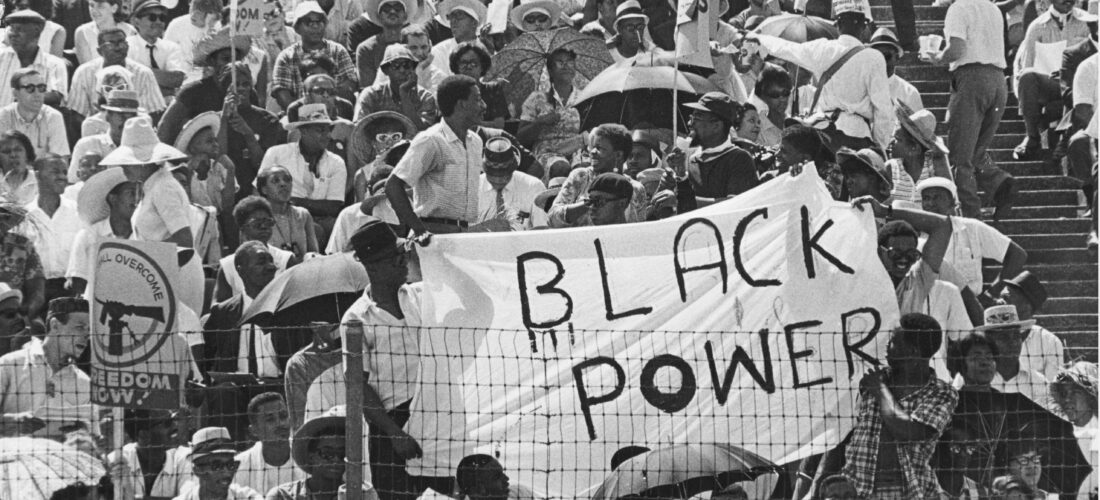
Black Liberation Will Put a Stop to the Klan, the Nazis & Killer Cops – John Brown Anti-Klan Committee (n.d.)

Defining the Enemy, Self Institution, Tactics of Disruption, White Supremacy

This source discusses the ongoing struggle against white supremacist groups like the Ku Klux Klan and Nazis. It highlights acts of resistance, such as Black and anti-Klan demonstrators who fought the Klan and police in the streets, successfully forcing the cancellation of a planned march in Washington, D.C.. The document calls for building a movement that opposes white supremacist violence from groups like the Klan and Nazis, as well as from police, emphasizing the need to support the Black Liberation Movement and defend revolutionary organizations. Grounded in the historical fight for liberation, the source advocates for struggling for land and independence for a Black nation and forcefully states, “DEATH TO THE KLAN AND THE NAZIS!”

Why We Support Black Nationalism – John Brown Anti-Klan Committee (n.d.)

Defining the Enemy, Self Institution, Tactics of Disruption, White Supremacy

This document explores the concept of Black Nationalism, asserting its historical roots in the struggle for Black empowerment and self-determination in the United States. It highlights the economic disadvantages faced by Black Americans despite their historical contributions and labor. The text also touches upon the legacy of Malcolm X and the ongoing relevance of Black liberation movements, emphasizing the need for Black control over resources and political power. The author suggests that achieving genuine democracy requires addressing these historical and ongoing inequities.

Black Politics: A Journal of Liberation (1968)

1946-1989, Black, Date, Defining the Enemy, Imperialism, Sabotage/Ecotage, Self Institution, Subjectives of Refusal, Tactics of Disruption, White Supremacy

This collection of excerpts from Black Politics: A Journal of Liberation (Vol. 1, 1968) offers insights into the Black Power movement during a pivotal year. The document covers a variety of topics, including discussions on political strategy, international relations, and resistance against oppression. It also contains information regarding the historical context of the movement, including its connections to other global liberation struggles, and details about weapons and self-defense, reflecting the urgency and intensity of the era.

Political Prisoners, Prisons, and Black Liberation (May 1971)

1946-1989, Black, Date, Subjectives of Refusal

In this document, Angela Y. Davis begins with a discussion of unjust laws and black resistance. After historical analysis, Davis begins to discuss the judicial system and the political prisoner. This document ends with an examination of the struggle against fascism and racism.

“As the black liberation movement and other progressive struggles increase in magnitude and intensity, the judicial system and its extension, the penal system, consequently become key weapons in the state’s fight to preserve the existing conditions of class domination, therefore racism, poverty and war.”

Hunger and Revolt – Cartoons (1935)

1840-1945, Authority, Date, Defining the Enemy, Privatization, Subjectives of Refusal, The Bourgeoisie, Workers

This book is a collection of cartoons by Jacob Burck that comment on a vide range of political and economic struggles, such as fascism, imperialism, and black liberation, but has an underlying focus capitalism and the worker.

“It is necessary that you penetrate to this reality, that you see the truthful core of these presentations, until, with more and more ardent partisanship and more and more anger, you unite together.”

Henri Barbusse, Introduction