Disrupt (v) : to interrupt (an event, activity, or process) by causing a disturbance or problem; to drastically alter or destroy the structure of (something)
This is an in-depth guide provided by Earth First! on safe methods to climb and rig rope structures needed in direct action situations. Knots to learn, equipment checklists, the psychological aspects of climbing, safe climbing steps, and more are described and illustrated in detail throughout the packet.
This is a call to action from Project Baldwin against the American Legislative Exchange Council’s (ALEC) November meeting in Scottsdale, Arizona. Project Baldwin argues that ALEC is an organization that brings corporations and legislators together to draft legislation that destroys the environment, increases the criminalization, incarceration, and deportation of individuals, and divides indigenous communities, all while those involved continue to profit from these new laws. Project Baldwin asserts that in 2009 alone, over 200 bills that ALEC helped organize were passed into federal law. The group is calling on individuals to join the fight for four days in Scottsdale, Arizona, and help employ “a diversity of tactics” to stop ALEC’s November meeting from happening.
This article provides dated updates of the tactics of resistance used by activists against the construction of a gas plant and port at James Price Point in the Kimberley region of West Australia. The planned project would destroy endangered species like the sea turtle and their habitats, ruin the pristine natural ecosystems of the region, and have major social and economic impacts, as the Kimberley region relies heavily on tourism. The piece captures some of the disruptive actions taken by activists over the summer of 2011. These include locking themselves to bulldozers, establishing blockades of construction entry points, occupying space at the site, among others. This campaign was ultimately successful, as by 2014, the development of the plant was officially stopped.
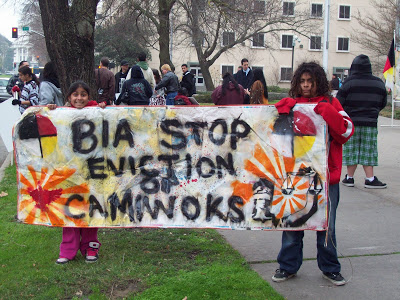
This letter, written in December of 2023 by the President of the Lac du Flambeau Band of Lake Superior Chippewa Indians, John Johnson Sr., to the Chairman of the Town of Lac du Flambeau, Matt Gaulke, communicated that the tribe would be enacting a Road Access Permitting Ordinance applying to all roads that cross tribal land. This would allow legal access to the roads in exchange for a fee, and came after months of contentious dispute over road access on the reservation. In January of 2023, the northern Wisconsin tribe barricaded four reservation roadways they argued were being illegally used. In this letter, the tribe president demanded nearly $10 million to resolve past trespass violations, and required payment of these damages before issuance of any road permits under this new ordinance.
In an excerpt from Chapter 1 of Ecodefense: A Field Guide to Monkeywrenching, David Foreman lists and describes 11 principles that monkeywrenching must follow in order to succeed as a campaign of resistance.
A journal entry written by an anonymous treesitter discusses issues of privilege and oppression, and how these issues relate to direct action campaigns to protect the forests.
“I see clearly that the forest will never be truly protected until this entire system of oppression is brought to a grinding halt.”
“Ultimately we will never save the forest until the bigger picture of oppression is addressed. As long as the rape and oppression of women continues so will the rape and oppression of the earth. It is one and the same.”
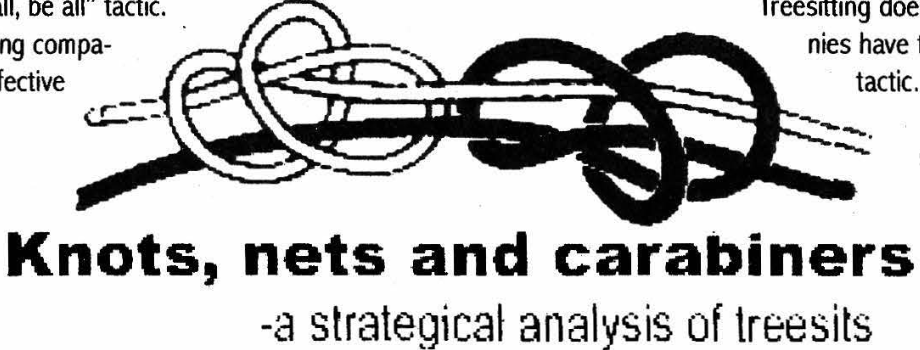
An excerpt from a Canopy Action Network newsletter provided a strategic analysis of the disruptive tactic of tree sitting. The history of this action was discussed in detail, including a description of the development of tree sitting techniques over time.
“As seen with the cancellations of timber sales like Watch Mountain, Harry Thomas, Kaisen Gulch, Freshwater and portions of Snog, a well timed, thoughtful strategic treesit with strong community support can change the fate of a forest. However, tree sitting is just one of many tactics. Let’s not limit ourselves. We should never forget the beauty of imagination, the wisdom of strategy and the bite of surprise. The sky’s the limit!”
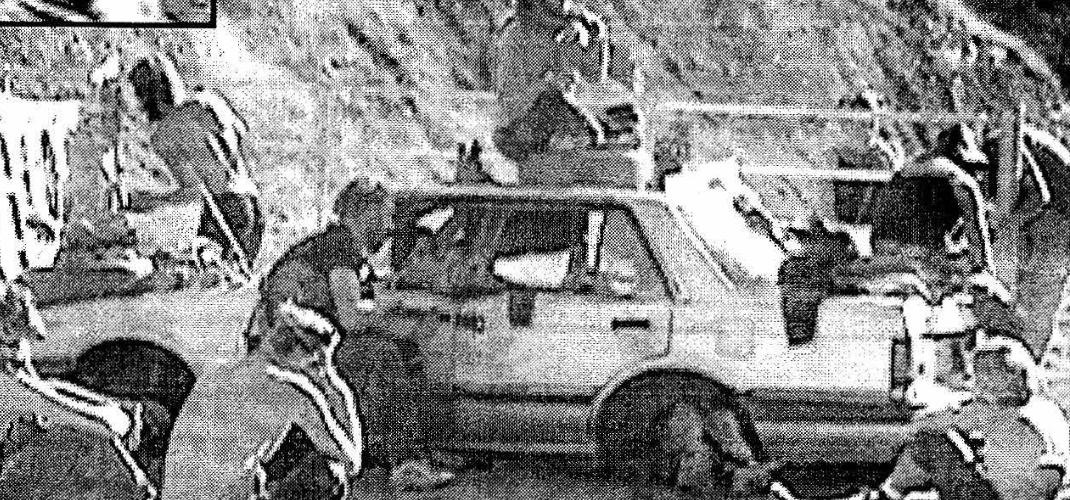
A member of the Mattole Forest Defenders described the group’s actions against logging plans to cut down the remaining Northern California coastal old-growth Douglas fir trees. Blockade structures were built, trees were occupied, and reinforcements from the Mattole Forest Defenders were convoked. The piece concluded with a call to action to help defend what remains of the forest.
Extinction Rebellion UK published a statement detailing their rebellion against the government, and declaring the nullification of the bonds of the social contract as a result of the government’s failure to directly address the sixth mass extinction event.
“We hereby declare the bonds of the social contract to be null and void, which the government has rendered invalid by its continuing failure to act appropriately. We call upon every principled and peaceful citizen to rise with us.”
This article, written by an American journalist under a pseudonym, details the actions taken by indigenous intertribal women of Nigeria against US oil companies ChevronTexaco and Shell. These oil companies, among others, have exploited the oil supply in Nigeria for decades, causing massive environmental degradation and destroying the lands needed for indigenous groups to maintain their livelihoods. Indigenous women of the Urhobo, Itsekiri, Ijaw, Ogoni, and Ilaje tribes united during the summer of 2002 by occupying operational headquarters, barricading the gates, threatening to commit acts of public nudity, as well as seizing control of four oil flow stations. Work was temporarily halted, and the actions taken at the oil flow stations resulted in a ChevronTexaco revenue loss of three million dollars.
“All will not be well for the oil companies in our areas until they start treating us as human beings that deserve a good life.” – IIaje leader B.I. Ugbasanin
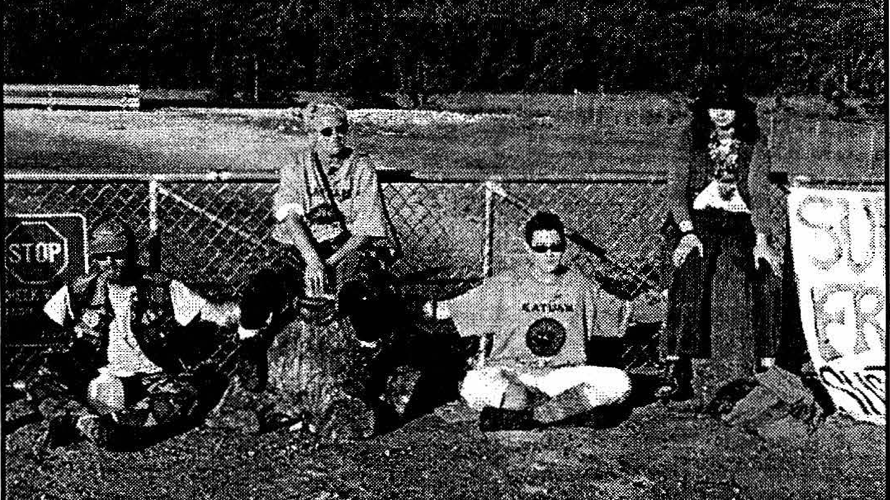
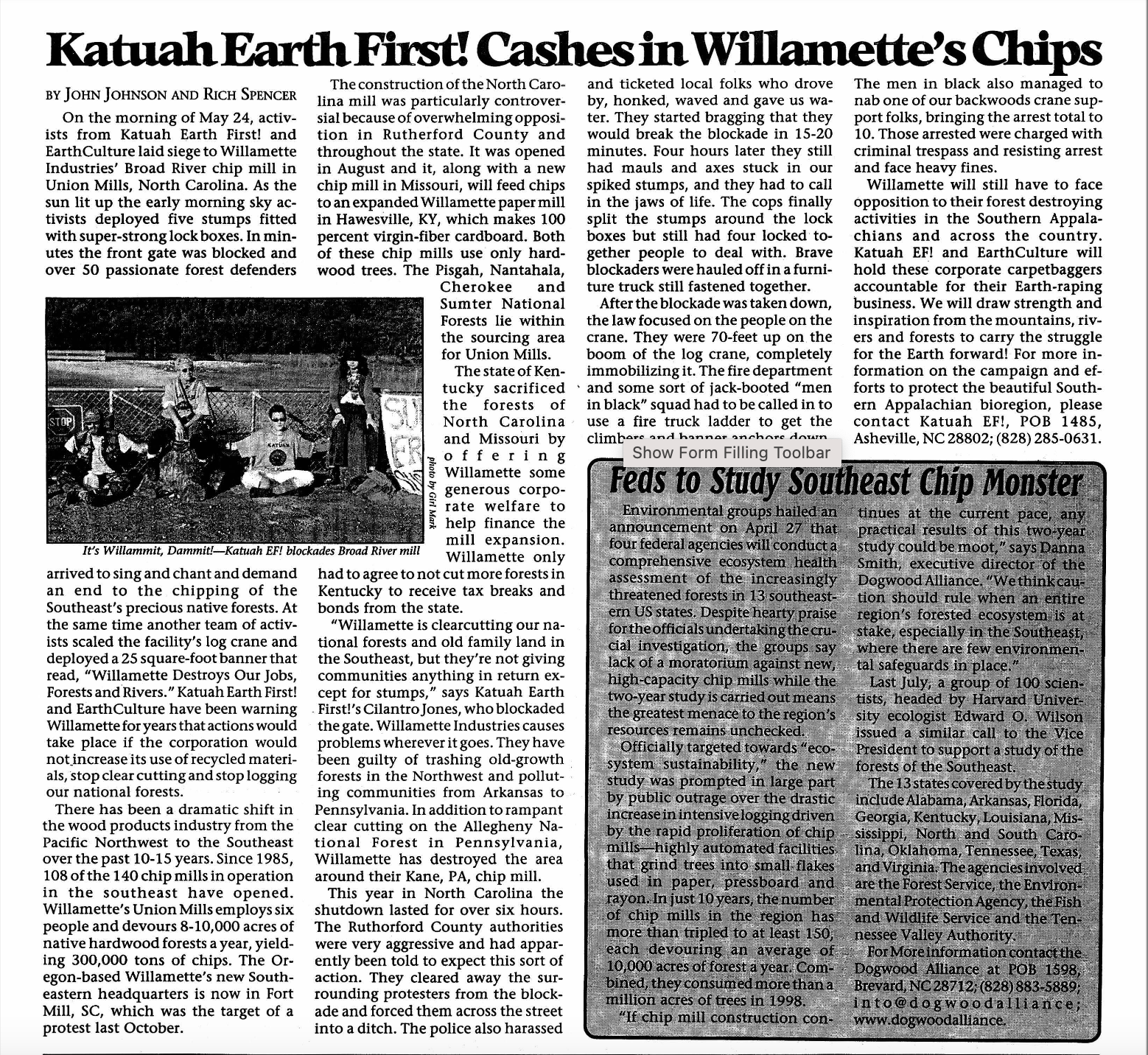
This article describes the tactics used by activists of Katuah Earth First! And EarthCulture to stop the continued chipping of native forests in the Southeast. Activists targeted the Willamette Industries’ Broad River chip mill in Union Mills, North Carolina by blockading the front gate and scaling the facility’s 70-foot log crane to deploy a banner stating, “Willamette Destroys Our Jobs, Forests, and Rivers.”
“Katuah EF! and EarthCulture will hold these corporate carpetbaggers accountable for their Earth-raping business. We will draw strength and inspiration from the mountains, rivers and forests to carry the struggle for the Earth forward!”
A communiqué from ALF activists describes the raid they conducted on the laboratories of the University of Iowa Psychology Department. All equipment and documents pertaining to the work of the vivisectors were destroyed, effectively shutting down the labs, with a total of 401 animals freed from testing. The animals were treated by a veterinarian and placed in homes. An addendum was added with the names and personal information of University of Iowa Psychology Department vivisectors.
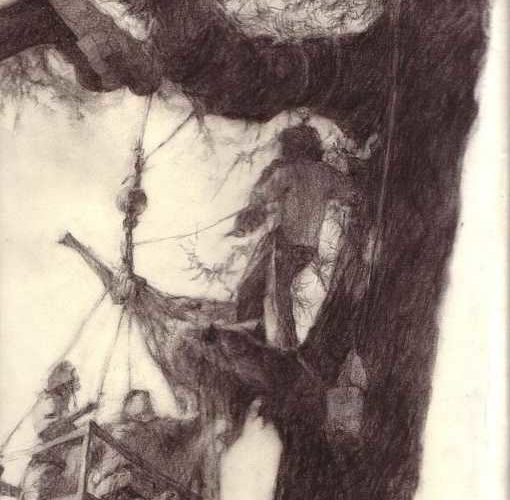
The article, written by an unnamed farmer participating in the occupation, describes the “tree-village” that has formed in a Humboldt County, California forest. The logging company Green Diamond has permits to destroy both the rare grove of residual Old-Growth Redwoods and the population of endangered Northern Spotted Owls in the forest. Those within the tree-village have tied over 40 trees together with rope, forming a defense network, and have called others to join the “tree-village,” and tackle imminent threats.
“…they have not backed off logging the grove we occupy, and we will continue to stand with this forest and it’s inhabitants until the threat is lifted.”
An interview with the California Valley Miwok Tribe in response to their occupation of their foreclosed home in Stockton, California. The group had planned to stand their ground and barricade themselves in the house until their problems were addressed by the Department of the Interior.
“We had to make our point clear that we were no longer going to be pushed out and forgotten like yesterday’s trash! We are human beings. We are not just names and/or numbers on a piece of paper.”
This undated, pseudonymous piece describes how Earth First! employs direct action methods such as civil disobedience and social arrest against those harming the earth. The article teaches how to effectively carry out demonstrations, civil disobedience, and other strategies necessary to achieve an intended goal.
“EARTH FIRST! is defined by its actions, the purpose of which is to: -ACTUALLY HALT THE DESTRUCTION, force the companies to quit, the Forest Dis-Service to withdraw its sale, the bulldozers to halt. Our primary purpose is to personally intercede, to “stop the bleeding.” The most “symbolic” action stops the saws, and leaves the log-trucks lined-up empty.”
“A clear message to the Earth rapists: No more “business as usual.””
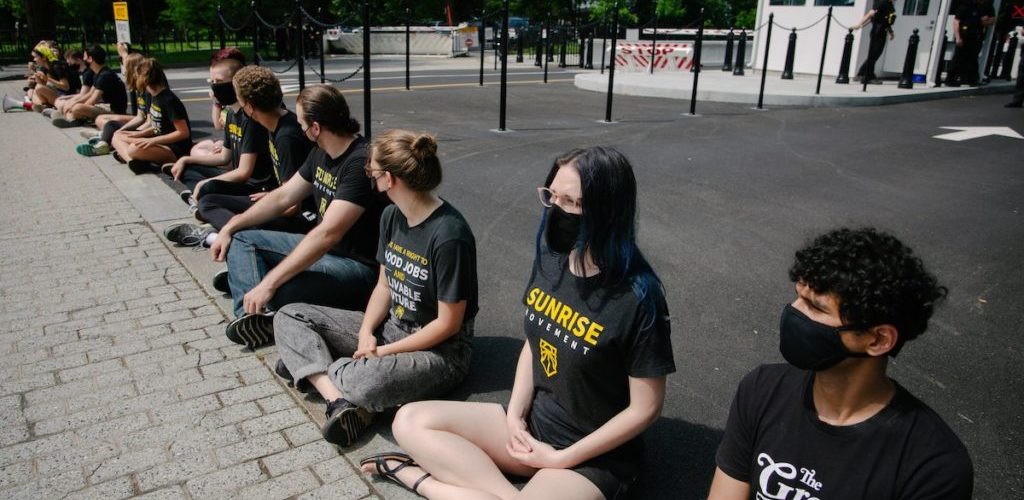
A statement by the Sunrise Movement describing the 500 individuals of the organization who occupied every entrance of the White House and the homes of two important senators in 2021, staging a sit-in to demand the Biden Administration pass an American Jobs Plan that addresses bold solutions to the rising climate crisis.
“So we will sit here until you commit to the side of climate justice, commit to an American Jobs Plan written with bold ambition against the climate crisis including a Civilian Climate Corps, and pass it through reconciliation immediately–or you will not pass a bill at all.”
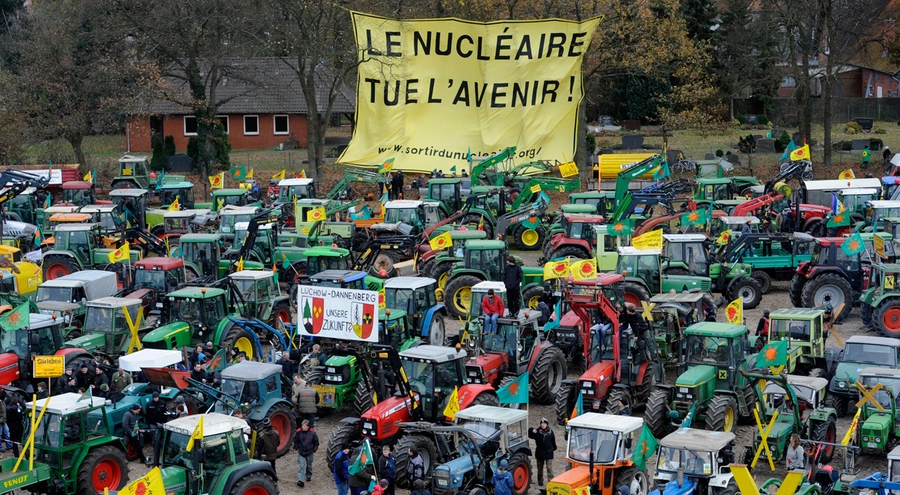
An article, found in the January-February 2007 issue of the Earth First! Journal, details the diversity of tactics French and German farmers, students, environmental activists, and anarchists, among others took in November of 2006 in an attempt to shut down a nuclear waste shipment traveling between the two countries. Sit-ins, erections of burning barricades, parked tractors in the path of the train were some of the tactics employed, in addition to actions taken to derail the police guarding the route, ultimately delaying the shipment and increasing nuclear waste transportation costs.