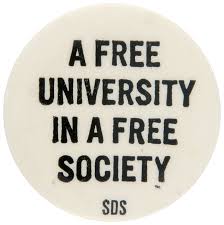
This statement was given by the president of Students for a Democratic Society, Paul Porter. It was given in 1965 at the close of their march on Washington in protest of the war in Vietnam. Similar to many activists of this period, Porter was arguing that the United States was acting in direct contradiction to our country’s democratic ideals in our involvement with this war. It was most opposed to the idea that the US was not defending freedom, but rather was promoting and continuing an imperialistic regime. While this call to action was aimed primarily at students, it was a larger call to action aimed at establishing a new level of political engagement.
students
The Port Huron Statement (1962)
1946-1989, Authority, Consciousness Raising, Date, Defining the Enemy, Self Institution, Strike, Students, Subjectives of Refusal, Subjects Redefined, Tactics of Disruption, Uncategorized, WorkersThe Port Huron Statement served as the first official statement of the Students for a Democratic Society and was an extension of a draft statement written by an SDS staffer, Tom Hayden. This document serves as an excellent call to action in a time of great societal upheaval. While the world was turning upside down due to a number of events, this group of students was attempting to outline the flaws of general society in their efforts to gain control over life’s unfortunate circumstances. Throughout the document, the author(s) discuss how the newfound world order in the 60’s was to address societal fears about the world’s affairs, which were to dominate. The goal of this society and statement was to prove to a younger generation that democratic systems were attainable. While this is a rather peaceful form of disruption in the way that it was calling for a return to an older, more democratic society, it is disruptive all the same in the way that it pushed back against the ever increasing societal understanding that violence and domination were the only ways to combat the fears and apprehensions of the age.
Our work is guided by the sense that we may be the last generation in the experiment with living.
The dominant institutions are complex enough to blunt the minds of their potential critics and entrenched enough to swiftly dissipate or entirely repel the energies of protest and reform, thus limiting human expectancies. Then, too, we are a materially improved society, and by our own improvements, we seem to have weakened the case for further change.
Occupy Egypt: From Cairo to Wall Street
2011-Present, Authority, Defining the Enemy, Disruptive Spaces, Institutions, Occupation, Subjectives of Refusal, Tactics of Disruption, The Workplace, Uncategorized, Urban Spaces, Workers
“The balance tipped. Going down to protest became acceptable Before then, people like members of my family would have said, ‘No way, how could you protest? It is not something people like us do.’ Then it became normal to protest. It became something we could do.”
Jawad Nabulsi
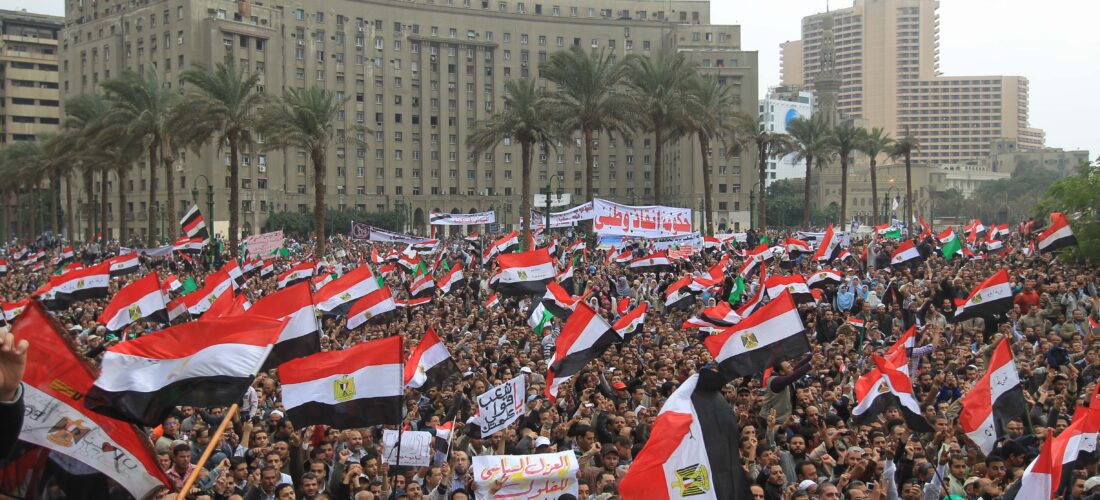
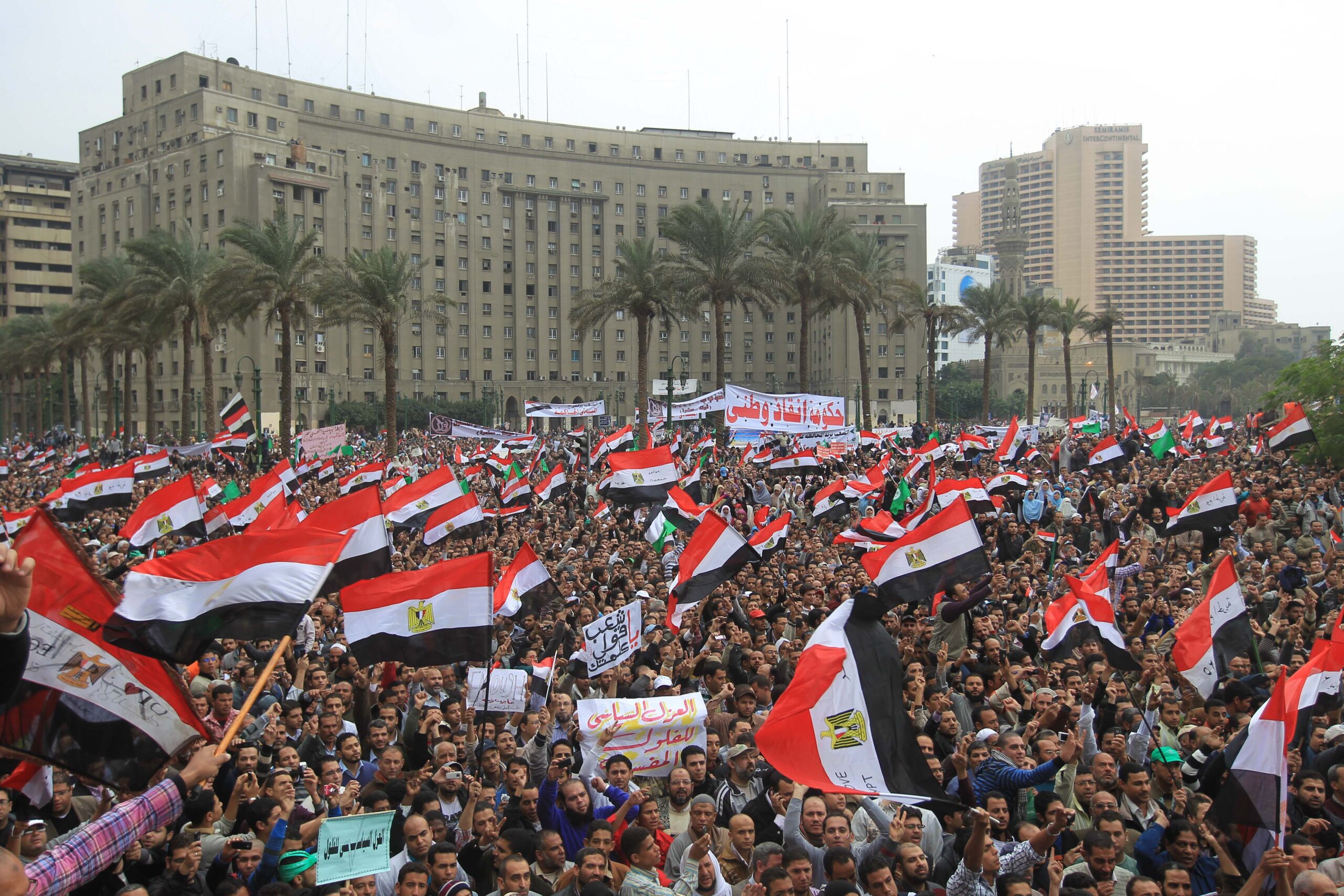
Jawad Nabulsi tells his personal experience of the Occupy movements in Egypt, taking place in Tahrir Square. Nabulsi’s narrative is particularly impactful as he was from a fairly wealthy family, and he recounts times where he was privileged enough to not follow certain procedures, like taking his driver’s license test, because his family had connections everywhere. He frames himself as well as his brother as people who did not need to partake in the movement, but were capable of doing so to benefit others. The tactics of “occupation” challenged the normal flow of everyday life and infrastructure, through taking over public space like Tahrir Square, a major public square in the heart of downtown Cairo, Egypt. The occupation undermined the regimes claim to order and complacency, especially when large numbers of people camped in central Cairo. The tactics of occupation allowed a wide cross-section of society from students, workers, unemployed graduates, young women—to participate, not just in short demonstrations but in extended presence. This broadened social disruption. The disruption can also be seen through Nabilsis personal story as he took part in the occupations regardless of the fact that his family was very well off, showcasing a reframing of whos involved, demonstrating the strong desire for change, even from those benefitting from this system. The tactics of occupation in Cairo were highly disruptive: they rewrote the rules of protest, challenged the state’s control of space, mobilised and organized large groups of society, and created a model for global protest movements.
You Cannot Profit off Our People’s Blood and Think Students Will Not Come for Your Money – Hammer & Hope (2024)
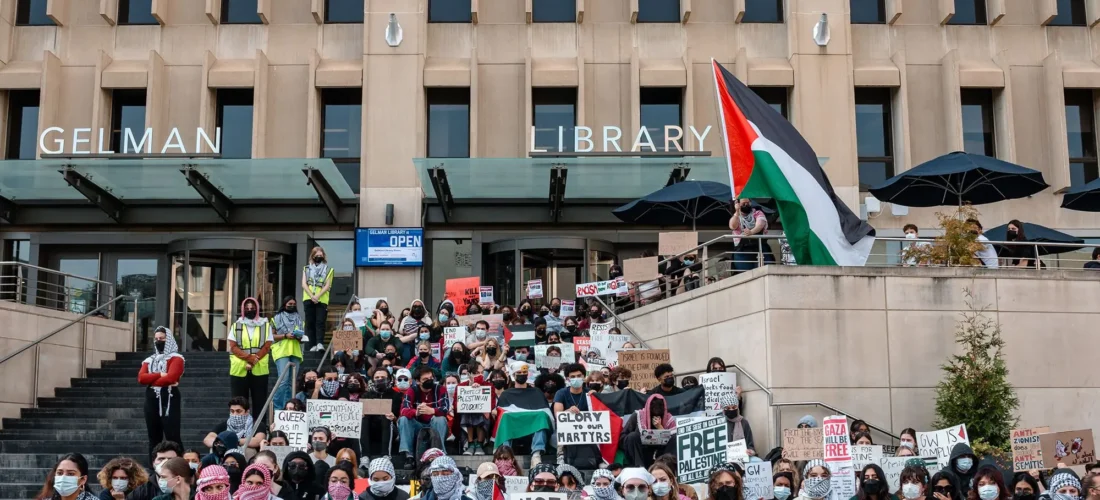
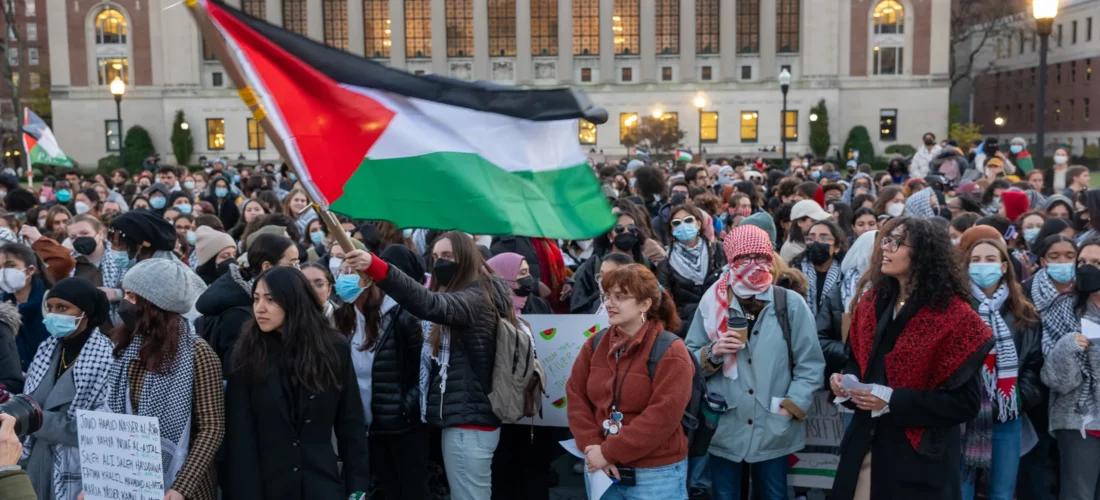
2011-Present, Authority, Date, Defining the Enemy, Disruptive Spaces, Imperialism, Institutions, Occupation, Students, Subjectives of Refusal, Tactics of DisruptionThis source presents conversations with five college student groups actively organizing for Palestine solidarity at various universities in the United States. The students discuss their strategies and tactics for raising awareness and demanding institutional change, including protests, sit-ins, teach-ins, and divestment campaigns. They focus on disrupting the flow of capital tied to what they perceive as Israeli occupation.
The Written Resistance #6 – National Students for Justice in Palestine (2025)
2011-Present, Consciousness Raising, Date, Defining the Enemy, Disruptive Spaces, Imperialism, Institutions, Occupation, Students, Subjectives of Refusal, Tactics of DisruptionThis is the sixth edition of the newsletter written by a compilation of individual authors and published by the National Students for Justice in Palestine. The authors analyze the historical context of the movement, discuss internal challenges like unifying various factions, and examine the broader global forces at play, including US imperialism and the capitalist system. Several pieces explore how different fields, such as medicine, and various locations, like Oklahoma, connect to and are impacted by this struggle. Furthermore, the texts advocate for continued resistance, emphasizing strategies like grassroots organizing, confronting corporate complicity in the oppression of Palestinians, and fostering solidarity across different communities and movements to achieve lasting liberation.
The Written Resistance #5 – National Students for Justice in Palestine (2024)
2011-Present, Authority, Blockade/Barricade, Date, Defining the Enemy, Disruptive Spaces, Imperialism, Institutions, Occupation, Sabotage/Ecotage, Students, Subjectives of Refusal, Tactics of DisruptionThis is the fifth edition of the newsletter written by a compilation of individual authors and published by the National Students for Justice in Palestine. The edition offers perspectives and reflections on the tactics and lessons learned from both historical and contemporary struggles against oppression and imperialism. It draws parallels between past movements, such as the Black Panther Party and Students for a Democratic Society, and current activism, including that of the Students for Justice in Palestine organization. The texts also critique the role of universities in perpetuating existing power structures, particularly through their focus on STEM fields and financial interests. Ultimately, the authors call for continued solidarity and resistance against injustice, stressing the importance of learning from past struggles to chart a path toward liberation.
The Written Resistance #4 – National Students for Justice in Palestine (2024)
2011-Present, Authority, Blockade/Barricade, Date, Defining the Enemy, Disruptive Spaces, Imperialism, Institutions, Occupation, Students, Subjectives of Refusal, Tactics of Disruption, UncategorizedThis is the fourth edition of the newsletter written by a compilation of individual authors and published by the National Students for Justice in Palestine. The edition features a range of articles documenting student activism across several universities, including Columbia, the University of North Carolina at Chapel Hill, Waterloo, Birzeit University, the American University of Beirut, and the University of Texas at Dallas. These articles explore student strategies, challenges with university administrations, and their connections to the military-industrial complex. The publication emphasizes the reclamation of political space and the forging of decolonized solidarity in a unified struggle against oppression.
White House Sit-In Flyer – Students for a Democratic Society (1965)
1946-1989, Date, Defining the Enemy, Disruptive Spaces, Imperialism, Institutions, Occupation, Students, Subjectives of Refusal, Tactics of DisruptionStudents for a Democratic Society (SDS) was a national student activist organization in the US during the 1960s that sought to establish a New Left focused on civil rights, peace, and universal economic security. In 1965, SDS held a mass sit-in at the White House to protest the Vietnam War. This document is a flyer for the event, detailing the various demands, plans, and sponsors of the group.
Open Letter from Students for Justice in Palestine to Universities (2024)
2011-Present, Authority, Date, Defining the Enemy, Disruptive Spaces, Imperialism, Institutions, Students, Subjectives of RefusalThis letter was released by Students for Justice in Palestine on April 21, 2024. In the document, SJP lays out its mission, sets forth various demands, expresses solidarity with SJPs across the country, and makes clear its determination to reclaim student power on campus to pursue justice and liberation for the people of Palestine.
The Written Resistance #3 – National Students for Justice In Palestine (2024)
2011-Present, Authority, Blockade/Barricade, Date, Defining the Enemy, Disruptive Spaces, Imperialism, Institutions, Students, Subjectives of Refusal, Tactics of DisruptionThis is the third edition of the newsletter written by a compilation of individual authors and published by the National Students for Justice in Palestine. The importance of discomfort, the global struggle against imperialism, information on the Palestine Solidarity Movement, accounts of personal experiences, various calls to action, and other important topics were included in the newsletter.
The Written Resistance #2 – National Students for Justice In Palestine (2024)
2011-Present, Authority, Blockade/Barricade, Date, Defining the Enemy, Disruptive Spaces, Imperialism, Institutions, Students, Subjectives of Refusal, Tactics of DisruptionThis is the second edition of the newsletter written by a compilation of individual authors and published by the National Students for Justice in Palestine. Smiling as an act of resistance, Palestinian educational institutions, the role of US students and workers in the struggle for Palestine, decolonization as a practice, recommendations for student organizing, and other topics were included in the newsletter.
A Call to Bucknell Faculty, Staff, and Students – Bucknell Students for Justice in Palestine (2024)
2011-Present, Authority, Date, Defining the Enemy, Disruptive Spaces, Imperialism, Institutions, Strike, Students, Subjectives of Refusal, Tactics of Disruption, The BourgeoisieThis is a statement made by the Students for Justice in Palestine at Bucknell University (BUSJP), located in Lewisburg, Pennsylvania. The group set forth four demands for the university including disclosing the identities of all donors and investment portfolios, divesting from companies that fund the Israeli government, denouncing Israel and the repression of university students across the country who support Palestine, as well as detaching from corporate partnerships that support the genocide. Additionally, BUSJP calls on everyone at the university to join the student movement and participate in the strike by withholding their labor.
“If there is no functioning university in Gaza, there should be no functioning university here.”
The Written Resistance #1 – National Students for Justice in Palestine (2024)
2011-Present, Authority, Blockade/Barricade, Date, Defining the Enemy, Disruptive Spaces, Imperialism, Institutions, Occupation, Students, Subjectives of Refusal, Tactics of DisruptionThis is the first edition of the newsletter written by a compilation of individual authors and published by the National Students for Justice in Palestine. The right to resist, a history of the Israeli-Palestinian conflicts, information on the BDS (Boycott, Divestment, and Sanctions) and the Palestinian Feminist Collective movements, accounts of personal experiences, various calls to action, and other topics were included in the newsletter.
Joint Statement by Harvard Palestine Solidarity Groups on the Situation in Palestine (2024)
2011-Present, Authority, Date, Defining the Enemy, Disruptive Spaces, Imperialism, Institutions, Occupation, Students, Subjectives of Refusal, Tactics of DisruptionIn this piece, Palestine Solidarity Groups at Harvard University take a stand against the violence committed against Palestinians and call on the Harvard community to take action. This is a part of a string of pro-Palestinian protests on college campuses across the United States against both the Israel-Hamas War and the financial ties these various universities have with Israel.
Press Release – Columbia Students for Justice in Palestine (2024)
2011-Present, Authority, Date, Defining the Enemy, Disruptive Spaces, Imperialism, Institutions, Occupation, Students, Subjectives of Refusal, Tactics of DisruptionThis is a press release from the Columbia Students for Justice in Palestine’s Twitter page. In the document, the organization demands their voices be heard, likens their quest for liberation to that of the Civil Rights Movement and other anti-war protests, as well as vows to remain in place until their demands are met. These demands include a complete divestment of all finances linked to the Israeli apartheid in Palestine, complete transparency of all of Columbia’s financial investments, and amnesty for everyone at the university who has been penalized for participating in the movement for Palestinian liberation.
Call to Action – National Students for Justice in Palestine (2024)
2011-Present, Authority, Date, Defining the Enemy, Disruptive Spaces, Imperialism, Institutions, Occupation, Students, Subjectives of Refusal, Tactics of DisruptionThis was a call to action posted on the social media accounts of the National Students for Justice in Palestine (SJP) on April 19, 2024. In the document, the National SJP criticizes the decision of the universities to choose profit and reputation over the lives of those in Palestine and the will of the students. The organization expresses solidarity with other chapters of SJP across the nation and calls on them for continued action.
Press Release from The New School Students for Justice in Palestine
2011-Present, Authority, Date, Defining the Enemy, Disruptive Spaces, Imperialism, Institutions, Occupation, Students, Subjectives of Refusal, Tactics of DisruptionOver the past weeks at various universities across the United States, students have erected encampments to demand action to end Israel’s war on the Gaza Strip. These protests have arisen on the campuses of some of the US’ highest academic institutions, including Harvard and Columbia. This document is a press release from The New School Students for Justice in Palestine, a student-organization at The New School in New York City. In the press release, they expressed their solidarity with other student protesters across the country, described why they established the encampment, detailed the rich history of student protest at the school, and set forth a list of demands for the university. Some of these demands included a complete divestment from all corporations that benefit from and are complicit in the ongoing genocide against the Palestinian people, greater protection for pro-Palestinian protesters, a full academic boycott of Israeli academic and cultural institutions, among others.

Workers! Students! – Jeunesse Communiste Révolutionnaire (1968)
1946-1989, Authority, Date, Defining the Enemy, Disruptive Spaces, Institutions, Occupation, Privatization, Strike, Students, Subjectives of Refusal, Subjects Redefined, Tactics of Disruption, The Bourgeoisie, The Workplace, Urban Spaces, WorkersJeunesse Communiste Révolutionnaire, a French Trotskyist organization, wrote this piece, describing the transition from a student revolt into a general strike of workers contesting capitalist society during the May 1968 events. The organization included a list of demands and called on other workers and students to join them in the future actions they will take in their fight against the current system.
We Are Still Here (2009)
1990-2010, Authority, Date, Defining the Enemy, Disruptive Spaces, Institutions, Occupation, Students, Subjectives of Refusal, Subjects Redefined, Tactics of Disruption, The Bourgeoisie, We're Not Paying That, White SupremacyThis is a communique from the occupation of a business administration building at San Francisco State University in the fall of 2009. Occupiers were protesting budget cuts and fee increases. In this communique, students connect their movement to anti-racist and labor movements, to the protests against the wars in Iraq and Afghanistan, to the occupation of Alcatraz Island by the Indians of All Nations, as well as to the wider struggle against capital.
“Although occupation, or reclaiming space, is not a historically new idea, it is a new form of struggle for many of those disillusioned with the promises of lobbying, those too tired of petitioning “our” elected leaders, those who have lost all faith in politics as they know it. As direct actions like these redefine socially-acceptable modes of protest, occupations themselves redefine the power-relations at the site of struggle.”
Voices from Wheeler Hall (2009)
1990-2010, Authority, Date, Defining the Enemy, Disruptive Spaces, Institutions, Occupation, Students, Subjectives of Refusal, Subjects Redefined, Tactics of Disruption, The Bourgeoisie, We're Not Paying ThatThis document contains excerpts from the zine created after the occupation of Wheeler Hall at the University of California, Berkeley on November 20, 2009. The occupation was the apex of three days of demonstration after the University of California’s Board of Regents had voted to raise student fees by 32%. Rather than issue a communique, the occupiers chose to have their individual statements gathered into a zine composition.
“We will take buildings, streets, and all that is necessary until we are free and rid of this bureaucratic, authoritarian, and unjust structure…We will occupy, we will appropriate, and in turn, we will liberate.”
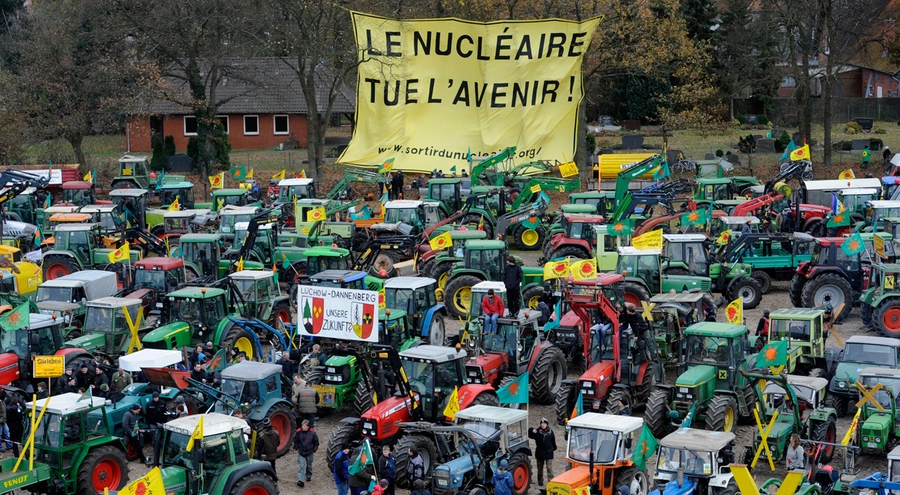
Nuclear Waste Shipment Meets Massive Resistance in Germany – Skyler Simmons (2006)
1990-2010, Blockade/Barricade, Date, Disruptive Spaces, Occupation, Tactics of Disruption, The 'Natural World'An article, found in the January-February 2007 issue of the Earth First! Journal, details the diversity of tactics French and German farmers, students, environmental activists, and anarchists, among others took in November of 2006 in an attempt to shut down a nuclear waste shipment traveling between the two countries. Sit-ins, erections of burning barricades, parked tractors in the path of the train were some of the tactics employed, in addition to actions taken to derail the police guarding the route, ultimately delaying the shipment and increasing nuclear waste transportation costs.
Newsletter by the Free Speech Movement (November 10, 1964)
1946-1989, Date, Disruptive Spaces, Institutions, Students, Subjectives of RefusalThe Free Speech Movement (FSM) was a student protest which took place during the 1964–65 academic year at the University of California, Berkeley. Students protested the ban of on-campus political activities and asserted their right to free speech and academic freedom. This is a newsletter from the FSM published November 10th, 1964.
Newsletter by the Free Speech Movement (November 2, 1964)
1946-1989, Date, Disruptive Spaces, Institutions, Students, Subjectives of RefusalThe Free Speech Movement (FSM) was a student protest which took place during the 1964–65 academic year at the University of California, Berkeley. Students protested the ban of on-campus political activities and asserted their right to free speech and academic freedom. This is a newsletter from the FSM published November 2nd, 1964.
Newsletter by the Free Speech Movement (October 20, 1964)
1946-1989, Date, Disruptive Spaces, Institutions, Students, Subjectives of RefusalThe Free Speech Movement (FSM) was a student protest which took place during the 1964–65 academic year at the University of California, Berkeley. Students protested the ban of on-campus political activities and asserted their right to free speech and academic freedom. This is a newsletter from the FSM published October 20th, 1964.
Newsletter From the Free Speech Movement (October 9 1964)
1946-1989, Date, Disruptive Spaces, Institutions, Students, Subjectives of RefusalThe Free Speech Movement (FSM) was a student protest which took place during the 1964–65 academic year at the University of California, Berkeley. Students protested the ban of on-campus political activities and asserted their right to free speech and academic freedom. This is a newsletter from the FSM published October 9th, 1964.
“The Combat is Also Ours!” – Paris (May 1968)
1946-1989, Date, Students, Subjectives of Refusal, WorkersThis document, written by the Parti Socialiste Unifié in May 1968, explains the unity between the struggles of workers and students.
“because the student’s struggle against the bourgeois university is the same as that of the workers against the capitalist regime… because only the unified action of students, workers and farmers can allow the popular movement to realize its final goal: the establishment of a power in the service of workers.”
“We are not a movement of an -ism” – Paris (May 1968)
1946-1989, Authority, Date, Defining the Enemy, Disruptive Spaces, Students, Subjectives of Refusal, Urban Spaces, WorkersIn this document, students and workers in Paris in May 1968 explain that reforms are not enough. Destruction and permanent revolution is necessary for the people to prevail.
We currently live in a pre-revolutionary time, hence one of destruction. This permanent struggle, engine of all true progress, will arrive at the revolution, a positive reality, but in no way definitive, for there is no established revolution. And so we say that THE REVOLUTION WILL BE PERMANENT OR IT WILL NOT BE AT ALL.
Workers, Students! – Paris (May 1968)
1946-1989, Authority, Date, Defining the Enemy, Disruptive Spaces, Institutions, Occupation, Self Institution, Students, Subjectives of Refusal, Subjects Redefined, Tactics of Disruption, The Workplace, Urban Spaces, WorkersThis document, written during the events in Paris during May 1968, calls for students and workers to continue the resistance, continue the occupations, and keep their power.
“We must continue to the very end!
We occupy the faculties, the offices, the factories!
We will stay there!
Occupy Wall Street – Students (2011)
2011-Present, Alternative Spaces, Authority, Date, Defining the Enemy, Disruptive Spaces, Occupation, Privatization, Self Institution, Students, Subjectives of Refusal, Tactics of Disruption, The Bourgeoisie, Urban SpacesThis document declares the occupation of student, university spaces during Occupy Wall Street.
“We join a long tradition of student activism and struggle. We the indebted and the future unemployed and underemployed stand committed to this movement for our collective lives.”
SDS Fire (1969)
1946-1989, Consciousness Raising, Date, Subjectives of Refusal, Tactics of Disruption, WorkersOn December 6, 1969, Students for a Democratic Society (SDS) published these writings. They cover a variety of topics including revolution, military conquest, and justice. It is a deep critique of the United States in which it sentences the United States government “to death.” Additionally, it identifies other enemies such as capitalism and imperialism. Overall, they aim to destroy bourgeois consciousness and create new revolutionary ways of living.
During the 1960’s the Amerikan government was on trial for crimes against the people of the world. We now find the government guilty and sentence it to death in the streets.
“Student Slain” Flyer (1967)
1946-1989, Authority, Date, Defining the Enemy, Students, Subjectives of RefusalIn 1967, student Benno Ohnesorg was killed at a protest against the Shah of Iran visiting Germany. Shocked by his killing by the police, the German Social Democratic Student Association (SHB) released this flyer, condemning the violence of the state