South African Crackdown on Xenophobic Attacks

2011-Present, Alternative Spaces, Authority, Black, Blockade/Barricade, Colonized, Consciousness Raising, Date, Defining the Enemy, Disruptive Spaces, Indigenous, Patriarchy, Subjectives of Refusal, Tactics of Disruption, The Home, The Workplace

South Africa 2026: A coalition calling itself “Concerned Citizens and Voters of SA” organizes a nationwide shutdown on May 4, calling for the expulsion of all immigrants—both documented and undocumented—from the country. This is not an uncommon trend, with movements like Operation Dudula, March and March, and ActionSA creating the narrative that undocumented immigrants cause unemployment, crime, and drug trafficking and strain the country’s public services. However, what is unprecedented about this event is the organization behind it, with thousands participating in the March and March rally that took place recently in Durban, including representatives from several political parties, initially billed as a “community clean-up” and reported afterwards as a targeted attack on foreign-owned businesses and delivery of foreign nationals to the police. The organizers of the May 4th strike refer to it as a precautionary measure to “avoid civil war,” which reveals some of the possible future directions for this movement.

Undoubtedly, the most disruptive feature of this situation in its negative sense is the ability of this movement to misdirect the spotlight away from the perpetrators of the country’s current crisis. Thirty years since the abolition of apartheid, South Africa struggles with high levels of unemployment, declining public services, and a national unity government incapable of competent governance. The individuals and institutions behind these developments still wield power in the country today. In describing the situation as “state-sponsored hate,” lawyer Simba Chitando points out that it is used to divert attention away from “economic decline and the general breakdown of the rule of law.” The undocumented migrants are neither the culprits behind nor the beneficiaries of South Africa’s inequality; instead, they make ideal targets, along with their persecutors, who understand the true nature of the problem.

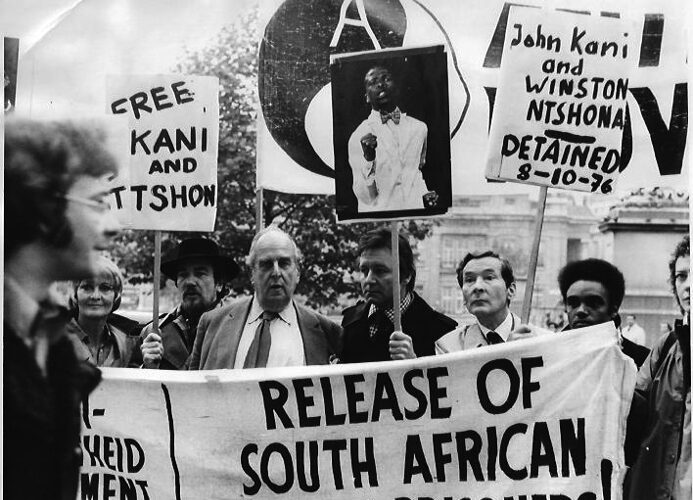
Documents on Unlock Apartheid’s Jails Campaign (1987)

1946-1989, Authority, Date, Defining the Enemy, Disruptive Spaces, Institutions, White Supremacy

The Unlock Apartheid’s Jails Campaign, initiated by The Africa Fund, fought for the release of detainees and political prisoners in South Africa. This compilation of documents included a letter from Dumisani S. Kumalo, a coordinator of the campaign, as well as various newspaper articles attached by him that detail the success of the campaign on focusing the nation’s attention on South Africa’s prisoners of conscience.
The Freedom Charter – South African Congress Alliance (1955)

1946-1989, Authority, Black, Consciousness Raising, Date, Defining the Enemy, Disruptive Spaces, Institutions, Subjectives of Refusal, Subjects Redefined, Tactics of Disruption, White Supremacy

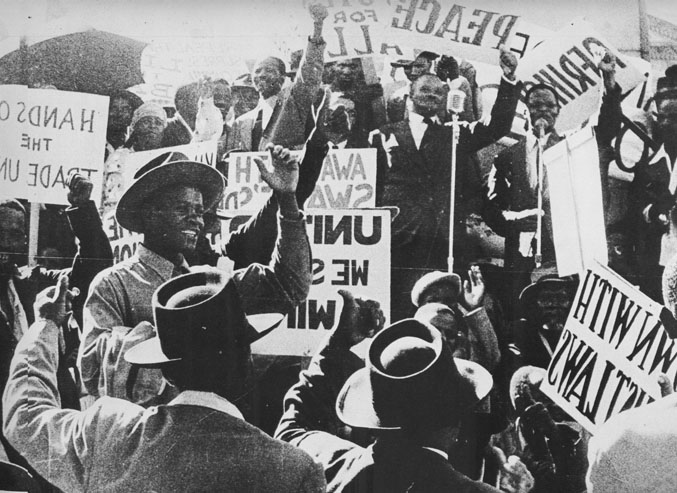
In 1955, the African National Congress (ANC) sent out 50,000 volunteers to various townships and rural areas throughout South Africa to gather “freedom demands” from average people. The ANC was tired of the repressive government and its desire to quell dissent. The demands made by the people of South Africa were synthesized into a document that was adopted later that year and became known as the “Freedom Charter.” This document is significant in that it was the first time in which the people were actively involved in creating their own vision for an alternative society.

 “The people shall govern!”

“These freedoms we will fight for, side by side, throughout our lives, until we have won our liberty.”

ActUP Activists Lock Al Gore Out of Office

1990-2010, Blockade/Barricade, Date, Defining the Enemy, Disruptive Spaces, Institutions, Occupation, Queer, Subjectives of Refusal, Tactics of Disruption, The Workplace

On August 23, 1997, five activists were arrested after locking down the Old Executive Office Building to deny Al Gore access to proceed with his U.S.-South Africa deal on pharmaceutical access. ActUP activists argued that his proposed agreement unfairly limits South Africa’s right to produce and import essential drugs at affordable prices. These activists postponed the workday, as officials took hours cutting the activists’ chains. The activists’ goal was to interrupt the workday to distrust the movement on Al Gore’s harmful procedure.

How to Master Secret Work (1985)

1946-1989, Consciousness Raising, Date, Tactics of Disruption

This pamphlet was published by the Communist Party of South Africa in 1985. It explains the benefits and importance of secrecy in revolutions. Additionally, it highlights the steps to set up secret networks, rules when engaging in secret work, surveillance, communication, and failure.

“We have said that secret work helps us overcome the problems created by the enemy. This helps in the vital task of building an underground organisation or secret network. The network must lead the people in the struggle for power. It does not compete with the progressive legal organisations but reinforces them.”