What We Want, What We Believe (1966)

1946-1989, Authority, Black, Consciousness Raising, Date, Defining the Enemy, Disruptive Spaces, Imperialism, Institutions, Sabotage/Ecotage, Strike, Subjectives of Refusal, Tactics of Disruption, White Supremacy

The Black Panther Party’s 10 Point Program, or formally, “What We Want, What We Believe,” served as a set of demands drafted by Huey P. Newton and Bobby Seale. This program/document served as the founding document and primary list of grievances posited by the Black Panther Party. It had many calls to action for societal change. These included, but were not limited to: a call for educational reform, housing reform, reform of the judicial process, and reform of employment biases. This served as an extremely disruptive foundational document, primarily through points 7 through 10 in their violent calls to take up arms. In these points, the Black Panther Party was calling for a disruption of the previously established authority. They advocated for their followers to take up arms and occupy public spaces in order to become monitors of freedom and independence for the Black community. In short, this was a manifesto charged with creating uncivil disobedience to ensure a more responsive, more representative society for the Black communities.

We want land, bread, housing, education, clothing, justice and peace. And as our major political objective, a United Nations-supervised plebiscite to be held throughout the black colony in which only black colonial subjects will be allowed to participate, for the purpose of determining the will of black people as to their national destiny.

Students for a Democratic Society Statement on Vietnam (1965)

1946-1989, Authority, Consciousness Raising, Date, Defining the Enemy, Disruptive Spaces, Imperialism, Institutions, Self Institution, Strike, Students, Subjectives of Refusal, Tactics of Disruption

This statement was given by the president of Students for a Democratic Society, Paul Porter. It was given in 1965 at the close of their march on Washington in protest of the war in Vietnam. Similar to many activists of this period, Porter was arguing that the United States was acting in direct contradiction to our country’s democratic ideals in our involvement with this war. It was most opposed to the idea that the US was not defending freedom, but rather was promoting and continuing an imperialistic regime. While this call to action was aimed primarily at students, it was a larger call to action aimed at establishing a new level of political engagement.

The Port Huron Statement (1962)

1946-1989, Authority, Consciousness Raising, Date, Defining the Enemy, Self Institution, Strike, Students, Subjectives of Refusal, Subjects Redefined, Tactics of Disruption, Uncategorized, Workers

The Port Huron Statement served as the first official statement of the Students for a Democratic Society and was an extension of a draft statement written by an SDS staffer, Tom Hayden. This document serves as an excellent call to action in a time of great societal upheaval. While the world was turning upside down due to a number of events, this group of students was attempting to outline the flaws of general society in their efforts to gain control over life’s unfortunate circumstances. Throughout the document, the author(s) discuss how the newfound world order in the 60’s was to address societal fears about the world’s affairs, which were to dominate. The goal of this society and statement was to prove to a younger generation that democratic systems were attainable. While this is a rather peaceful form of disruption in the way that it was calling for a return to an older, more democratic society, it is disruptive all the same in the way that it pushed back against the ever increasing societal understanding that violence and domination were the only ways to combat the fears and apprehensions of the age.

Our work is guided by the sense that we may be the last generation in the experiment with living.

The dominant institutions are complex enough to blunt the minds of their potential critics and entrenched enough to swiftly dissipate or entirely repel the energies of protest and reform, thus limiting human expectancies. Then, too, we are a materially improved society, and by our own improvements, we seem to have weakened the case for further change.

Germantown Quaker Petition Against Slavery (1688)

Authority, Black, Consciousness Raising, Date, Defining the Enemy, Disruptive Spaces, Institutions, Pre-Modern, Subjectives of Refusal, Tactics of Disruption, White Supremacy

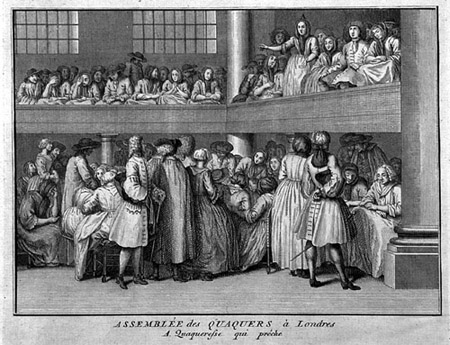
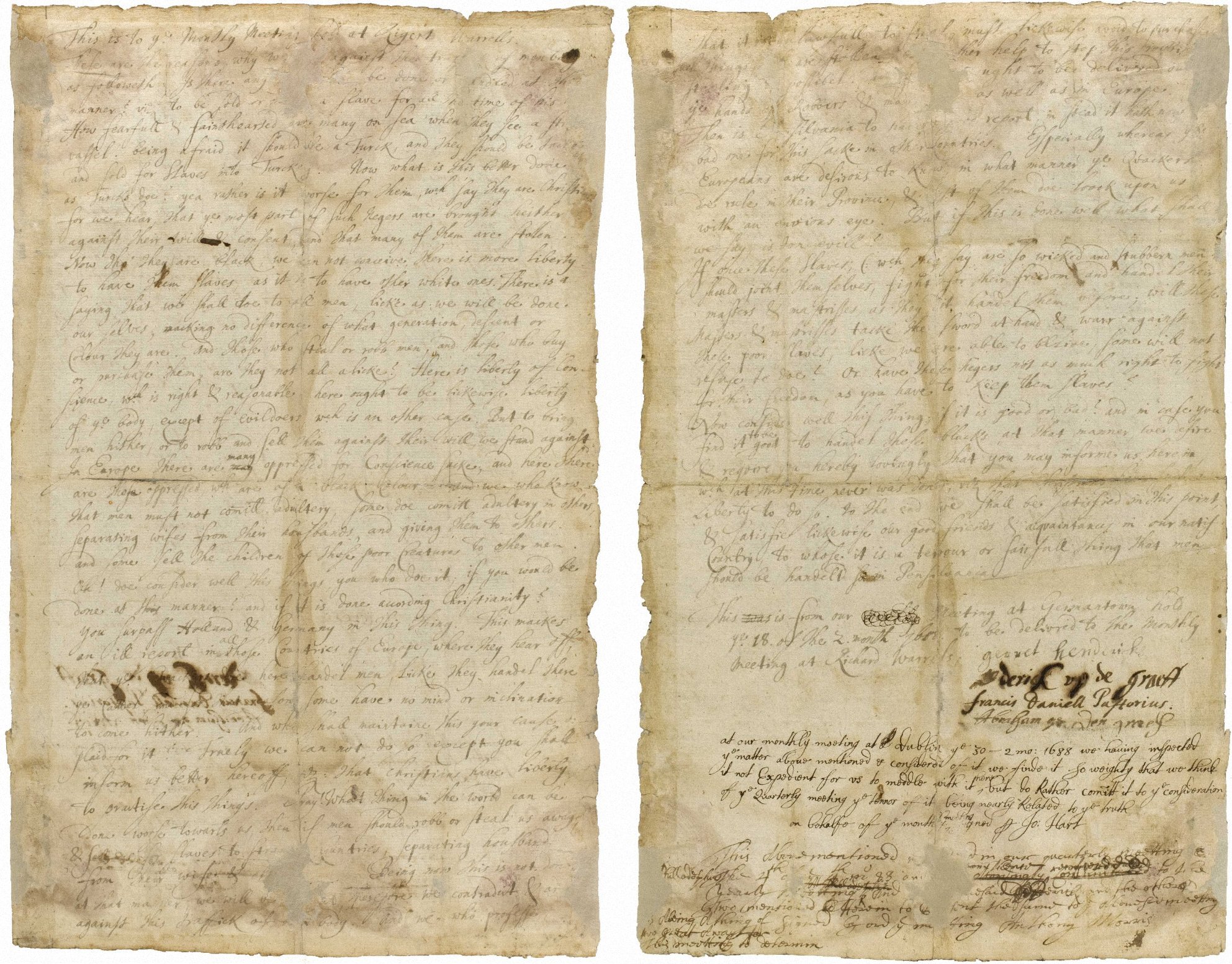
This petition served as the first official written protest of slavery in the new world. While it is not a direct rebellion, or call for physical action, the petition and German Quaker organization critiqued slavery for its moral violations of Christian ethics. More accurately, this petiton can be viewed as a call for collective reflection rather than collective action on the issue of slavery in British North America. Because it was only passed along through Quaker governing bodies, this document failed to bring about much driect or disruptive action. It did however, set quite the precedent for future abolitionist movements. While the immorality argument against slavery seems to be a common theme in abolitionist movements now, this petition was the first time morality was utilized to spark a change in social structure.

Heart Mountain Fair Play Committee Manifesto (1944)

1840-1945, Authority, Consciousness Raising, Date, Defining the Enemy, Disruptive Spaces, Institutions, Tactics of Disruption

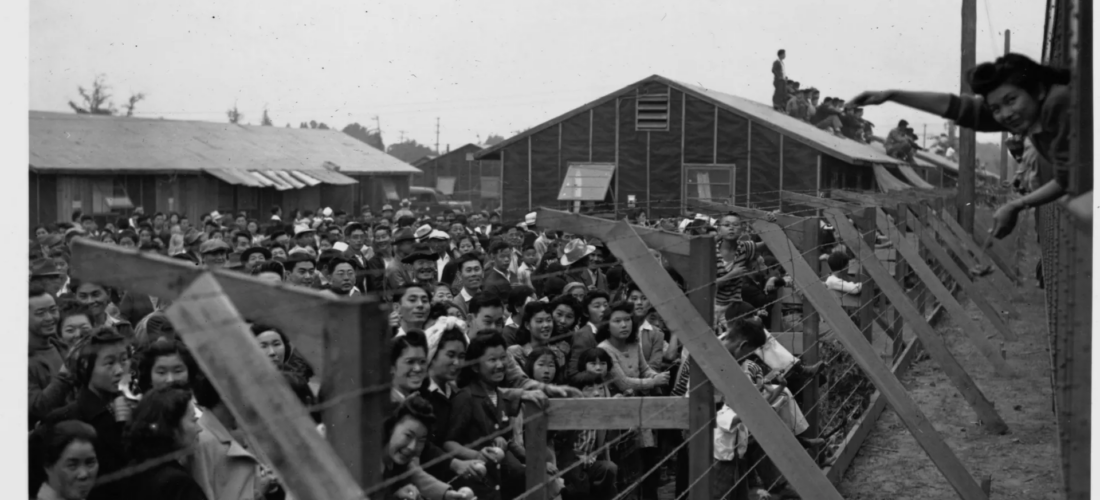
This document, regularly known as the Heart Mountain Fair Play Committee Manifesto, attempts to ignite a united response against the violation(s) of their constitutional rights. This committee and the ensuing manifesto were primarily focused on protesting the forced conscription of imprisoned Japanese-Americans into the United States Army. The argument in this manifesto is quite intriguing in its underlying tone of civic pride. While they are demanding an upheaval of the discrimination placed against them, they are still eager and willing to defend the constitutional rights not being granted to them. This committee did not carry a tone of animosity in its argument(s), but rather called for justice and free will to be restored to all individuals who called themselves American. The Japanese-Americans, through this committee, were not looking for a dramatic or revolutionary upheaval of the system, but rather a return to the promises and institutions that founded the United States.

We would gladly sacrifice our lives to protect and uphold the principles and ideals of our country as set forth in the Constitution and Bill of Rights, for on its inviolability depends the freedom, liberty, justice, and protection of all people including Japanese-Americans and all other minority groups.

The Liberator’s Salutation (1831)

1700-1830s, Black, Consciousness Raising, Date, Strike, Subjectives of Refusal, Tactics of Disruption

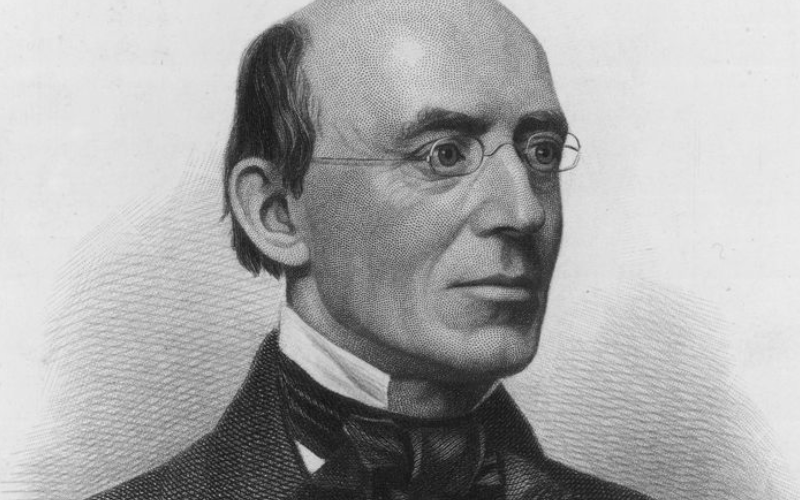
The Liberator served as one of the most disruptive calls for abolition that existed in the Civil War era. In circulation from January 1831 to December 1865, this newspaper was primarily published by William Lloyd Garrison, and in this “Salutation” that was issued in the first print, we can see the primary purpose for the paper, and the radical, disruptive measures it was looking to make in order to abolish slavery. Using incredibly provocative language, Garrison, with this “Salutation,” was successful in his continuous call(s) to action. Newspapers, such as the Liberator, were extremely effective forms of disruption in the way(s) that they were able to spread awareness and validation for the ever increasing abolishtionist movement.

My name is “LIBERATOR!” I propose
To hurl my shafts at freedom’s deadliest foes!
My task is hard—for I am charged to save
Man from his brother!—to redeem the slave! 

Our Countrymen in Chains (1841)

1840-1945, Black, Colonized, Consciousness Raising, Date, Subjectives of Refusal, Tactics of Disruption

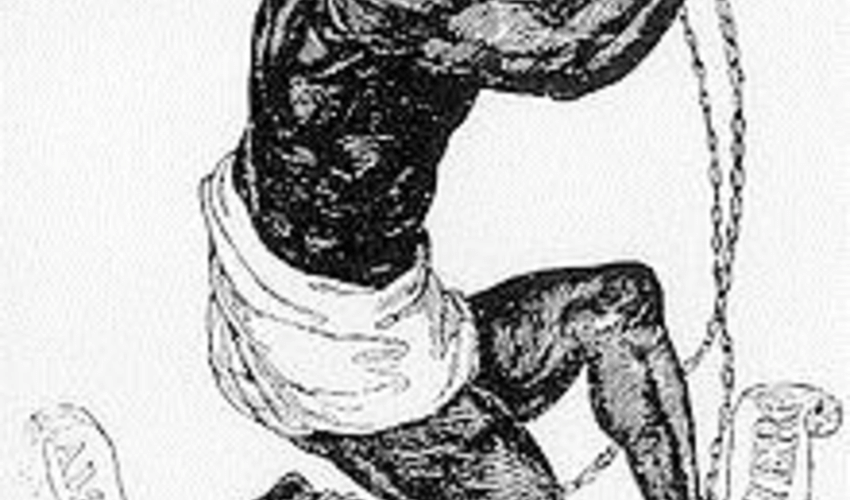
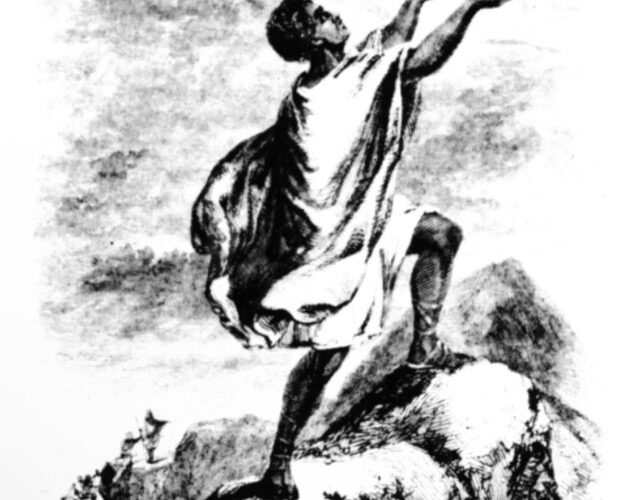
With the use of publications such as the Mirror of Liberty, authors such as John G. Whittier were able to advance their radical abolitionist agenda. In this poem, titled Our Countrymen in Chains, Whittier used abrasive language and vivid verbal imagery to attempt to describe the plight of the enslaved man. Often coupled with this work is the “Am I Not a Man and a Brother?” image (as it is here) and is truly an example of disruptive moral propaganda. While many works such as this were designed to incite direct violent action against the supporters of the slave industry, Whittier decides to make the ever-difficult appeal of emotion to stir disruptive tendencies. His call to “scatter the living coals of truth” throughout the heart of the nation offers the clearest insight into his disruptive agenda.

And shall we scoff at Europe’s kings, when Freedom’s fire is dim with us, and round our country’s altar clings the damning shade of Slavery’s curse?

David Walker’s “Appeal to the Colored Citizens of the World” (1829)

1700-1830s, Black, Defining the Enemy, Subjectives of Refusal, Uncategorized, White Supremacy

David Walker was born a free man in North Carolina on September 28, 1976. He later moved to Boston, where he began writing for the nation’s first African American newspaper. In 1829, while working with this newspaper, he published this Appeal to the Colored Citizens of the World. This appeal was a collection of essays that focused on appealing to the nation’s civic duty, what he believed was an inherent sense of Christianity, and finally, a sense of early black nationalism. While this pamphlet has a unique take on disruption for its use of Christian morals as a call to action, it was effective in its coupling with calls for radical abolitionism and critiques of the founding tenets and members of our nation, such as Thomas Jefferson and the Declaration of Independence.

The whites have always been an unjust, jealous, unmerciful, avaricious and blood-thirsty set of beings, always seeking after power and authority.

Fadwa El Guindi’s “Veiling Resistance” (1999)

1990-2010, Colonized, Date, Subjectives of Refusal, Women

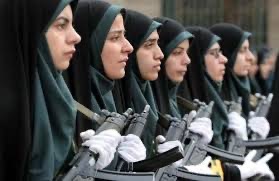
El Guindi argues that contemporary veiling is not simply a result of patriarchal structures, but a conscious rejection of Western ideologies and colonial legacies. Historically, veiling has signified honor, status, and social identity, resisting Western narratives that depict the practice as strictly oppressive. Western thinkers have distorted Islamic understandings of gender, often portraying Islamic societies as culturally inferior. For many women, veiling becomes a way to negotiate privacy and create an identity that is religious, cultural, and modern. Muslim women activists who have advocated for women’s rights from within Islamic frameworks further challenge the Western assumption that Islam is inherently antifeminist and undermine universalizing Western feminist conceptions of “women’s rights.” This essay disrupts existing Western perceptions of Islamic culture and gender norms.

BUT WE HAVE TO, SO WE DO IT REAL SLOW – Noche (2016)

2011-Present, Authority, Date, Defining the Enemy, Disruptive Spaces, Privatization, Sabotage/Ecotage, Subjectives of Refusal, Tactics of Disruption, The Bourgeoisie, The Workplace, Workers

This collection of texts primarily features an essay titled “BUT WE HAVE TO, SO WE DO IT REAL SLOW” by Noche, which explores the concept of anti-work within the context of Mexican and Mexican-American identity in the United States. The author challenges the prevailing pro-work sentiment, even within radical circles, arguing that elements of labor refusal and resistance are already present in Mexican-American culture, often in subtle or playful forms. The essay contrasts the traditional labor movement’s focus on better working conditions with a call for the abolition of work itself, linking this idea to historical anti-work movements and the critique of capitalism. Noche suggests that everyday acts of slacking, stealing, and working slowly can be seen as forms of resistance, and ultimately advocates for a world free from the constraints of wage labor, the state, and capitalist structures. 

Black Politics: A Journal of Liberation (1968)

1946-1989, Black, Date, Defining the Enemy, Imperialism, Sabotage/Ecotage, Self Institution, Subjectives of Refusal, Tactics of Disruption, White Supremacy

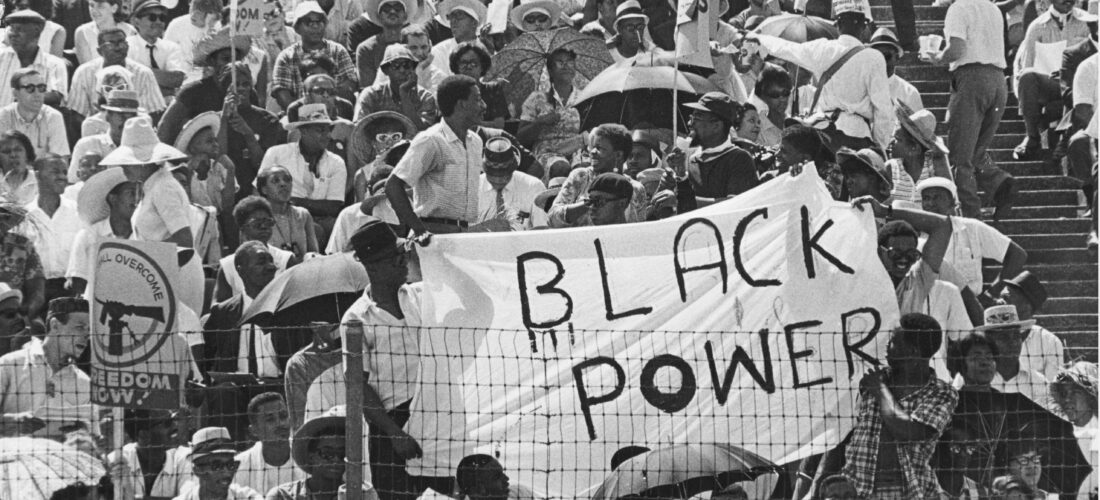
This collection of excerpts from Black Politics: A Journal of Liberation (Vol. 1, 1968) offers insights into the Black Power movement during a pivotal year. The document covers a variety of topics, including discussions on political strategy, international relations, and resistance against oppression. It also contains information regarding the historical context of the movement, including its connections to other global liberation struggles, and details about weapons and self-defense, reflecting the urgency and intensity of the era.

The Proper Way to Harvest Wheat? Direct Action for the 90’s (1989)

1946-1989, Authority, Date, Defining the Enemy, Disruptive Spaces, Infrastructure/Data, Institutions, Sabotage/Ecotage, Tactics of Disruption, The 'Natural World'

This document highlights various forms of direct action and resistance employed by groups such as Plowshares, known for disarmament actions, and Earth First!, associated with environmental sabotage. The text also discusses clandestine political bombings carried out by groups like the Armed Resistance Unit, emphasizing the importance of building revolutionary movements and resisting state repression. It examines the successes and failures of these actions, focusing on the need for strong networks, security, and a broader revolutionary vision. 

Political Prisoners and Lesbian Resistance – Jennie McKnight (1989)

1946-1989, Authority, Date, Defining the Enemy, Disruptive Spaces, Infrastructure/Data, Institutions, Patriarchy, Queer, Sabotage/Ecotage, Subjectives of Refusal, Tactics of Disruption, White Supremacy, Women

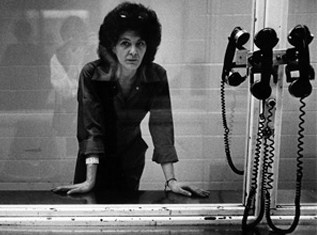
This 1989 interview from Gay Community News features political activists Linda Evans, Laura Whitehorn, and Susan Rosenberg, who were imprisoned for aiding and abetting the bombing of military and government facilities. In the interview, they share their experiences as activists, their lesbian identities, and their time in prison. They advocate for various direct actions, including demonstrations, militant AIDS activism, and collective resistance to injustices they viewed as immoral and illegal, such as racism.

“One of my favorite slogans is “Build to Win,” which is a slogan from the Black Liberation Army. They have always had a perspective that really is about victory. It’s really important that the gay liberation movement has taken that on in such a serious way – that winning is what we really want to do, not just make a protest or make reforms.”

“Resistance is not a crime.”

29 Ways to Say No! – John Brown Anti-Klan Committee (1989)

1946-1989, Authority, Date, Defining the Enemy, White Supremacy

The John Brown Anti-Klan Committee, founded in 1978, was an anti-racist organization within the United States that took direct actions against the Ku Klux Klan and other white supremacist organizations in addition to publishing literature on the subject. This document, published by the organization, details 29 ways to resist racism, sexism, homophobia, and other forms of discrimination.

Lafchenke Machupe Resistance Sabotage

2011-Present, Authority, Date, Defining the Enemy, Indigenous, Privatization, Sabotage/Ecotage, Subjectives of Refusal, Tactics of Disruption

In Chile, the Machupe people are an indigenous group that have been fighting off outsider invaders to their land and livelihood for years. The Lafchenke Machupe groups are a resistance group that use tactics like sabotage, arson, and violent resistance to push out the Chilean government, who they now see as invaders to their ancestral land, and protect their forests/land from destructive practices. Below, there is a statement the group released in which they take responsibility for sabotage and arson against corporations and government efforts.

Tecumseh Calls for Pan-Indian Resistance (1810)

1700-1830s, Date, Defining the Enemy, Disruptive Spaces, Indigenous, Self Institution, Subjectives of Refusal, Subjects Redefined, Tactics of Disruption, The 'Natural World', Uncategorized, White Supremacy

In this document, Tecumseh, a Shawnee chief and warrior, details a message of both resistance and spirituality. He writes to a community larger than just the Shawnee, calling on all the “red men” to unite and to reclaim the land that has been stolen from them by the “white people.”

“The way, and the only way, to check and to stop this evil, is for all the red men to unite in claiming a common and equal right in the land, as it was at first, and should be yet; for it never was divided, but belongs to all for the use of each.”

100 Years of Land Struggle – Mike Gouldhawke (2020)

Authority, Blockade/Barricade, Defining the Enemy, Disruptive Spaces, Indigenous, Occupation, Privatization, Subjectives of Refusal, Subjects Redefined, Tactics of Disruption, The 'Natural World', The Bourgeoisie, White Supremacy

This document is a timeline of Native American resistance in pursuit of land and self-determination between the years of 1921-2020.

We Won This Round: The Cancún WTO Ministerial Summit – Lesley Adams (2003)

1990-2010, Blockade/Barricade, Date, Defining the Enemy, Disruptive Spaces, Imperialism, Institutions, Occupation, Sabotage/Ecotage, Subjects Redefined, Tactics of Disruption, The 'Natural World', The Bourgeoisie

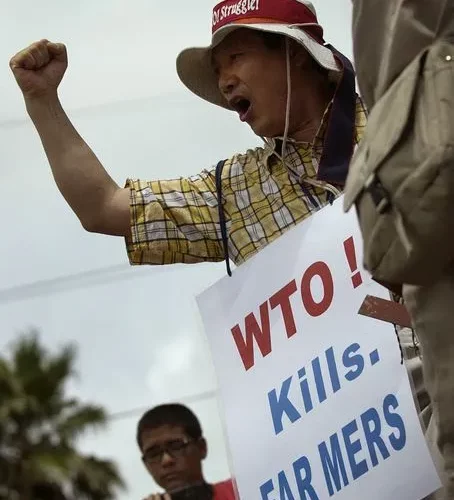
This piece was written by an activist at the 2003 ministerial conference of the World Trade Organization in Cancún. Over 10,000 protesters from around the world took action throughout the summit, occupying a building, conducting marches, disrupting the opening ceremony, using bolt cutters to break down barriers, and employing other direct action tactics. Activists faced the challenge of integrating different cultures, who each had their own organizing methods, social relations, and disruptive tactics. Many of the activists were farmers, who were protesting the globalist free trade policies that they argued had privileged multinational businesses at the detriment of their livelihoods. This was shown by one farmer, Lee Kyung Hae, who stabbed himself as an act of sacrifice, expressing, “WTO kills farmers. I am taking my life so that others can live.”

“Building alliances and solidarity between struggles is vital to counter the ways in which the current power structure is connecting our global community. The world is being globalized whether we like it or not. They choose to globalize capital. We choose to globalize resistance.”

The Mandate for 1992: Resistance – Bobby Castillo (1992)

1990-2010, Date, Indigenous, Self Institution, Subjectives of Refusal, Subjects Redefined, Tactics of Disruption

This piece was published in the 1992 program of the International Tribunal of Indigenous Peoples and Oppressed Nations in the USA. Bobby Castillo, the author of the mandate as well as the coordinator of the International Tribunal, challenged the 500th anniversary of the “discovery” of America by Christopher Columbus, demanding that myth be destroyed. Furthermore, he demanded the release of political prisoners/prisoners of war and the ability of oppressed national movements to exercise their rights to self-determination. This document serves to raise awareness to the new resistance of the American Indian Movement and to reaffirm the basic human rights of indigenous groups to determine their own destiny. Additionally, both the document and the tribunal are evidence of efforts by indigenous groups to redefine themselves within the current system.

Resistance #4 by ELF

1990-2010, Date, Defining the Enemy, Disruptive Spaces, Privatization, Sabotage/Ecotage, Tactics of Disruption, The 'Natural World'

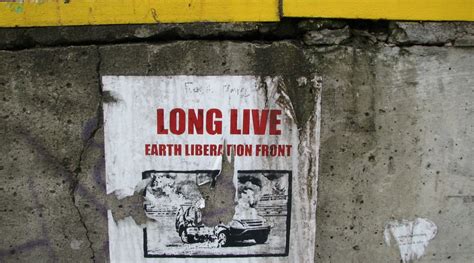
The Earth Liberation Front (ELF) is the collective name for a group of individual cells that use ecotage to try to stop the destruction of the environemnt. Former ELF spokesperson Leslie James Pickering compiled various documents from the ELF’s functioning from 1997-2002. The publication Resistance featured the ELF three times. This second feature tells the arrest of Josh Harper, among other stories and statements by the ELF.

Resistance #3 by ELF (2000)

1990-2010, Date, Disruptive Spaces, Institutions, Sabotage/Ecotage, Tactics of Disruption, The 'Natural World'

The Earth Liberation Front (ELF) is the collective name for a group of individual cells that use ecotage to try to stop the destruction of the environemnt. Former ELF spokesperson Leslie James Pickering compiled various documents from the ELF’s functioning from 1997-2002. The publication Resistance featured the ELF three times. This first feature tells the story of Craig Rosebraugh at his Grand Jury hearing in Spring of 2000.