1946 African Mineworker’s Strike

1946-1989, Authority, Black, Date, Defining the Enemy, Disruptive Spaces, Imperialism, Privatization, Strike, Subjectives of Refusal, Tactics of Disruption, The Workplace, White Supremacy, Workers

“When I think of how we left our homes in the reserves, our children naked and starving, we have nothing more to say. Every man must agree to strike on 12 August. It is better to die than go back with empty hands.”

unnamed worker

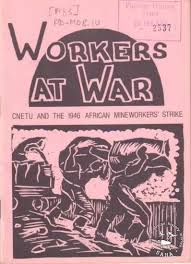
On August 4, 1946, over 1,000 delegates united in Newtown Market Square, Johannesburg. This meeting place was chosen because no hall in the city was large enough to hold them, since no hall was open to Black Africans. The conference brought speaker after speaker to the podium, advocating for a general strike of all African workers within the Witwatersrand gold mines, beginning August 12, in demand of a minimum wage of 10 shillings a day. After years of attempted negotiations with the Chamber of Mines, the African Mine Workers’ Union was dismissed, and met with silence from the Chamber’s secretary, who had also instructed staff to ignore all Union communications. Between 75,000 and 100,000 workers walked off the job, which the state responded to with mass arrests, baton charges, and bayonets, transporting workers back underground in mass numbers. Policy brutality reached a bloody climax on a peaceful march from the East Rand to Johannesburg on Tuesday, 13 August. Police opened fire on the procession, and a number of workers were killed, collapsing the movement as a whole. Even though the mine workers did not achieve their set goal, they still disrupted South African political life by destroying its credibility and publicly questioning its authority. The apartheid states consultative body for Black South Africans never met again, but within 3 years, the African National Congress (ANC) Youth League adopted the “Programme of Action”, following the mineworkers’ lead through turning toward mass struggle. Although the 1946 strikers did not exactly achieve their desired outcome, they paved the way for the 1952 Defiance Campaign, the 1960 uprisings, and the eventual emergence of Umkhonto we Sizwe.

The Global Consequences of American Consumption & Fast Fashion

2011-Present, Authority, Colonized, Date, Defining the Enemy, Disruptive Spaces, Imperialism, Subjectives of Refusal, The 'Natural World', The Workplace, Uncategorized, Urban Spaces, Workers

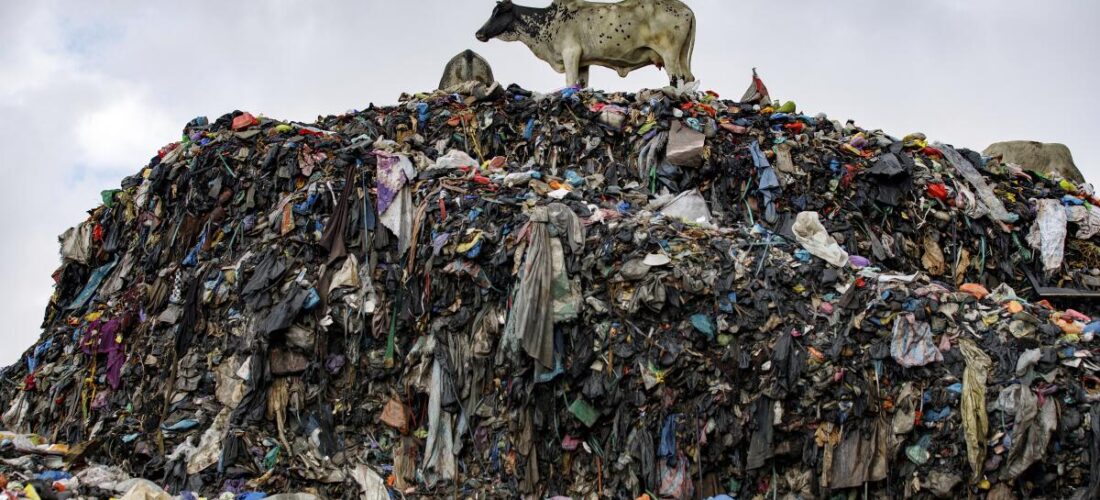
“Around the world, the equivalent of one dump truck filled with clothing is sent to a landfill or incinerator every second.”

Eric Liedtke

Clothing companies produce twice as much clothing today than they did in 2000, and the average American consumer now purchases four times as many clothing items as they did in that same time period. It’s estimated that Americans don’t wear about 50% of the clothing they own, and 65% of the clothing they purchase ends up getting disposed of within 12 months. Because of this, clothing is often exported to Global South Countries, disguised as assistance, sending clothing to countries in need when in reality it causes substantially more harm. The United States sends over 15 million articles of clothing to Ghana a week, ending up in massive secondhand markets like Kantamanto Market in Accra, creating a significant waste crisis as up to half the imported garments are unsellable, clogging landfills, polluting beaches, and overwhelming local waste systems with textile waste, much of it fast fashion that quickly becomes trash. This extreme quantity of unwanted clothing is a disruptive force that restructures everyday life in places like Accra, while the cause (fast fashion companies and exporting companies like the U.S.) creates an environmental catastrophe by forcing this immense burden upon lower-income nations on the other side of the world. Local textile producers and tailors are pushed out of business as secondhand fast fashion floods the market at prices they cannot compete with, eroding domestic industries, productivity, and livelihoods. At the same time, the sheer volume of unsellable garments turns consumption in the Global North into environmental destruction in the Global South, shifting the burden of waste management onto communities with the least infrastructure to absorb it. What appears as excess convenience for American consumers thus becomes economic displacement, ecological degradation, and public health risk elsewhere—revealing overconsumption as a global system of harm rather than an individual choice. The documentary “Buy Now!”, as well as various other environmental sources, exposes the harm of overconsumption, and its parallels to imperialist and colonizing methods specifically in America.

https://www.documentaryarea.com/video/Buy+Now!+The+Shopping+Conspiracy

Flaming Fury: Tunisian Occupy Movements

1990-2010, Alternative Spaces, Authority, Date, Defining the Enemy, Disruptive Spaces, Subjectives of Refusal, The Workplace, Uncategorized, Urban Spaces, Workers

“Within days of Bouazizi setting himself on fire, Tunisians began filling the streets of their cities with largely peaceful protests… this display of mass nonviolent action to effect rapid change would have been stunning anywhere, but was especially remarkable in a region that had grown notorious for its seeming inability to change peacefully, if at all.”

Jeffrey D. Sachs

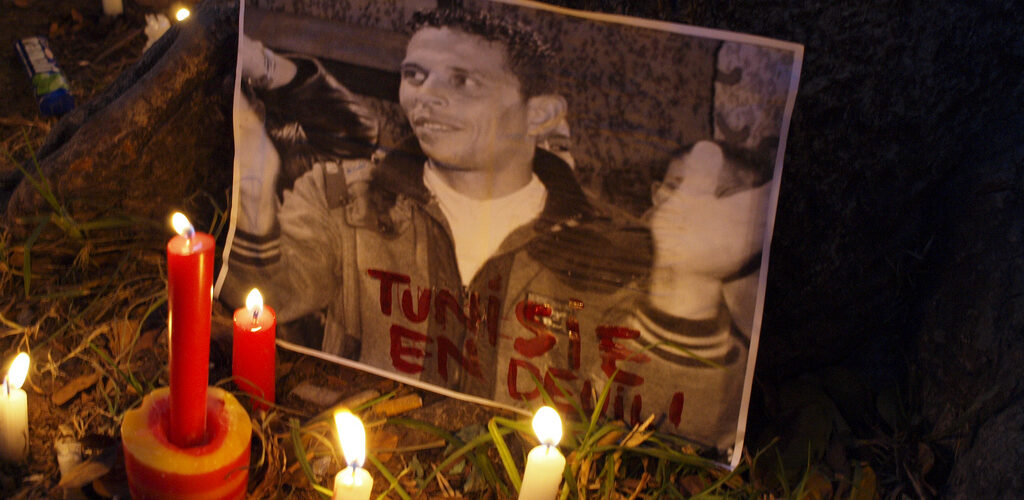
Mohammad Bouazizi, setting himself on fire in Tunisia during the series of Occupy movements, was immensely disruptive. This act emphasized the need for drastic change, as this man was willing to sacrifice his life and body to disrupt the cycle that many had become complacent with. This action symbolized how deeply disenfranchised people were under Tunisia’s authoritarian rule, and that the people would no longer stand for this. His igniting exposed the brutality of the economic and political system that had become incredibly exclusive, often leaving behind the lower classes. The youth were angry- they were consistently repressed under their government, and desperately wanted new rules, yet their internet connections and communication with others about their widespread dissatisfaction yielded few results. Following Bouazizi’s decision to set himself on fire, protests ignited around police abuse, corruption, and high unemployment rates across the nation. Ultimately, this resulted in President Zine El Abidine Ben Ali fleeing the country less than a month later, opening space for new political leaders and freedoms and the establishment of a more open civil society through a newly constructed constitution. This act also sparked the Arab Spring- uprisings in Syria, Bahrain, Libya, Egypt, and Yemen, demonstrating that this single act of disruption-when other methods are unheard, can transform political and economic landscapes, opening the conversation globally.

Occupy Egypt: From Cairo to Wall Street

2011-Present, Authority, Defining the Enemy, Disruptive Spaces, Institutions, Occupation, Subjectives of Refusal, Tactics of Disruption, The Workplace, Uncategorized, Urban Spaces, Workers

“The balance tipped. Going down to protest became acceptable Before then, people like members of my family would have said, ‘No way, how could you protest? It is not something people like us do.’ Then it became normal to protest. It became something we could do.”

Jawad Nabulsi

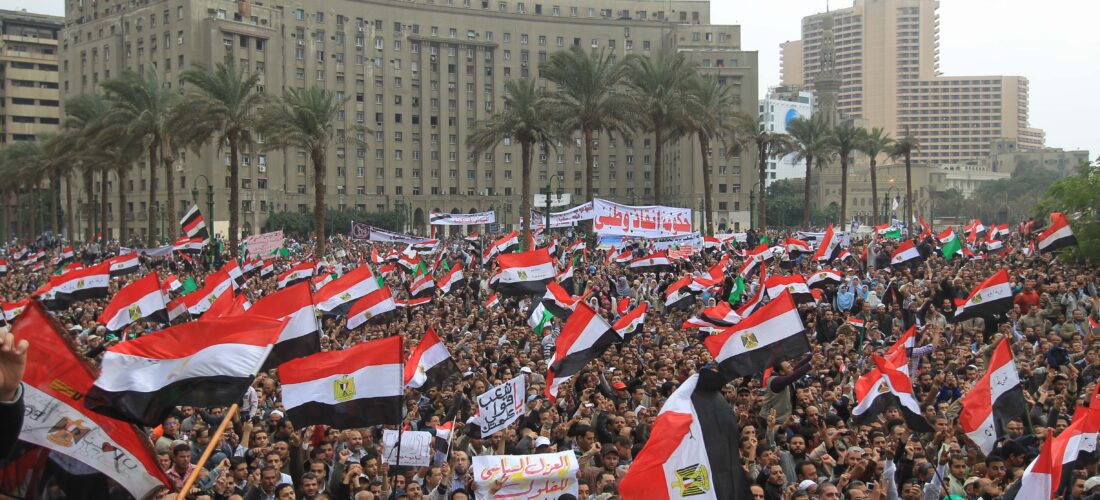
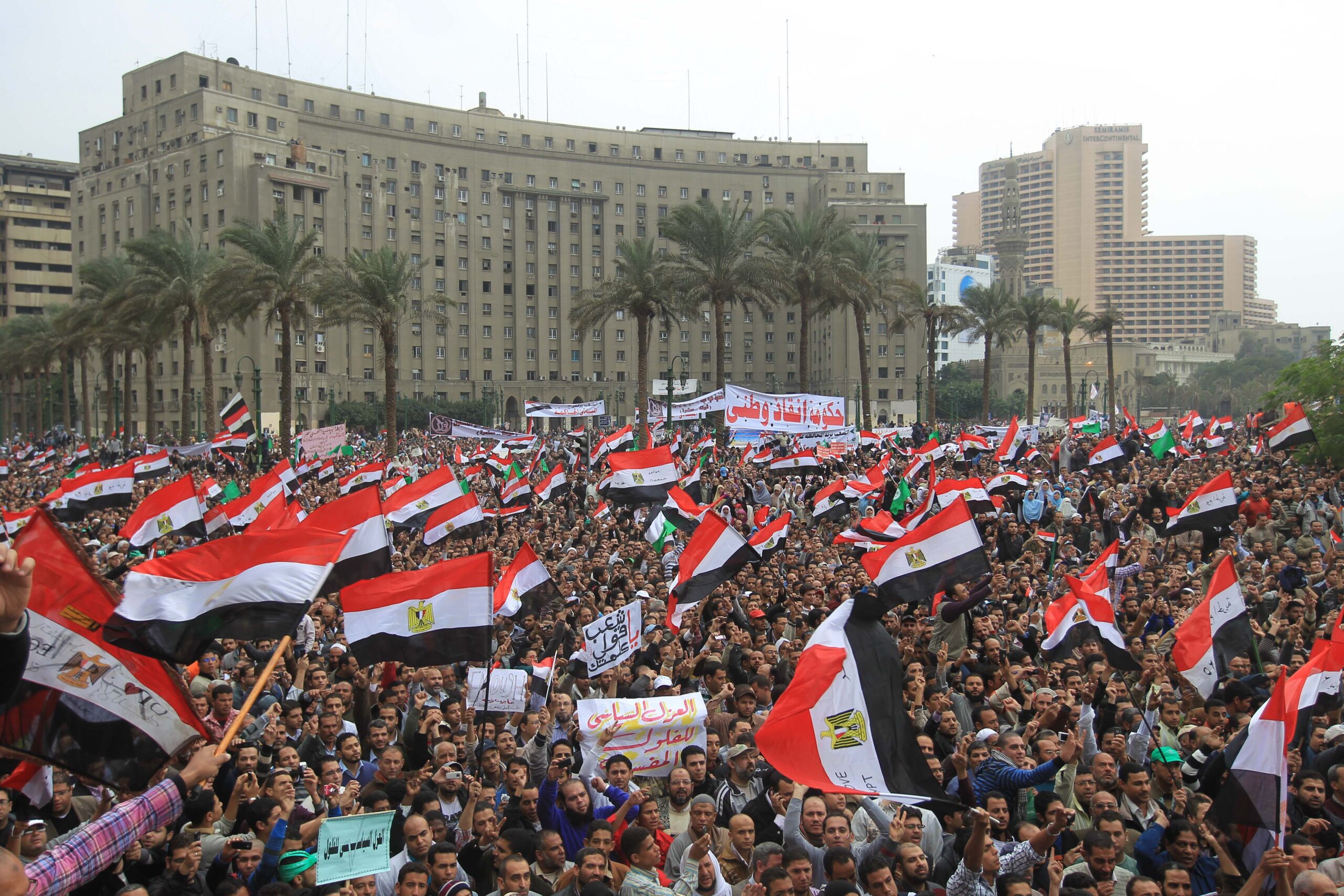
Jawad Nabulsi tells his personal experience of the Occupy movements in Egypt, taking place in Tahrir Square. Nabulsi’s narrative is particularly impactful as he was from a fairly wealthy family, and he recounts times where he was privileged enough to not follow certain procedures, like taking his driver’s license test, because his family had connections everywhere. He frames himself as well as his brother as people who did not need to partake in the movement, but were capable of doing so to benefit others. The tactics of “occupation” challenged the normal flow of everyday life and infrastructure, through taking over public space like Tahrir Square, a major public square in the heart of downtown Cairo, Egypt. The occupation undermined the regimes claim to order and complacency, especially when large numbers of people camped in central Cairo. The tactics of occupation allowed a wide cross-section of society from students, workers, unemployed graduates, young women—to participate, not just in short demonstrations but in extended presence. This broadened social disruption. The disruption can also be seen through Nabilsis personal story as he took part in the occupations regardless of the fact that his family was very well off, showcasing a reframing of whos involved, demonstrating the strong desire for change, even from those benefitting from this system. The tactics of occupation in Cairo were highly disruptive: they rewrote the rules of protest, challenged the state’s control of space, mobilised and organized large groups of society, and created a model for global protest movements.


The Manukan Declaration (2004)

1990-2010, Date, Disruptive Spaces, Indigenous, Subjectives of Refusal, The 'Natural World', Women

The Manukan Declaration was signed by seventeen different organizations across North America, South America, Asia, and Africa that make up the Indigenous Women’s Biodiversity Network in 2004. Generally, it advocates for indigenous voices. It highlights the importance of indigenous women in particular to indigenous culture, tradition, and environmental biodiversity.

“As Indigenous women, we have a fundamental role in environmental conservation and preservation throughout the history of our Peoples. We are the guardians of Indigenous knowledge and it is our main responsibility to protect and perpetuate this knowledge. Our weavings, music, songs, costumes, and our knowledge of agriculture, hunting or fishing are all examples of some of our contributions to the world. We are daughters of Mother Earth and to her we are obliged. Our ceremonies recognize her and we return to her the placentas of our children. She also safeguards the remains of our ancestors.”

Congolese Independence Speech by Patrice Lumumba (1966)

1946-1989, Black, Colonized, Defining the Enemy, Imperialism, Privatization, Subjectives of Refusal, The Bourgeoisie

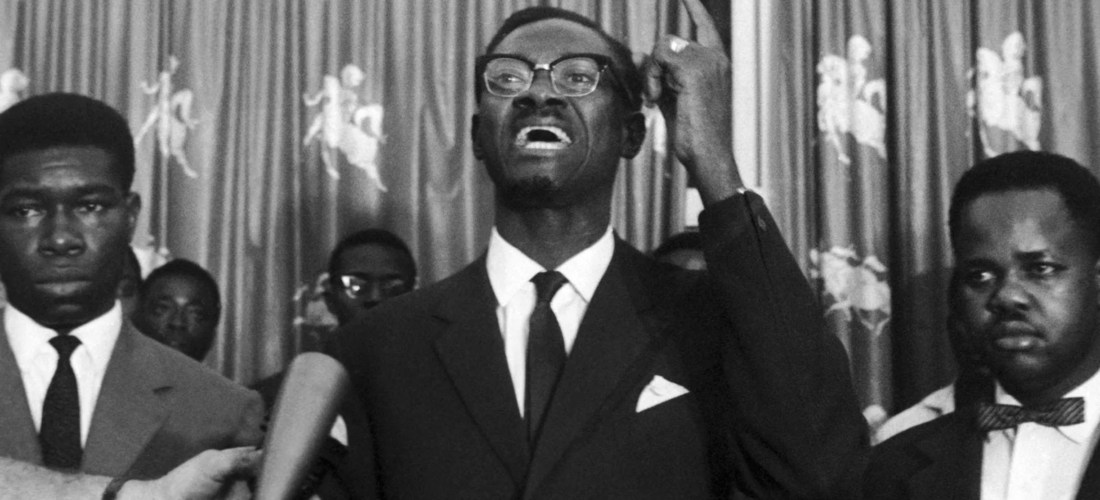
Given by Congolese Prime Minister Patrice Lumumba shortly after the independence of the Republic of Congo in 1966, the Congolese Independence Speech was most praised for its critique of colonialism and imperialism. Within the Republic of Congo, Lumumba was praised for his outwardness against colonialism within the speech, while outside nations critiqued the honesty of it.