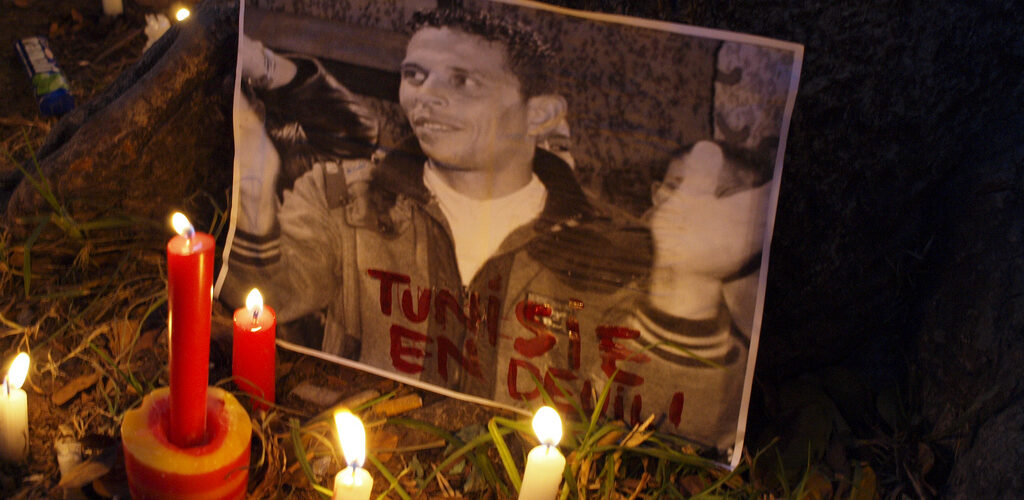
Flaming Fury: Tunisian Occupy Movements

1990-2010, Alternative Spaces, Authority, Date, Defining the Enemy, Disruptive Spaces, Subjectives of Refusal, The Workplace, Uncategorized, Urban Spaces, Workers

“Within days of Bouazizi setting himself on fire, Tunisians began filling the streets of their cities with largely peaceful protests… this display of mass nonviolent action to effect rapid change would have been stunning anywhere, but was especially remarkable in a region that had grown notorious for its seeming inability to change peacefully, if at all.”

Jeffrey D. Sachs

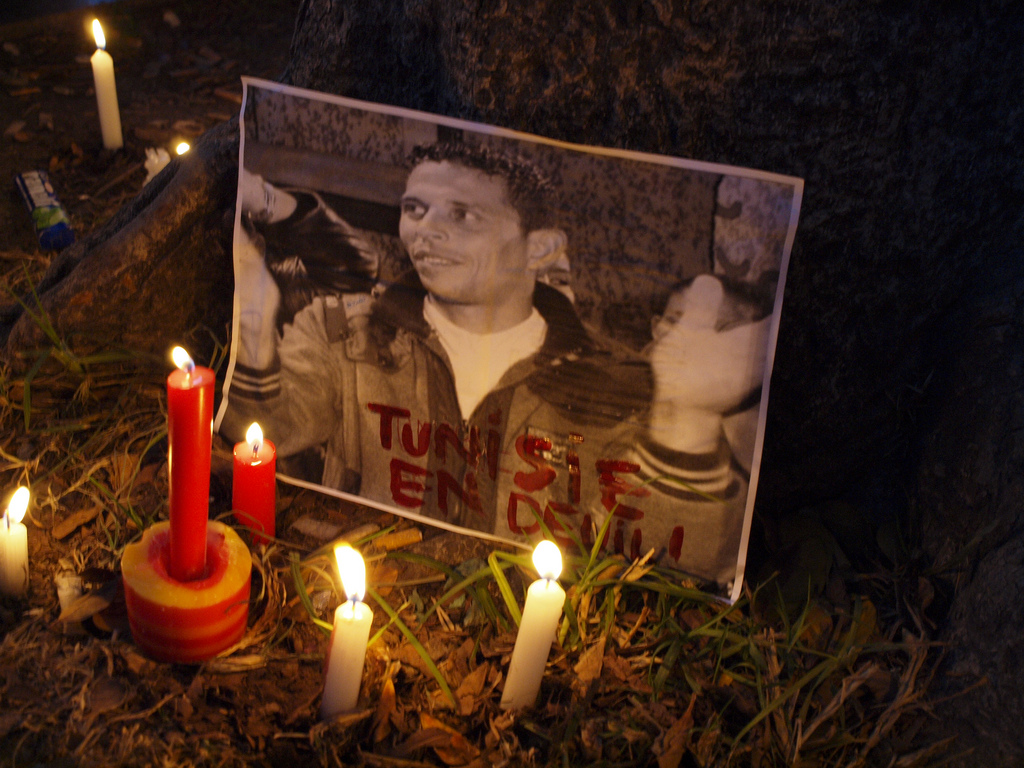
Mohammad Bouazizi, setting himself on fire in Tunisia during the series of Occupy movements, was immensely disruptive. This act emphasized the need for drastic change, as this man was willing to sacrifice his life and body to disrupt the cycle that many had become complacent with. This action symbolized how deeply disenfranchised people were under Tunisia’s authoritarian rule, and that the people would no longer stand for this. His igniting exposed the brutality of the economic and political system that had become incredibly exclusive, often leaving behind the lower classes. The youth were angry- they were consistently repressed under their government, and desperately wanted new rules, yet their internet connections and communication with others about their widespread dissatisfaction yielded few results. Following Bouazizi’s decision to set himself on fire, protests ignited around police abuse, corruption, and high unemployment rates across the nation. Ultimately, this resulted in President Zine El Abidine Ben Ali fleeing the country less than a month later, opening space for new political leaders and freedoms and the establishment of a more open civil society through a newly constructed constitution. This act also sparked the Arab Spring- uprisings in Syria, Bahrain, Libya, Egypt, and Yemen, demonstrating that this single act of disruption-when other methods are unheard, can transform political and economic landscapes, opening the conversation globally.
Occupy Egypt: From Cairo to Wall Street

2011-Present, Authority, Defining the Enemy, Disruptive Spaces, Institutions, Occupation, Subjectives of Refusal, Tactics of Disruption, The Workplace, Uncategorized, Urban Spaces, Workers

“The balance tipped. Going down to protest became acceptable Before then, people like members of my family would have said, ‘No way, how could you protest? It is not something people like us do.’ Then it became normal to protest. It became something we could do.”

Jawad Nabulsi

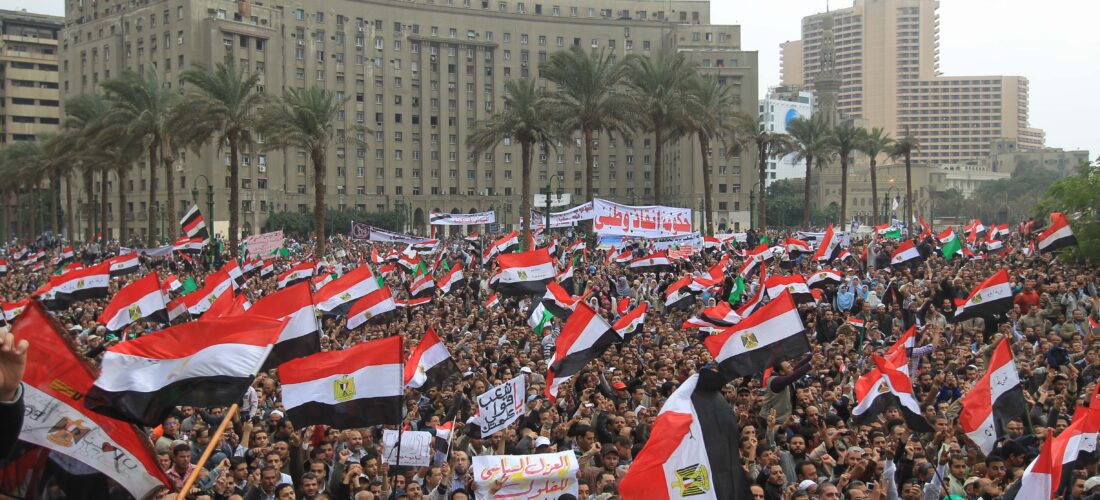
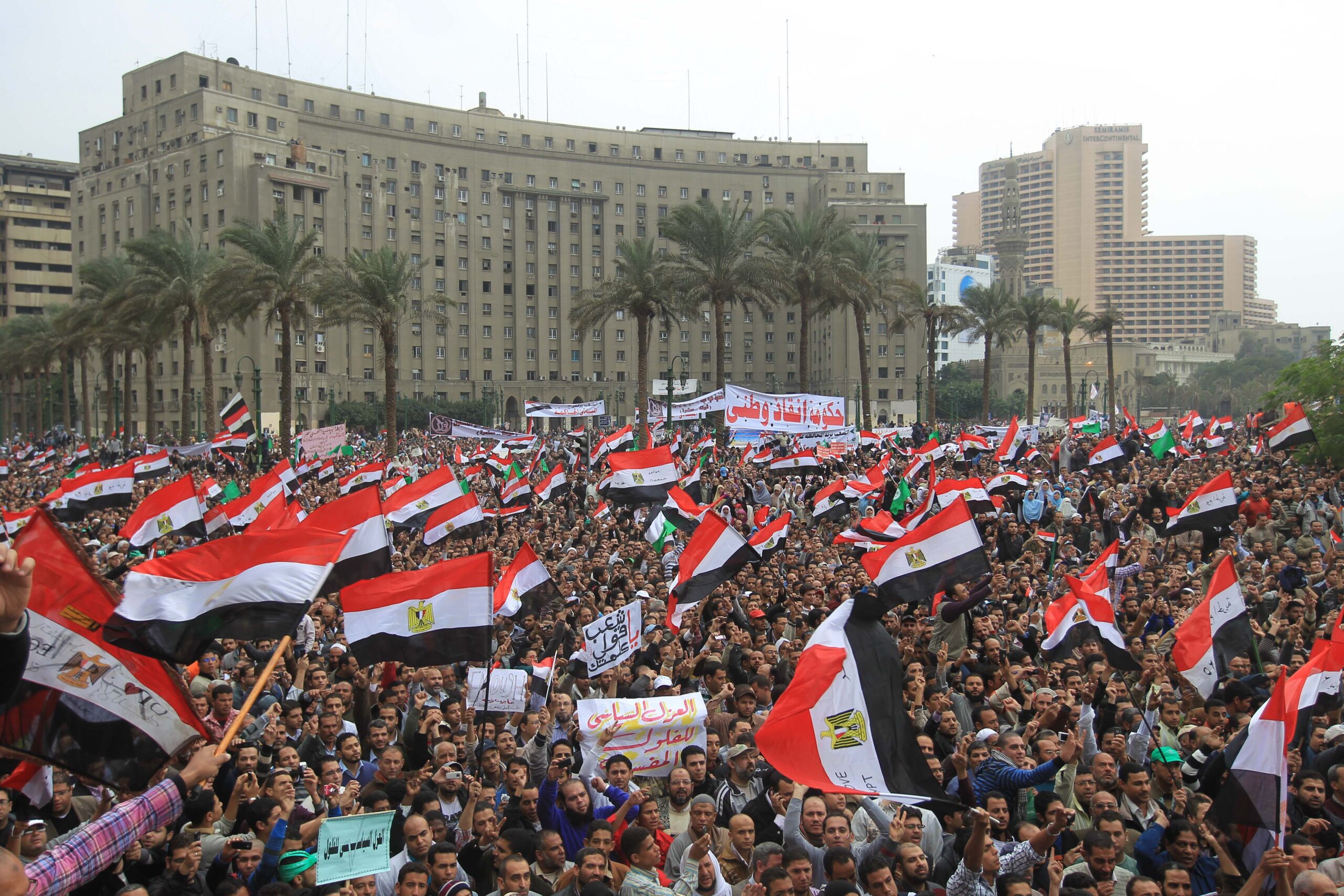
Jawad Nabulsi tells his personal experience of the Occupy movements in Egypt, taking place in Tahrir Square. Nabulsi’s narrative is particularly impactful as he was from a fairly wealthy family, and he recounts times where he was privileged enough to not follow certain procedures, like taking his driver’s license test, because his family had connections everywhere. He frames himself as well as his brother as people who did not need to partake in the movement, but were capable of doing so to benefit others. The tactics of “occupation” challenged the normal flow of everyday life and infrastructure, through taking over public space like Tahrir Square, a major public square in the heart of downtown Cairo, Egypt. The occupation undermined the regimes claim to order and complacency, especially when large numbers of people camped in central Cairo. The tactics of occupation allowed a wide cross-section of society from students, workers, unemployed graduates, young women—to participate, not just in short demonstrations but in extended presence. This broadened social disruption. The disruption can also be seen through Nabilsis personal story as he took part in the occupations regardless of the fact that his family was very well off, showcasing a reframing of whos involved, demonstrating the strong desire for change, even from those benefitting from this system. The tactics of occupation in Cairo were highly disruptive: they rewrote the rules of protest, challenged the state’s control of space, mobilised and organized large groups of society, and created a model for global protest movements.