“Iran is collapsing financially! They want the Strait of Hormuz opened immediately – Starving for cash! Losing 500 Million Dollars a day. Military and Police complaining that they are not getting paid. SOS!!!”
Donald Trump
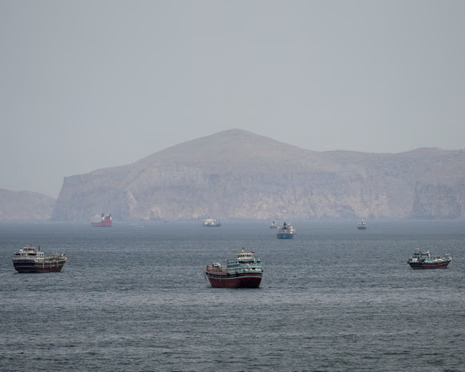
What is occurring today with the Strait of Hormuz represents a distinctly disruptive development to the global economic order that is quite unique for the time. From February 2026 onward, Iran has shut down the strait—a passage through which around 20% of global oil and liquefied natural gas travel—due to a US-Israel joint attack on the country. These developments have led to oil price hikes to over $106 per barrel, as well as introducing some degree of instability into the world of energy markets. In response to this, US forces have imposed a naval blockade on Iran’s ports and commandeered any tankers and ships in international waters that Iran has been labeling as acts of piracy. However, there is a critical difference between the two sides here, with respect to time horizons: it is estimated that Iran currently has an inventory of around 183 million barrels of oil floating on the high seas, along with enough money to sustain themselves in a stand-off until August of the same year, against US forces that are now under pressure from domestic politics and a Congress-imposed deadline of May 1.
A deeper disruption occurs beyond oil prices, where fears about the future of control of the infrastructure necessary for the continued functioning of the world’s economy become involved. Iran now effectively controls the passage and is charging each passing ship between $1 and 2 million, with payments demanded in Chinese yuan currency, rather than in dollars. It has therefore become necessary to ask the question that US policy makers have so far neglected: what happens when economic resilience, asymmetric war strategies, and geography outperform the most powerful navy in the world?