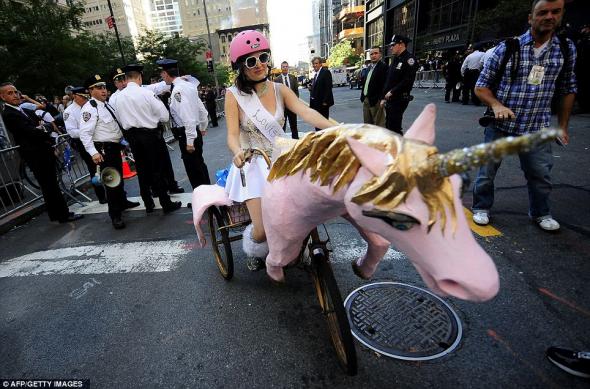
In September of 2011, thousands of protestors occupied Zuccotti Park in Lower Manhattan, protesting Wall Street’s role in the 2008 financial crisis and decades of inequality leading up to it. The media wrote it off as a disorganized street party because of the costumes, drums, and even paper-mâché unicorns, but in reality, it was a deliberate protest with a history substantially longer than realized. Claire Tancons traces the carnival-esque tactics of the movement all the way back to slave societies in the Americas, where the drama and spectacle of this protest were often a tool used to attract attention from people with no formal political power. OWS was evicted two months in, two days before its planned Day of Action. It never made a single concrete demand, which critics used to dismiss it entirely. But the 1% versus 99% framing it popularized genuinely shifted how Americans talked about inequality, and the organizing models it developed influenced basically every major left movement that came after it. Tancons’ piece is worth reading not just as analysis but as a primary source — she was writing in real time, from inside the movement’s own cultural logic, which makes it a different and more honest document than most of what got published about OWS at the time.
Related Posts:
Third Statement on Uprisings in Turkey (2013)
This statement, written by Devrimci Anarşist Faaliyet (DAF - Revolutionary Anarchist Action), discusses the ongoing occupations in Gezi Park and Taksim Square, particularly the police…
16 Things You Can Do to Be Ungovernable – Indigenous Action Media (2020)
This excerpt, published shortly after the 2020 U.S. Presidential election, presents a perspective rejecting both major political parties, arguing that neither offers genuine liberation from colonial…
Story of The Last Great Gunfighters – Vietnam War
The following excerpt follows what a Vietnam War veteran, Joseph M. Belardo Sr., went through after his return to the United States after his tour