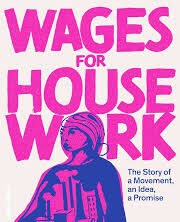
In the 1970’s, the Italian campaign, Wages for Housework, emerged as an incredibly disruptive intervention to feminist politics as well as economic theory. Martina Gabrielli analyzes how the movement went above and beyond demanding financial compensation for domestic labor, as the movement challenged capitalism’s definitions of value, work, and productivity. The movement questioned mainstream understandings of “work” and sought answers as to why domestic labor and housework were unpaid, exemplifying society’s inability to see value in predominantly female roles of reproductive work. Before the rise of the movement, domestic labor was treated as a private responsibility, undeserving of being recognized as economic activity, as it was often viewed as a labor of love and expression of femininity outside the realm of wages and markets. Within numerous feminist movements, the common solution to female oppression was smooth integration into paid work and equal access to employment opportunities, but neglected social reproduction: the unpaid work of cleaning, childcare, cooking, and emotional support that enabled (often husbands, or male) wage labor. The movement argued that capitalism succeeds due to its equal dependence on unpaid reproductive labor and factory production. The debate sparked conversation about exploitation, which had previously never been thought of occurring inside the home, as it was traditionally seen as apolitical. The peak activity and influence were during 1972 and 73 were Dallas Costa released E Sovversione Sociale, a document that delves into the disproportionate burden of domestic labor on women, and argued that even women with jobs outside the home shoulder the bulk of household responsibilities. The main framework within the women’s capitalist division of labor reinforces the notion that women’s extended familial duties encompassing emotional and caregiving responsibilities are deemed not worthy of being paid, akin to wage labor. This position diverges from the dominant promotion of female integration into the workforce, as it focuses on predating the introduction of wages for reproductive jobs. The Lotta Feminista’s activism rejects the capitalist system, which has centered the monetization of predominantly male productive labor and prompted the centering of women’s reproductive labor in the paid workforce.