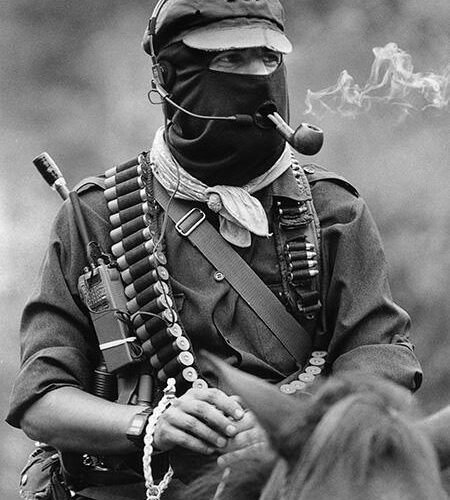
Raheel Hayats essay looks at an important time for the Zapatista movement. This was after the murder of José Luis Solís López, also known as Galeano in 2014. He was a teacher, with the Zapatistas. State-backed paramilitary forces killed him in Chiapas. They did this as part of a campaign to stop the Zapatistas and other indigenous people from being independent, with the goal to make it easier for companies to take the resources from the area without any problems. The Zapatista movement is still fighting against this. The attack on the school and health clinic showed how the Mexican government uses violence and controls what people see in the media to hurt communities that are trying to be independent. They also get some peasant groups to work with them. The Zapatistas did not fight back with violence, instead they wanted justice to be done in their way. They did not want to use violence like the government. The essay describes how when Subcomandante Marcos appeared to die after Galeano was murdered it was not a sign that the movement was weak, it was proof that the movement was strong. Subcomandante Marcos was a person who helped tell people outside of the movement what was going on. He was also getting in the way of people seeing the real heart of the movement, which is made up of a lot of different indigenous people working together. The movement is really about these people, not just, about Subcomandante Marcos. By stepping aside and elevating indigenous leadership, the Zapatistas demonstrated that their power lies not in charismatic figures but in deeply rooted, bottom-up institutions of governance, education, and care, showing that they are stronger than ever as a collective challenge to capitalism, state violence, and neoliberal exploitation. This moment was deeply disruptive because it overturned the state’s expectation that repression, assassination, and the removal of a visible leader would fracture the movement, instead revealing a form of resistance that thrives precisely by refusing hierarchy, spectacle, and violent retaliation.