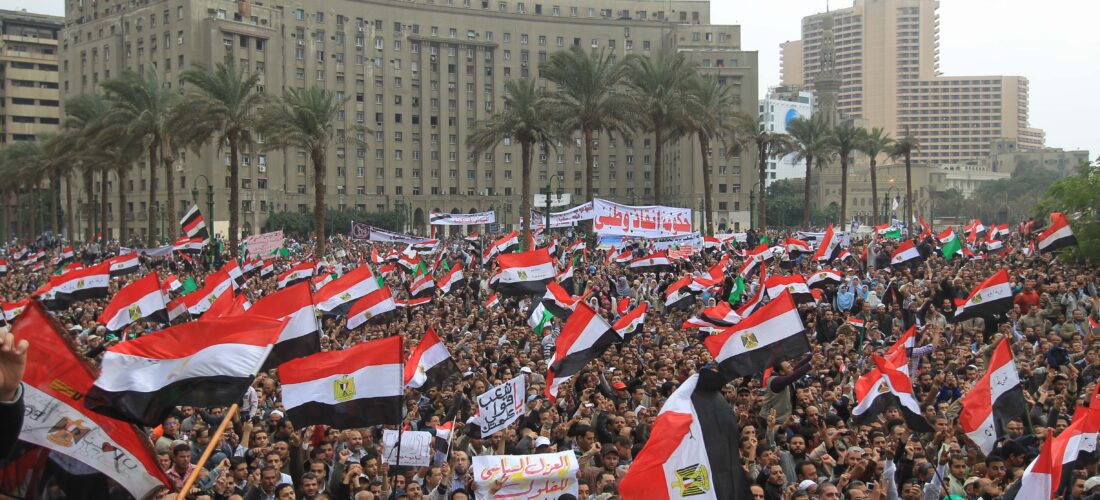
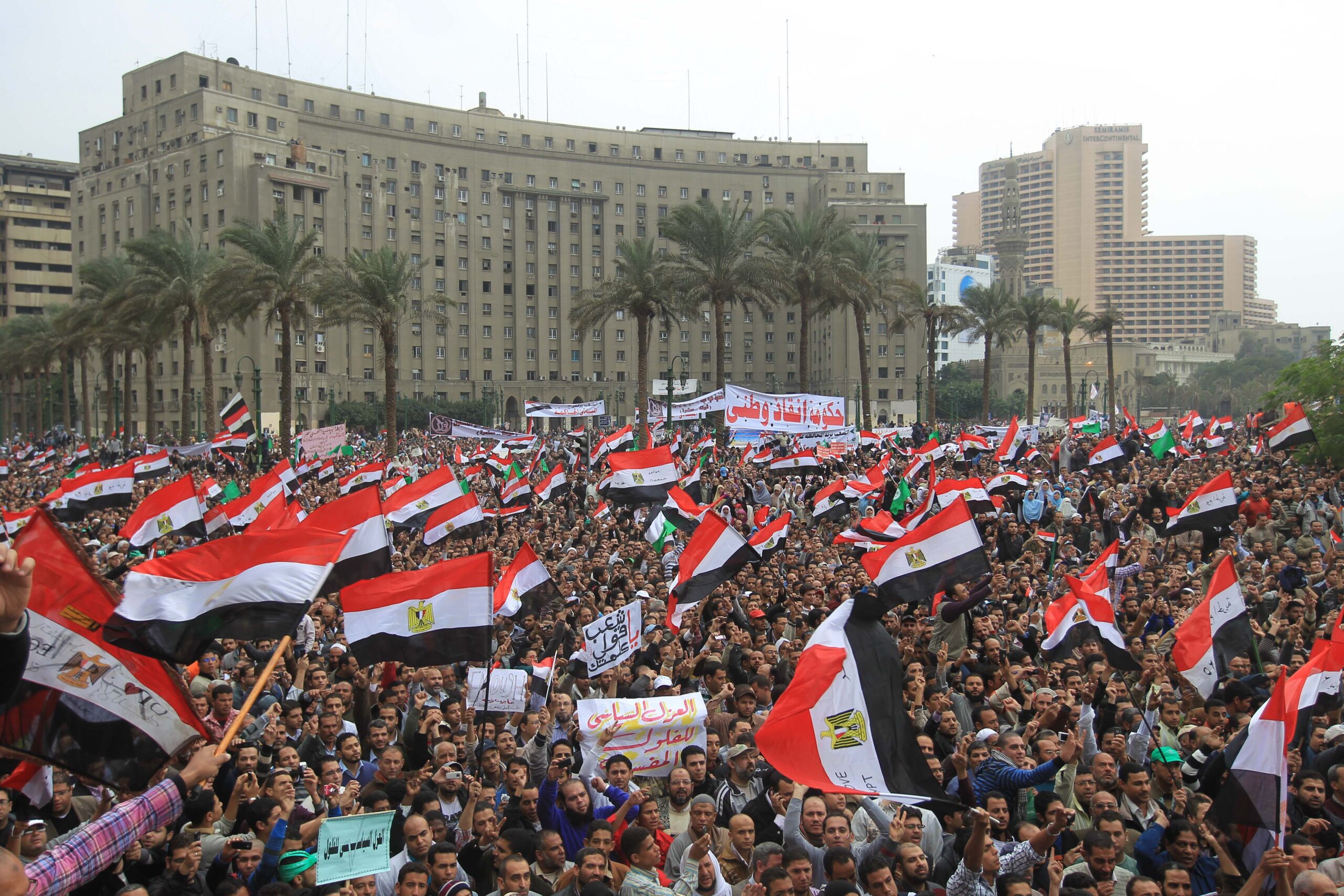
“The balance tipped. Going down to protest became acceptable Before then, people like members of my family would have said, ‘No way, how could you protest? It is not something people like us do.’ Then it became normal to protest. It became something we could do.”
Jawad Nabulsi
Jawad Nabulsi tells his personal experience of the Occupy movements in Egypt, taking place in Tahrir Square. Nabulsi’s narrative is particularly impactful as he was from a fairly wealthy family, and he recounts times where he was privileged enough to not follow certain procedures, like taking his driver’s license test, because his family had connections everywhere. He frames himself as well as his brother as people who did not need to partake in the movement, but were capable of doing so to benefit others. The tactics of “occupation” challenged the normal flow of everyday life and infrastructure, through taking over public space like Tahrir Square, a major public square in the heart of downtown Cairo, Egypt. The occupation undermined the regimes claim to order and complacency, especially when large numbers of people camped in central Cairo. The tactics of occupation allowed a wide cross-section of society from students, workers, unemployed graduates, young women—to participate, not just in short demonstrations but in extended presence. This broadened social disruption. The disruption can also be seen through Nabilsis personal story as he took part in the occupations regardless of the fact that his family was very well off, showcasing a reframing of whos involved, demonstrating the strong desire for change, even from those benefitting from this system. The tactics of occupation in Cairo were highly disruptive: they rewrote the rules of protest, challenged the state’s control of space, mobilised and organized large groups of society, and created a model for global protest movements.
Related Posts:
Third Statement on Uprisings in Turkey (2013)
This statement, written by Devrimci Anarşist Faaliyet (DAF - Revolutionary Anarchist Action), discusses the ongoing occupations in Gezi Park and Taksim Square, particularly the police…

Breaking the Illusion of Scarcity: A Squatter’s Primer (2003)
This piece is a detailed guide on how to squat an unoccupied property. Information on how to find a place, claim squatters’ rights, gain adverse…
Stanford “Disorientation Guide” (2005)
Published in 2005 by student activists, this Stanford University "Disorientation Guide" did an in depth analysis of the history of Standford Unviersity in relation to…