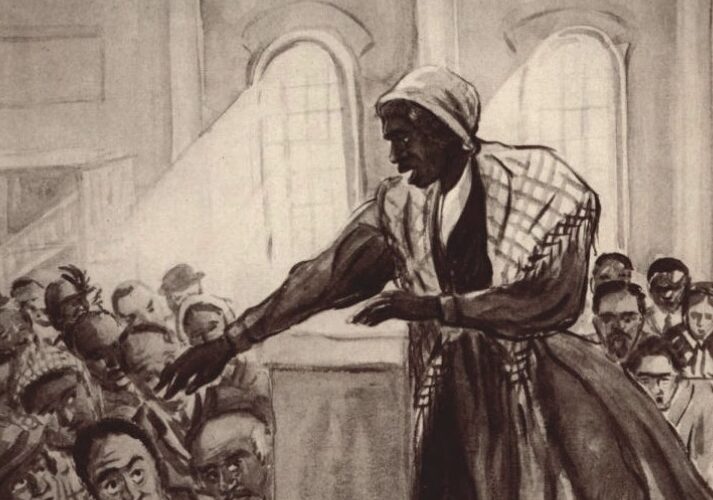
Sojourner Truth was a prominent American abolitionist, speaking out primarily for African-American civil rights, women’s rights, and alcohol temperance. In this speech given at the Akron, Ohio, Women’s Convention in 1851, Truth was a pioneer in demonstrating the dual burden Black women faced. Seeing as this demographic was facing both deep-rooted racism and sexism, she, in this speech, attempts to describe the potential for disruption that these women had. It was also very important to Truth to legitimize the rights of Black women. She describes how, at this dawn of women’s rights activism, White women were given more legitimacy in the eyes of men, but Truth is disrupting preconceived conventions by asking, “And ain’t I a woman?” While in this era of abolitionism, we primarily focus on the civil rights of the enslaved, we regularly forget that in this period, early calls for the equal rights of women were beginning to emerge. Truth, makes sure that we don’t forget the demographic that was affected by both of these movements, Black women.