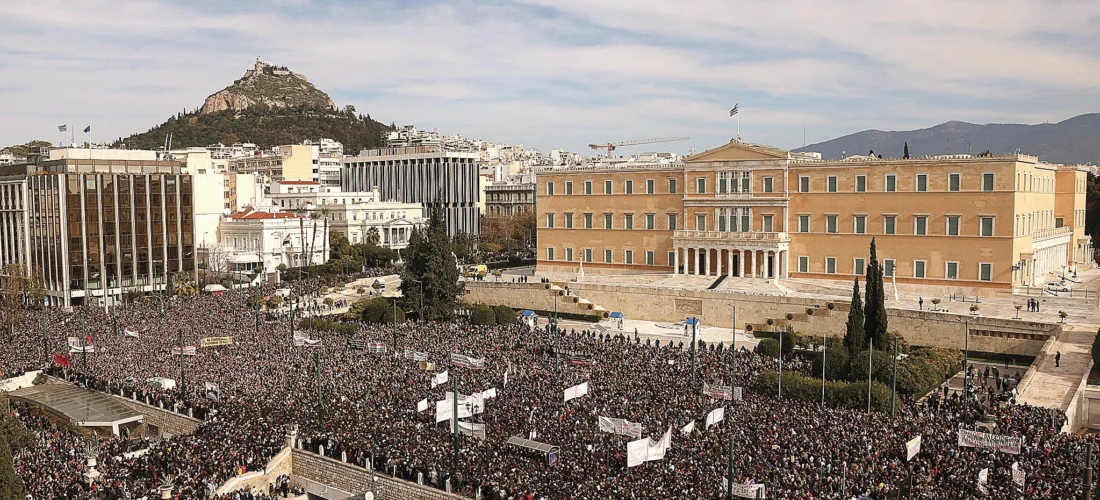
In May 2011, the movement of popular assemblies erupted as a disruption to society. Begun through a Facebook call to express indignation, this movement morphed quickly into a mass occupation. This assembly delegitimized the political class, forced general strikes, and disrupted the flow of everyday life in the heart of Athens. Parliamentary access, business, education, baking, and tourism were repeatedly interrupted, affecting the daily lives of people in Greece. The assemblies demanded direct democracy and exposed the divisions between peaceful protesters, anti-authoritarians,and nationalists, increasing tension within the movement, but also increasing difficulty for the state to involve itself. Tens or hundreds of thousands of people formed blockades and attempted to prevent Military Professionals from entering parliament. Protesters rioted, created barricades, improvised medical aid, and played music during tear gas exposure. This movement demonstrated how powerful the combination of unity, perseverance, and protest is, even when disordered and disorganized. This assembly created a political crisis that terrified elites and prompted the reconfiguration of social norms of who can speak and act in the public sphere. Syntagma’s occupations disrupted institutional routine, fractured political legitimacy, and dispersed power to the people through the promises brought through solidarity, popularity, and movement.
https://libcom.org/article/preliminary-notes-towards-account-movement-popular-assemblies-tptg: Syntagma Square AssembliesRelated Posts:

A Conversation with Chandi Prasad Bhatt (2011)
This interview explores Bhatt's journey from a poverty-stricken childhood to his leadership in the Chipko Movement

May Day Tactical Manual – Student and Youth for a People’s Peace (1971)
This is a manual published in advance of the 1971 May Day protests in Washington D.C. It describes how to carry out civil disobedience actions…
Angela Davis on Mainstream Feminism/ Bourgeoise Feminism (2017)
In this lecture, Angela Davis addresses her career-long struggle to identify as a feminist, given the current state of the feminist movement. Breaking through the…