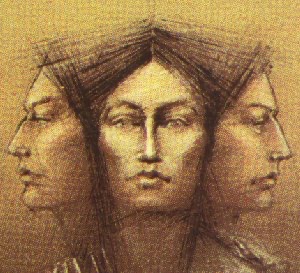
Davis shows that Indigenous women resisted traditional European gender roles by maintaining forms of authority and autonomy that sharply contrasted with French patriarchal norms. European observers expected women to be submissive, economically dependent, and excluded from decision-making, yet Iroquois women controlled agriculture, household resources, and kinship through matrilineal and matrilocal systems. Senior women exercised influence within the longhouse, could initiate divorce, retained custody of children, and had decisive power over daily economic life—practices that undermined European assumptions about male dominance within the family. Even when exposed to Christianity, some Indigenous women adapted the new religion to expand their public voice, preaching, teaching, and leading prayer despite missionaries’ insistence on female obedience. Rather than passively accepting European gender ideals, Iroquois women reshaped colonial encounters to preserve their authority.
“If a man wanted a courteous excuse not to do something he could say without fear of embarrassment ‘that his wife did not wish it.’”