Disrupt (v) : to interrupt (an event, activity, or process) by causing a disturbance or problem; to drastically alter or destroy the structure of (something)
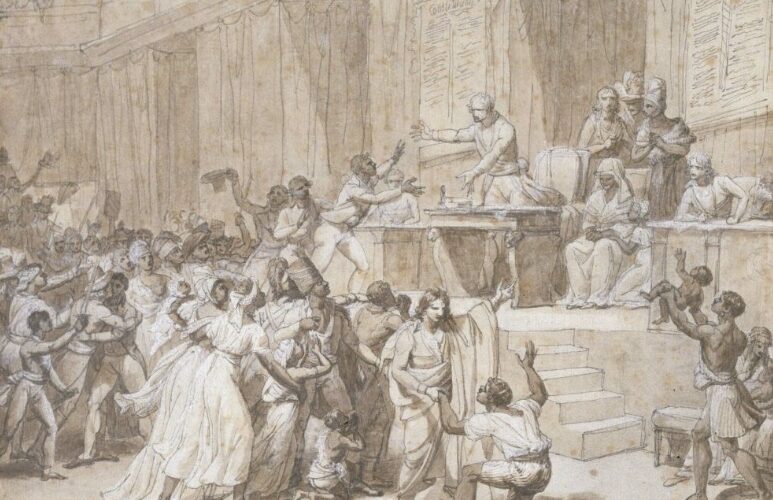
On August 29, 1793, Léger-Félicité Sonthonax, civil commissioner of the northern part of the French colony Saint-Domingue (present-day Haiti), issued a decree that formally abolished slavery forever in his region of the colony. This proclamation, which was seemingly the first of its kind, created a snowball effect that eventually led to the National Convention’s official Feb 4, 1794, decree abolishing slavery throughout all of the French colonies. Used initially as a tactic for securing the colony for French control in the face of British invasion and colony-wide slave revolt, Sonthonax can easily be credited with paving the way for early calls for the abolition of slavery, and was a primary initiator for the French being one of the first countries to formally abolish the institution of slavery throughout all of their provinces and colonies. What began as a “small” political action in the northern region of a colony with a very large slave population established one of the most disruptive chains of events for the abolition of the institution of slavery.
This anonymous collection of statements cuts straight to the core of gender as a social construct and the ways in which women are brought up to act/think in a specific manner. Through these descriptions, perhaps women can bring themselves out of their confines and utilize consciousness raising to realize the extent to which they have been controlled by society.
Kiki Mason, an ActUP activist, wrote “Manifesto Destiny, By Any Means Necessary” to raise consciousness among his LGBTQ+ community to refuse the negligence of the United States Healthcare system and continue to live by “any means necessary.” Mason defines his disruption as continuing to live despite the government’s refusal to act rigorously in fighting the AIDS epidemic.
“This is my message to everyone with AIDS: If you think the end is near, take someone with you. Hold the president of a drug company hostage. Splatter your blood across the desk of a politician. Trash an AIDS researcher’s home. When some silly-assed, blow-dried, brain-dead TV reporter asks you a stupid question about living with AIDS, spit in his face. Call the police and tell them you’ve put LSD in the water supply in retaliation for our genocide. Do it so they’ll know what it’s like to have your life ripped apart”