
The source presents a powerful critique of the colonial and capitalist systems, arguing they represent an ongoing, destructive “apocalypse” built on violence, exploitation, and the suppression of Indigenous ways of being. It contrasts this linear, destructive trajectory with an Indigenous perspective of time and existence that is cyclical and rooted in ancestral knowledge and connection to the Earth. The text rejects the notion of seeking solutions within the existing colonial framework, instead calling for a return to ceremony, collective dreaming, and disruptive action as forms of resistance and liberation. Ultimately, it posits that the survival and flourishing of Indigenous worlds are contingent upon the dismantling of the colonial “dead world.”
Related Posts:

CHAZ (Capitol Hill Autonomous Zone) Demands – 2020
The Demands of the police-free Capitol Hill Autonomous Zone established in Seattle, USA on 8 June during the height of the 2020 Black Lives Matter…

100 Years of Land Struggle – Mike Gouldhawke (2020)
This document is a timeline of Native American resistance in pursuit of land and self-determination between the years of 1921-2020.
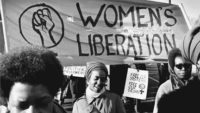
Double Jeopardy: To Be Black and Female (1971)
This document was written by Frances M. Beal in 1971. "Double Jeopardy: To Be Black and Female" links the anti-capitalist struggle, women's liberation, and black…