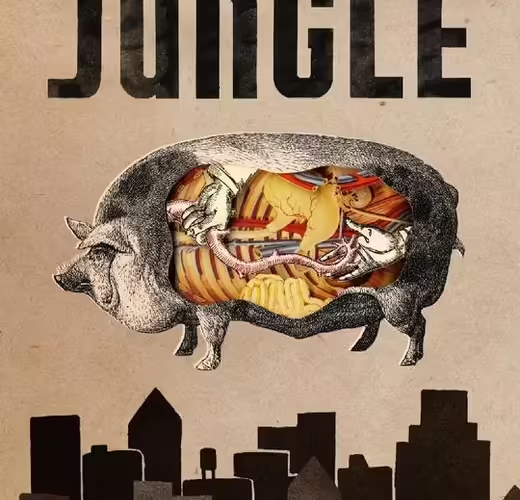
“The hands of these men would be criss-crossed with cuts, until you could no longer pretend to count them or to trace them. They would have no nails,—they had worn them off pulling hides; their knuckles were swollen so that their fingers spread out like a fan. There were men who worked in the cooking rooms, in the midst of steam and sickening odors, by artificial light; in these rooms the germs of tuberculosis might live for two years, but the supply was renewed every hour.”
Upton Sinclair
As seen in the above quote, the conditions of work during the Industrial Revolution were not only gruesome and unclean but also exploitative and inhumane. The book reveals how working-class life under unchecked capitalism is already disrupted; the real disruption or disobedience is not the strikes, protests, or publications but the violence hidden beneath the appearance of normal economic systems. The Jungle demonstrates how capitalism disrupts the most basic aspects of life: eating, housing, family, love, and, importantly, safety. The book describes how the system is designed to constantly undercut working-class people, making survival the only mindset. It is revealed how industrial society manufactures precarity, turning every day of these workers’ lives into a living hell. Jurgis and his family arrive believing in the promise of steady work and upward mobility, but that promise collapses through a series of everyday shocks—wage cuts, layoffs, injuries, death from preventable disease, and fraudulent contracts. Child labor, sexual exploitation, and the erosion of humanity and dignity disrupt the boundaries between safety and danger, as well as childhood and adulthood. Children are forced to trade playing, exploring, and learning for dangerous, meticulous work to assist their families. The disruption lies within the realization that millions of people live and work in catastrophic conditions while others live comfortably, calling it order or survival of the fittest. The normal functioning of a capitalist system is inherently disruptive, restricting access to basic needs through the constant need to work even during times of physical or mental barriers/harm.