“We shall have the sham reformers self-stultified and self-convicted; we shall have the radical Democracy left without a lie with which to cover its nakedness!”
Upton Sinclair
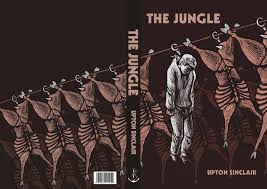
The contents of Upton Sinclair’s “The Jungle” expose the gruesome truth of the meat-packing industry, but more importantly, exemplify the explosion of the boundaries of American Literature. During the early 1900s and late 1890s, popular and frequent novels focused on romanticized progress and prosperity in America, praising capitalism, promoting ideas of hard work, and instilling hope for achieving the American Dream within the country’s youth. Sinclair on the other hand, forced readers to witness filth, exploitation, abuse, and the human cost associated with the “advancement” of industrial capitalism. Rather than the typical narratives about individuals or families moving up the socioeconomic ranks of the capitalist structure, Sinclair exposes the structural violence, slavery, housing fraud, workplace abuse, starvation, harm, and death behind this illusion of capitalism as the perfect path to success. Once published, Sinclair’s piece triggered the public, and his novel was investigated by the federal government. The contents of this book are incredibly graphic, disturbing, and harmful, and Sinclair’s publication ruptured everyday political life and caused disturbances to common perceptions of capitalism and America’s economic system. This piece opened readers’ eyes to the hidden costs of production, increased manufacturing, and capitalism, challenging the government’s one-sided presentation of capitalism’s benefits, revealing the truth they aimed to conceal.